REVIEW · TOKYO
Tokyo: Daikoku JDM Car Meet & Night Car Culture Tour
Book on GetYourGuide →Operated by MisiuJDMX · Bookable on GetYourGuide
Tokyo at night hits different, and this tour is built for that. I love the Daikoku Parking Area stop, because it feels like a live, underground car show with unbelievable builds, and I also love the insider guide stories that connect what you see to Tokyo’s car scene. One thing to keep in mind: you don’t get to pick the exact cars you’ll see, and Daikoku PA can close without notice, so the route can shift on the day.
You’ll ride in clean, comfortable vehicles chosen for your group, and all driving is handled responsibly. It’s not Hollywood Fast & Furious chaos: no illegal racing, no reckless moves, just a safe night ride through iconic spots like Rainbow Bridge and the kind of car-meet atmosphere you can’t recreate from videos.
In This Review
- Key things to know before you go
- A Midnight Drive Into Tokyo’s JDM Dreamscape
- Small Group Setup That Feels Less Like a Bus Tour
- Dōgenzaka or Roppongi Start Points, Then Night Views Add Up
- APIT Autobacs Shinonome: Car Shopping as a Stop, Not a Side Quest
- Tatsumi 1st PA and Other Likely Stops Along the Way
- Daikoku Parking Area: Why This One Hour Can Change Your Trip
- Riding in Style: Vans, Sedans, and How Comfort Impacts the Night
- Safety, Respect, and the Real Meaning of Tokyo Drift
- Price and Value: Is $98 Worth It for 4 Hours?
- Who This Tour Fits Best
- Book It or Skip It: My Take for Your Tokyo Night
- FAQ
- How long is the Tokyo Daikoku JDM Car Meet & Night Car Culture Tour?
- Where do I meet the tour?
- Is Daikoku Parking Area guaranteed to be open?
- Will I definitely see specific cars at the meetups?
- Is this tour about illegal drifting or street racing?
- What stops are included?
- What’s included in the price?
- What should I bring, and what’s not allowed?
- What languages do the guides speak?
Key things to know before you go
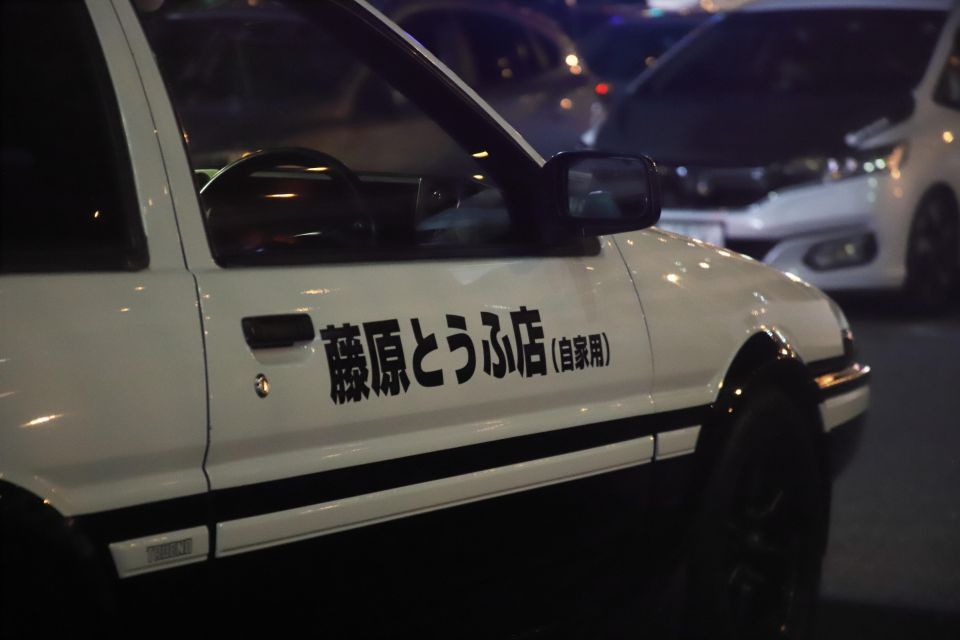
- Daikoku PA is the main event: expect an electric car-meet vibe and high-level builds while you have about an hour on-site.
- You’ll shop and browse at APIT Autobacs Shinonome: think parts, tuning gear, and car obsession made into a store stop.
- Your route depends on day and conditions: planned stops can swap with other car-meet areas like Tatsumi, Umihotaru, or Gaienmae.
- The car lineup isn’t guaranteed: that’s part of the reality of public meetups, so go for the culture, not a specific model list.
- Guides help you read the scene: you’ll get context on cars, Tokyo roads, and what the car culture means, with English as the default and other languages when available.
- You ride for comfort first: you may split into two vans on the VAN option depending on group size and seats.
A Midnight Drive Into Tokyo’s JDM Dreamscape
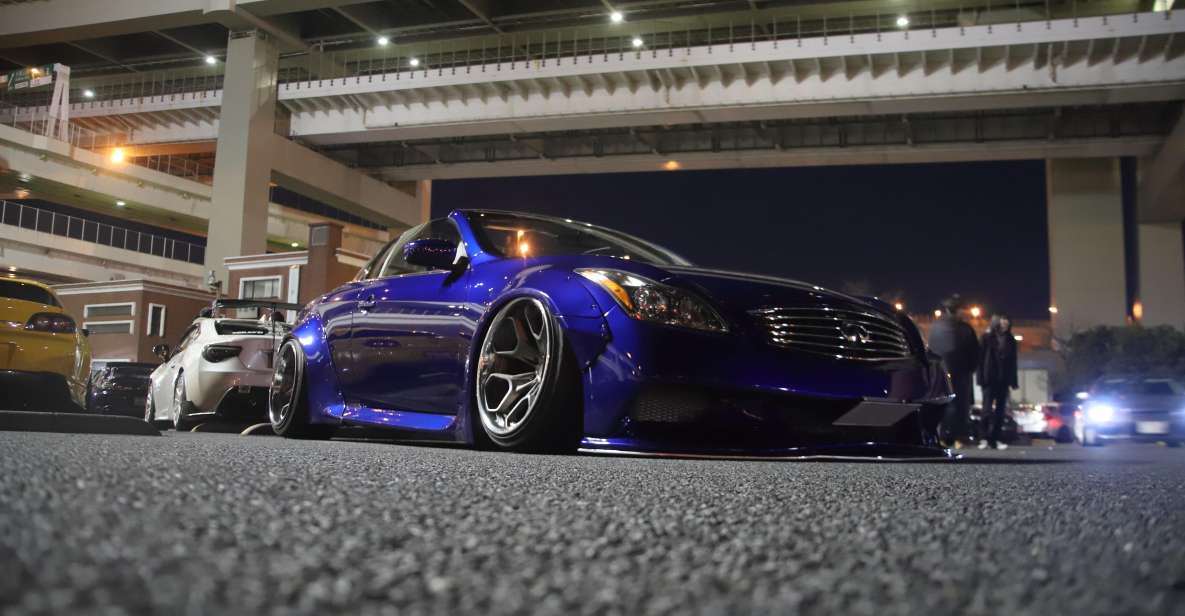
Tokyo’s car culture has a special kind of seriousness. It’s style, craftsmanship, and community, all wrapped in neon and exhaust notes. This tour is built around that reality: you’re not just seeing places, you’re being guided through the car-scene logic of Tokyo at night.
The big appeal is that it’s not confined to one location. You get city driving plus car-meet stops, which means you’re constantly switching gears mentally—views, then cars, then more views. And because it runs at night, you get the best part of Tokyo: lit skyline moments and busy expressway energy.
The second reason I like it is how the guides frame things. Some guides by name you might meet include Michael, Karim, Mori, Jason, and Julian. They tend to explain what matters: why certain spots are famous, what kind of car culture you’re seeing, and how Tokyo’s roads fit into the story.
And yes, there’s a reality check. Public rest stops and meet locations can shut, weather can change the plan, and car lineups are never promised. If you want a controlled, guaranteed-car experience, you’ll need to adjust your expectations.
You can also read our reviews of more tours and experiences in Tokyo.
Small Group Setup That Feels Less Like a Bus Tour
This runs as a small group experience with a cap of 10 participants. That matters more than it sounds. Smaller groups mean you’re less likely to feel rushed at stops, and the guide can actually keep track of everyone when cars and crowds start pulling your attention in every direction.
Transport is also part of the value. The vehicles are described as clean and well-maintained, and options range from vans to sedans and performance-focused models depending on availability and your group size. In practice, that usually means you’re not crammed into a rough ride. It’s a night tour, so comfort helps you stay present for the skyline moments and the meet atmosphere.
One practical detail that affects your experience: in the VAN option, your group may split between two vans depending on how many people book and what seat availability looks like. That’s normal for small-group logistics, but it does mean you may not all move together in one single vehicle.
You’ll also want basic travel readiness. Bring a passport or ID card. And follow the onboard rules: no smoking, no alcohol, and no food or drinks in the vehicle. It keeps the ride smooth and respectful for everyone.
Dōgenzaka or Roppongi Start Points, Then Night Views Add Up
Depending on what you book, you’ll start either at 2-chōme-29-8 Dōgenzaka, 東叡堂ビル or around Roppongi Hills. Either way, the tour quickly shifts from normal Tokyo to the roads and viewpoints that make the night feel like a movie set—minus the chaos.
From there, you’ll pass major sights and get those night “look out the window” moments. Rainbow Bridge is called out for a reason: it’s one of those Tokyo icons where the city turns into layers of light. You may pass it more than once during the route, which is handy because each pass hits with a different angle as traffic and timing change.
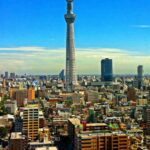
The tour also routes you past spots like Tokyo Skytree and Tokyo Tower from the roadside. You’re not stopping at everything (some stops are pass-by scenic moments), but it’s enough to give you context. Tokyo doesn’t feel like a grid when you’re riding through it at night. It feels like a network that’s been built for speed and survival—and car culture thrives in that kind of environment.
One note: the exact driving streets and pacing can change based on traffic and weather. That’s not a flaw—it’s just the difference between a photo itinerary and a real night ride.
APIT Autobacs Shinonome: Car Shopping as a Stop, Not a Side Quest
Autobacs is basically a pilgrimage site for car people, and APIT Autobacs Shinonome is where the tour gives you a proper chance to stop and browse. You’ll have about 25 minutes here.
This stop works for two types of travelers. If you’re the kind of person who knows part numbers, you’ll enjoy seeing tuning pieces, memorabilia, and all the car-nerd stuff you usually only spot in online shops. If you’re not that deep into the hobby, you’ll still enjoy it because it’s a culture snapshot. Cars are everywhere in the store, and the vibe is focused.
A real practical tip: set a mental budget before you walk in. One of the best kinds of reviews for this tour mentions people spending too much money because everything feels tempting. Even if you don’t buy anything, take a slow look at the shop displays. It’s the fastest way to get your “car language” back on track before you hit the bigger meet stop.
You’ll also find out that shopping in Japan has a different energy at night. It’s calm, quick, and very organized. That helps when your time window is short.
Tatsumi 1st PA and Other Likely Stops Along the Way
You may visit Tatsumi 1st PA for about 15 minutes. Stops like this are more than a quick break. In Japan, parking areas and expressway spots are where travel intersects with local routines. For car culture, that’s a powerful thing: people gather, talk, and show off in safe, legal places.
The tour also hints that other experience locations can be used depending on the day and time on weekends. Options mentioned include Tatsumi, Umihotaru, Autobacs, and Gaienmae. Translation: you’re not getting a rigid script every night. You’re getting a flexible plan designed to keep the experience alive even if a certain meet spot is quiet that night.
If you care about getting photos, these shorter stops can be useful. You get time to look around, spot standout cars, and still keep the energy up for Daikoku PA.
If you’re sensitive to crowds, keep in mind that car-meet locations can get busy fast. The good part is that the tour operates as a supervised, respectful scene. The goal is to enjoy without turning it into chaos.

Daikoku Parking Area: Why This One Hour Can Change Your Trip
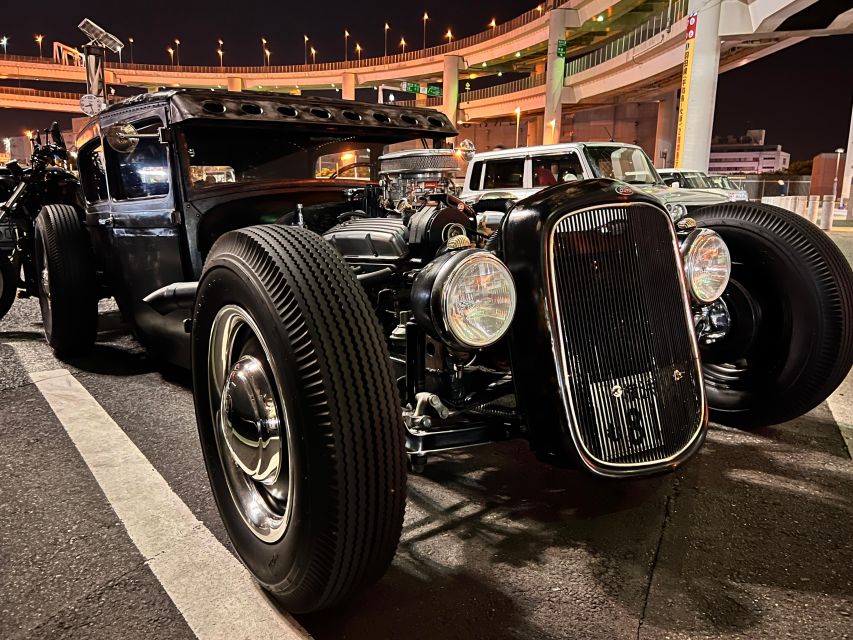
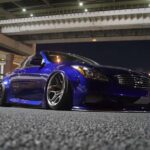
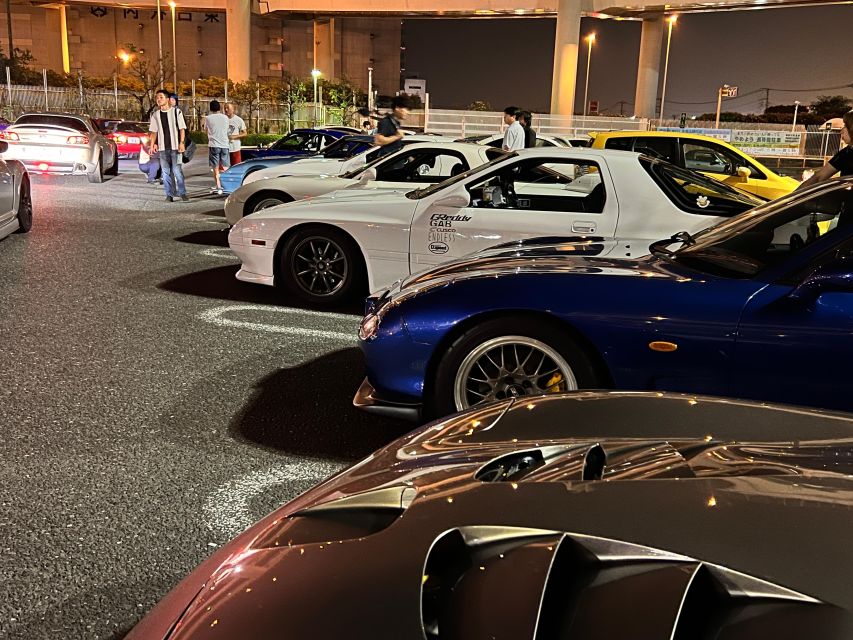
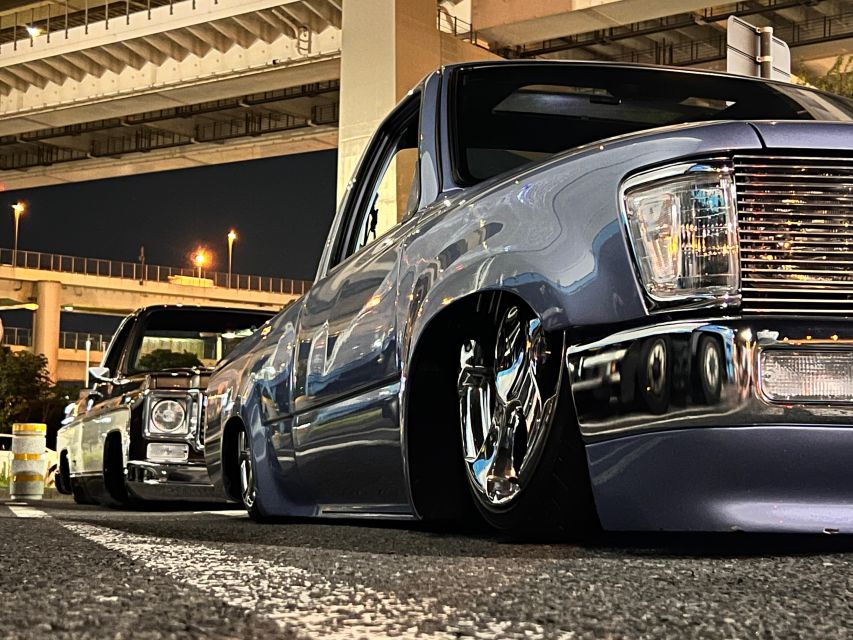
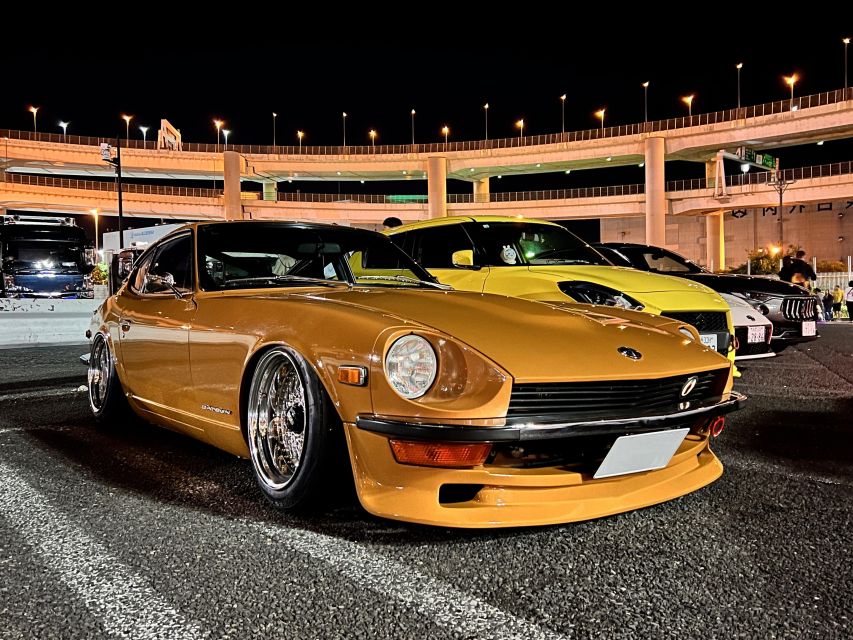
Daikoku Parking Area is the crown jewel of the route, and it’s the stop that makes people plan an entire Tokyo night around cars. When it’s open, you’re usually stepping into a world where modified cars are treated like art.
You’ll have about one hour here. That’s long enough to walk, take pictures, and notice details you’d miss in a shorter stop. It’s also short enough that the tour can keep moving without turning your night into a single long wait.
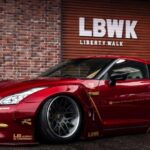
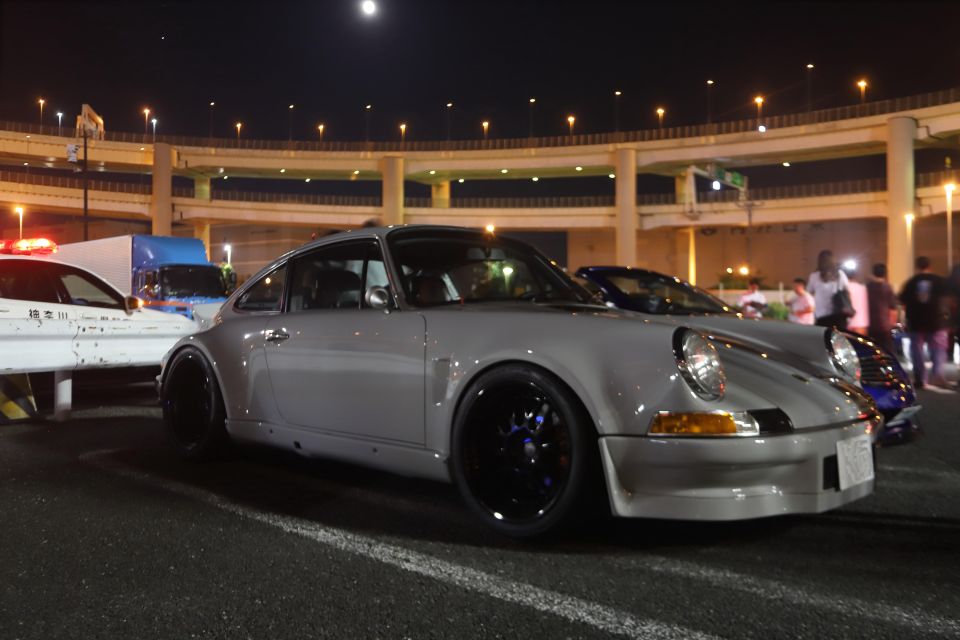
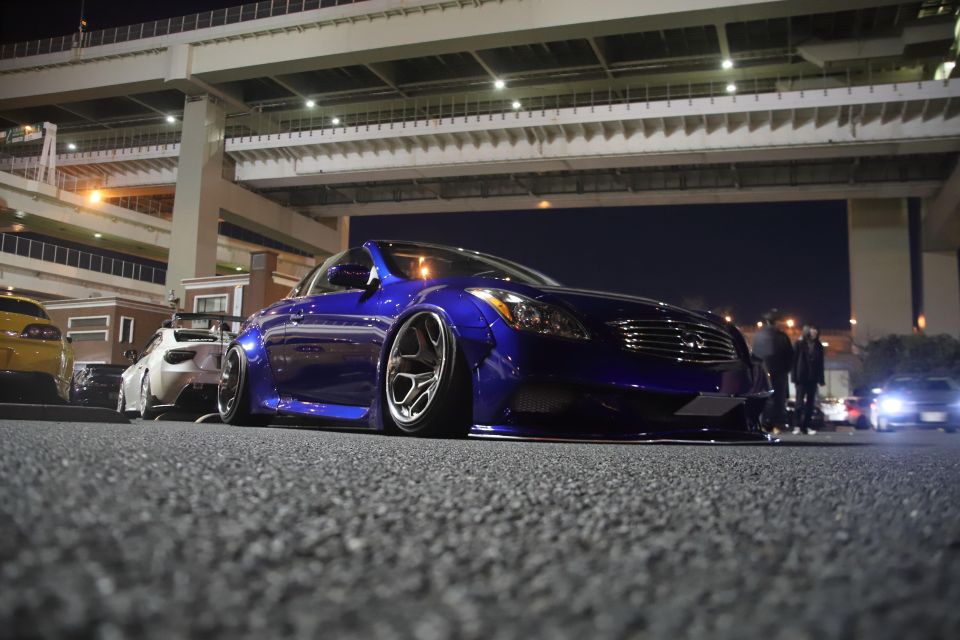
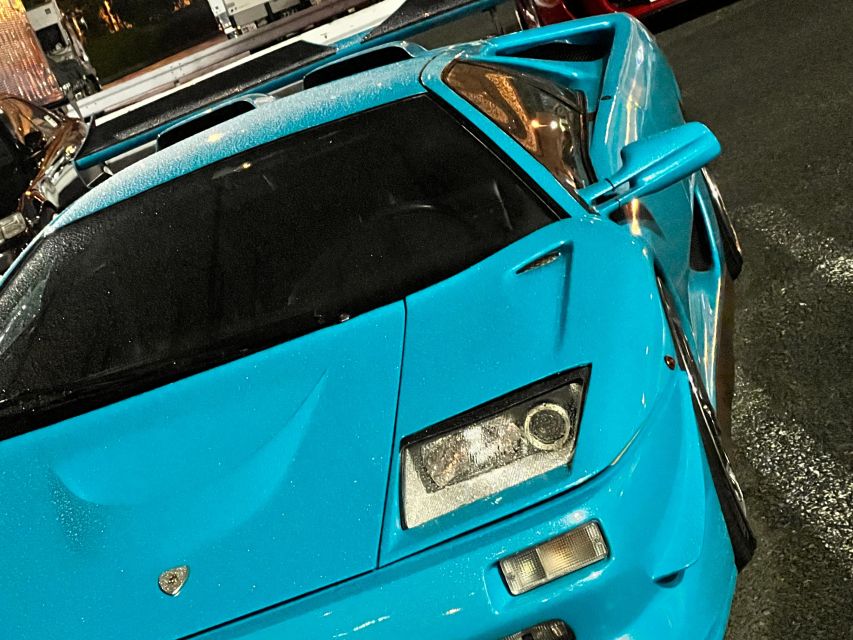
From what I see and what this tour consistently delivers, the highlight isn’t just the quantity of cars—it’s the quality and variety. Expect insane high-level builds, and the lot often feels like a massive underground car show. You might see famous Japanese models, and you might also spot German and American cars mixed into the same culture flow, which makes it feel international without losing the Tokyo core.
Important reality check: Daikoku PA is a public rest stop and may close without notice. If that happens, the host adjusts the route to keep you on a good track. That flexibility is part of the value because it protects the spirit of the tour even when plans change.
Also, this isn’t a drifting fantasy scene. You’re there for the car-meet culture: people, photos, and builds. Driving is handled responsibly and legally, and the tour is explicitly set up to avoid unsafe stunts.
Riding in Style: Vans, Sedans, and How Comfort Impacts the Night
A night car culture tour can go one of two ways: either you’re comfortable enough to enjoy the ride, or you’re thinking about your back the whole time. This one tries to solve that with vehicle selection.
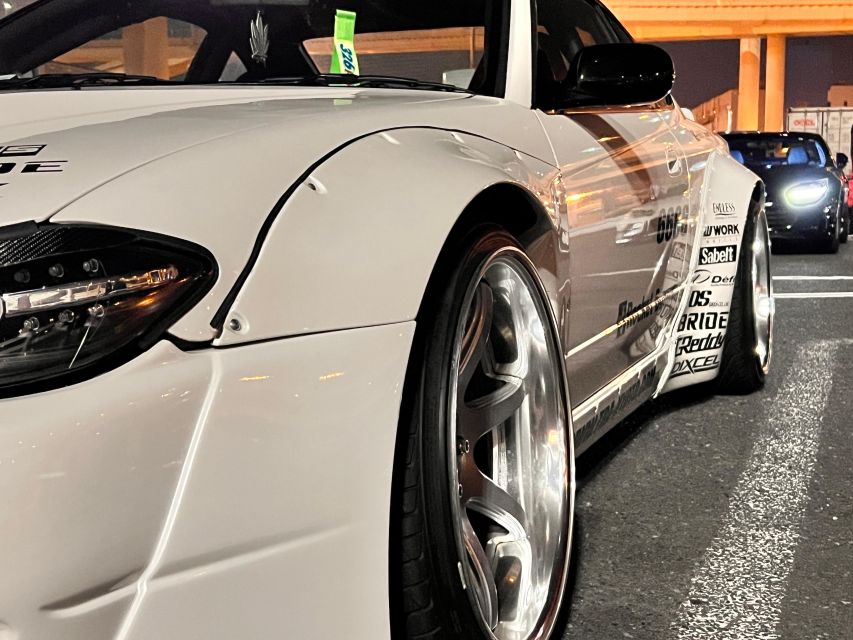
Your ride could be a spacious van or a sedan/performance option, and some vehicles may be customized by the provider while others are factory high-performance models. In every case, the important promise is that cars are clean and well-maintained and chosen for group comfort.
This detail matters because the tour combines three things that normally don’t mix well:
1) city driving,
2) stops with crowd energy,
3) photo time and constant attention shifts.
If the ride is cramped, you miss parts of the experience. If the ride is smooth, you’re more relaxed when you walk into Daikoku’s noise and visual overload.
And the guides do more than steer. Many guides treat the drive like a moving classroom. Names that stand out include Mori, Michael, Karim, Jason, and Julian, with comments about guides sharing history, explaining the roads, and keeping the conversation going in a way that feels natural rather than scripted.
Safety, Respect, and the Real Meaning of Tokyo Drift
This is where expectations matter most. This tour is clearly built around respect: responsible driving, local law compliance, and a focus on culture rather than illegal behavior.
You’re not doing street racing. You’re not doing reckless drift scenes. You’re getting a guided, safe look at the places and vibe that influenced pop culture like Tokyo Drift, Fast & Furious, Initial D, and Wangan Midnight. The tour spirit is: the movie stuff was a reference. The real thing is better—because it’s about people and craftsmanship.
Even the language approach supports that tone. The tour runs in English by default, and also offers Polish, German, Italian, and Japanese when available. That helps a lot when you want to understand what you’re looking at, not just what you’re seeing.
If you come in expecting a Hollywood stunt show, you’ll be disappointed. If you come in wanting the genuine culture behind the fantasy, it’s a great match.
Price and Value: Is $98 Worth It for 4 Hours?
At $98 per person for 4 hours, the big value is that you’re paying for three things at once:
- transport through iconic nighttime areas,
- guided context from car-scene insiders,
- access to well-known meet spots (including Daikoku when open).
For the cost, you’re not just buying entry to a single location. You’re buying a structured night that normally takes effort to piece together yourself: timing, route flow, and a host who knows what to look for.
You do need to plan around what’s not included. Food, drinks, and souvenirs are not included, and you can’t eat or drink in the vehicle. So budget time for quick purchases or bring a plan for after the tour. Also, there’s no hotel pickup or drop-off, so you’ll need to get to the meeting point on your own.
When you see how many cars you can realistically get to in one night, the $98 starts to make sense. A DIY version would likely cost more in transport time and coordination, and it wouldn’t come with the background stories that help you understand why Daikoku and places like Autobacs matter.
Who This Tour Fits Best
This is ideal for:
- real car enthusiasts who want a safe, organized way to see Tokyo’s meet culture,
- people who love the look of JDM builds but don’t know where to go,
- anyone who enjoys night views and wants more than sightseeing photos.
It’s less ideal if:
- you want guaranteed access to a specific meet lineup (it’s public and can change),
- you hate crowds or loud energy around cars,
- you’re looking for drifting/racing action.
Age and accessibility matter too. It isn’t suitable for children under 5, and wheelchair users aren’t supported. If you’re traveling with kids who require a booster seat (ages 5–7), you’ll need to contact the provider before the tour date.
Book It or Skip It: My Take for Your Tokyo Night
If you want Tokyo Drift vibes with the safety and respect of a real guided experience, I’d book this. The best part is that the night isn’t one-note. You get Rainbow Bridge style views, a major stop at APIT Autobacs, and then you hit the main attraction at Daikoku when the night is open and running.
But book it with the right mindset. Expect the culture, the cars, and the community—not a guaranteed list of specific supercars or a controlled event with zero surprises. If you can handle that reality, this tour is excellent value for a four-hour, insider-style car night in Tokyo.
FAQ
How long is the Tokyo Daikoku JDM Car Meet & Night Car Culture Tour?
It lasts 4 hours.
Where do I meet the tour?
The meeting point can vary depending on the option booked, with start options that include a location in Dōgenzaka (2-chōme-29-8 Dōgenzaka, 東叡堂ビル) and meeting around Roppongi Hills.
Is Daikoku Parking Area guaranteed to be open?
No. Daikoku Parking Area is a public rest stop and may close without notice. If that happens, the route is adjusted to keep the experience going.
Will I definitely see specific cars at the meetups?
No. There’s no guarantee as to the type and number of cars you will see, since the stops are impromptu meeting places.
Is this tour about illegal drifting or street racing?
No. The tour is designed for safe, respectful driving and does not include illegal drifting, street racing, reckless driving, or loud illegal-style rev battles.
What stops are included?
The tour includes iconic city viewpoints and stops such as APIT Autobacs Shinonome and Daikoku Parking Area when open. It may also include other car-meet-related areas depending on conditions (for example, Tatsumi, Umihotaru, Autobacs, or Gaienmae).
What’s included in the price?
All fees and taxes are included, along with spectacular Tokyo views, access to legendary underground meet locations, and a passionate host introducing you to Japan’s car scene.
What should I bring, and what’s not allowed?
Bring a passport or ID card. Smoking, alcohol, and food/drinks in the vehicle are not allowed.
What languages do the guides speak?
The tour is hosted in English by default, and the guide may also speak Polish, German, Italian, and Japanese when available.