REVIEW · TOKYO
Tsukiji Fish Market Guided Tour and Sushi Making with Pro Chef
Book on Viator →Operated by Japan Wonder Travel · Bookable on Viator
Tsukiji starts with temples, not seafood. This 4-hour Tokyo experience pairs a guided walk through the outer Tsukiji area with a hands-on sushi-making class led by a pro chef, finishing with lunch you make yourself. I love the way the guide links what you see (catch, distribution, and selling) to real Japanese food culture, and I love that you learn practical sushi skills—5 nigiri types and one rolled style—so you leave with more than photos. One possible drawback: the tour is not built around the old inner-market crowds, and the market portion can feel more like guided shopping corridors plus food stalls than a strict chef-at-every-counter tasting spree.
I also like the details baked into the lunch: you don’t just eat your sushi, you get the chef’s own pieces too, with wasabi and pairings like dashi soup and green tea. The small group size (up to 22) helps the class feel manageable, not chaotic. The main consideration is logistics: your end point can vary (sometimes Tsukiji, sometimes Shinjuku depending on the date), and the sushi classroom is on the third floor with stairs only.
If you want to maximize value, I’d plan to spend a little extra on the street-food side, since you’ll pass vendors and stalls where you can buy snacks. I suggest wearing comfortable walking shoes and bringing your patience for a fast start (the guide leaves on time and won’t wait). You’ll get a well-structured seafood-to-sushi experience, but it helps to show up ready to walk and learn.
In This Review
- Key things to know before you go
- Entering the Tsukiji Honganji Temple: why the tour starts with worship
- Outer Tsukiji Fish Market: the seafood supply chain in real life
- Tsukiji Jogai and the food-stall rhythm: what to expect and how to spend
- The sushi lesson: nigiri basics taught by a pro
- What you eat for lunch: your sushi, the chef’s sushi, and simple pairings
- Price and logistics: what you’re paying for (and what you’re not)
- Timing, meeting point, and stairs: the stuff that affects your day
- Who this Tsukiji sushi tour fits best
- When you might want a different tour
- Should you book this Tsukiji guided tour and sushi class?
- FAQ
- How long is the Tsukiji Fish Market guided tour and sushi-making class?
- Where is the meeting point?
- Is this tour mostly walking?
- What parts of Tsukiji will you visit?
- What sushi will I learn to make?
- Do I eat what I make?
- Where is the sushi-making classroom located?
- Are there vegetarian or dietary options?
- Is the market open every day?
- What if I cancel or arrive late?
Key things to know before you go
- Outer Tsukiji focus: you’ll explore the outer/mini wholesale areas, not the moved inner market
- Temple stop included: Tsukiji Honganji Temple sets context before you hit the fish streets
- Pro-chef workflow: step-by-step instruction on nigiri and a rolled style
- What you make is what you eat: your lunch includes sushi plus the chef’s pieces
- Third-floor classroom stairs: plan around limited elevator access
- Timing matters: expect a sharp start and possible end-time shuffling depending on venue
Entering the Tsukiji Honganji Temple: why the tour starts with worship
The first stop is Tsukiji Honganji Temple, and it’s not just a quick photo break. You get the chance to understand why this neighborhood’s relationship to seafood isn’t only commercial—it’s cultural and spiritual too.
I like this start because it changes your mindset. Before you see carts, fish, and cutting skills, you’re taught how people behave around sacred spaces. In strong reviews, guides like Sachi-san even shared how to properly pray in a Buddhist temple, and you can feel the tone shift from tourist mode to respectful curiosity.
A practical note: meeting is at the main gate of Tsukiji Honganji Temple. The walking route matters here—Google Maps can sometimes send you toward the backside, so aim for the front entrance. And yes, the tour leaves at the start time sharp.
You can also read our reviews of more tours and experiences in Tokyo.


Outer Tsukiji Fish Market: the seafood supply chain in real life
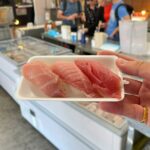
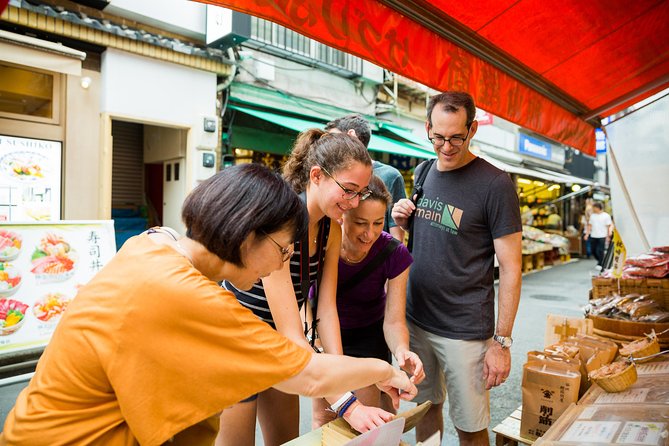
After the temple stop, the tour turns into a guided walk through the market streets where seafood is shown as a system, not just a product. You’ll visit the main fish market area and multiple connected zones, including the Jogai Market and Nippon Fish Port Market areas.
What you’ll learn to look for is the path from ocean to plate:
- how fish is presented and categorized
- how products are distributed and sold
- how sellers operate in tight spaces with strong routines
This is where a good guide pays off. Review highlights repeatedly mention guides pointing out smart food spots and explaining what you’re seeing. Names that came up include Monami (featured for insights on food choices and value), Ko (for clear explanations while guiding you between food areas), and Yuki (for explanations that made the whole market feel easier to understand).
A word on the market layout: you are touring the outer market side. The inner market moved to Toyosu in 2018, so you’re seeing the outer and mini wholesale areas as your main “Tsukiji market” experience. It’s still very much Tsukiji, but it won’t recreate the old inner-market vibe you may have seen in classic videos.
Tsukiji Jogai and the food-stall rhythm: what to expect and how to spend
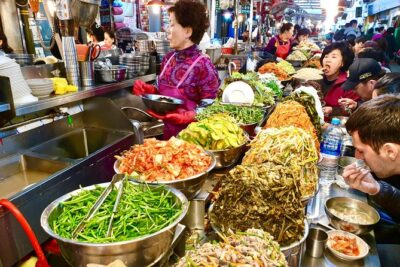
In the market portion, you’ll pass lots of small stalls and food counters. Even if you don’t eat everything, you’ll learn what ingredients are common and what tools locals use.
One reviewer specifically called out that the tour helped explain “mystery” ingredients and customs, which is exactly the kind of payoff I look for in markets. Instead of random browsing, you get a framework for what matters: freshness, handling, and how different vendors specialize.
Here’s the practical reality: extra food and drinks are not included. That means you’ll likely want cash or a payment method handy if you want street snacks. One review even advised bringing cash because you can easily spend as much on snacks as you spent on the class price. I’d treat it as optional, but very tempting.
The sushi lesson: nigiri basics taught by a pro
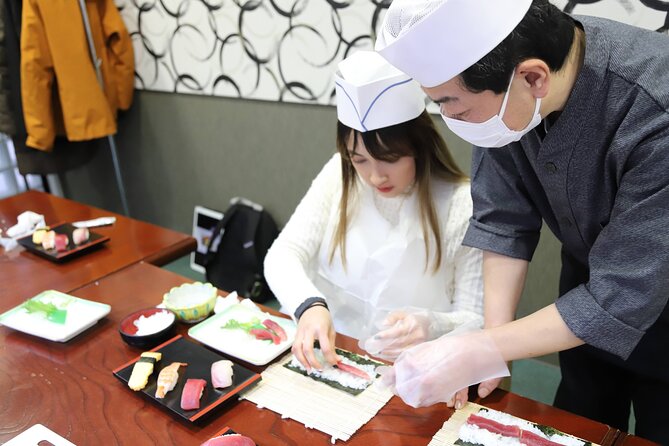
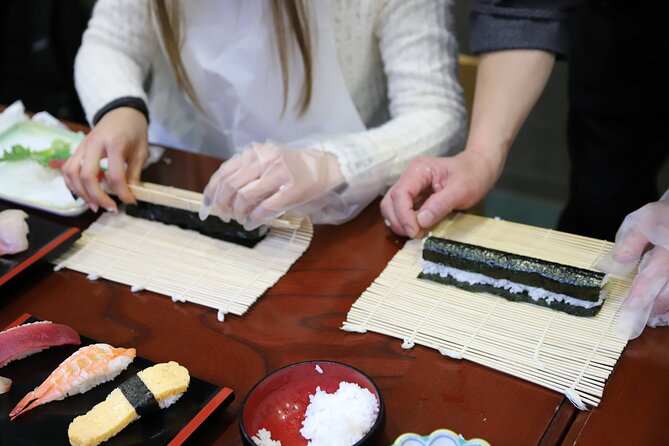
The sushi-making part happens in a classroom in the center of the market area, in a hidden local building style space. The setting is typically Japanese and not a big show kitchen. You’re learning in a working-classroom environment with the chef and step-by-step instruction.
You’ll learn to make five types of nigiri sushi and one rolled type. That’s a smart range for a single class: it covers the core idea (rice + topping balance, technique, and handling) without turning into a whole-day workshop.
In reviews, the chef’s demonstrations got high praise, including skill like deboning fish. One key detail I’d call out: even if you’ve eaten nigiri your whole life, this class teaches what makes it work—rice pressure, topping placement, and clean technique.
For language support, this experience has worked well in both Japanese and English formats depending on the venue. Multiple reviews praised English clarity, with names like Mari-san and Yuki mentioned for patient, clear guidance. Chef Kate also came up as a knowledgeable instructor who kept things interactive and easy to follow.
What you eat for lunch: your sushi, the chef’s sushi, and simple pairings
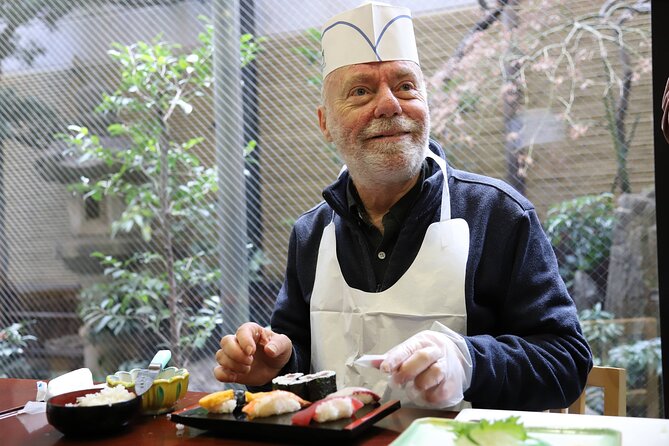
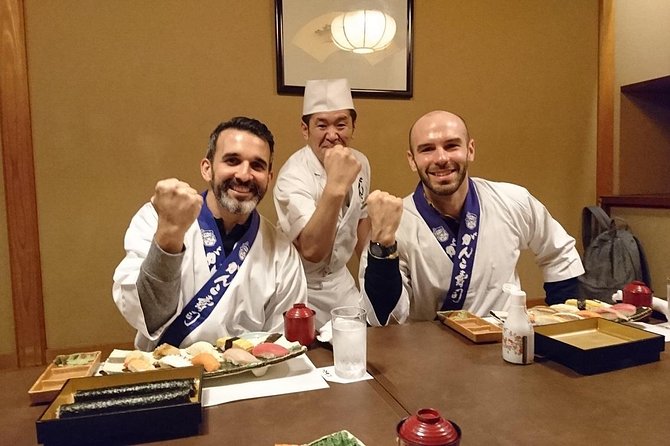
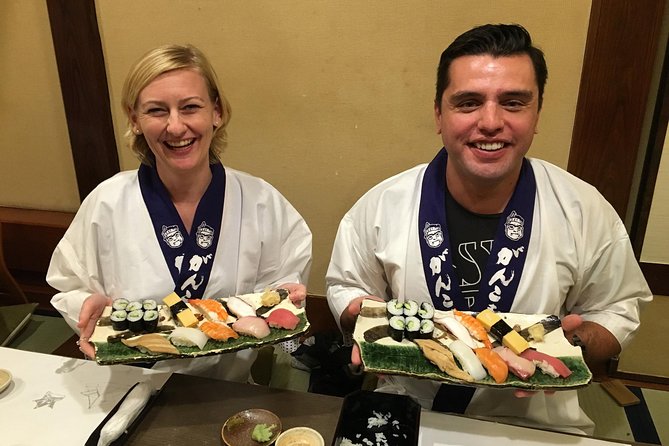
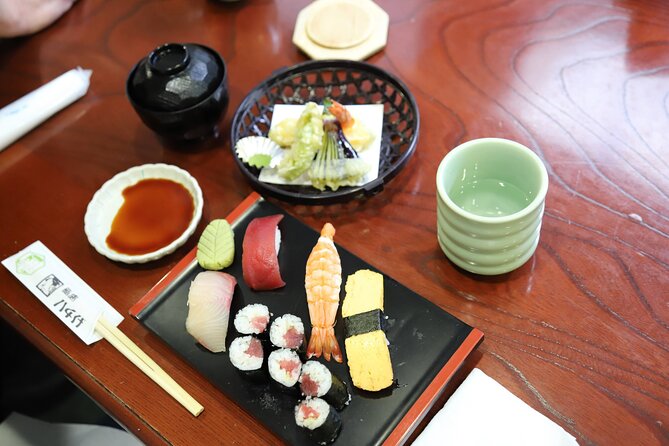
This is one of the most satisfying parts of the whole experience. After making your own sushi, you also get sushi from the sushi master—plus wasabi prepared in a fresh, expert way.
You’ll also have traditional dashi soup and green tea as pairings. That matters because sushi is not a standalone taste bomb. Dashi and tea help reset your palate and keep the meal from turning into only “salt + fish.” It’s practical, it’s traditional, and it makes the lunch feel complete.
Some reviews specifically mentioned cleanliness and fresh seafood, which can be a worry point for anyone concerned about hygiene in close quarters. If that’s you, this class format seems to put cleanliness and fresh handling front and center.




Price and logistics: what you’re paying for (and what you’re not)
At about $104.13 per person for a roughly 4-hour experience, you’re paying for two things:
- a guided walkthrough with cultural context across multiple market areas
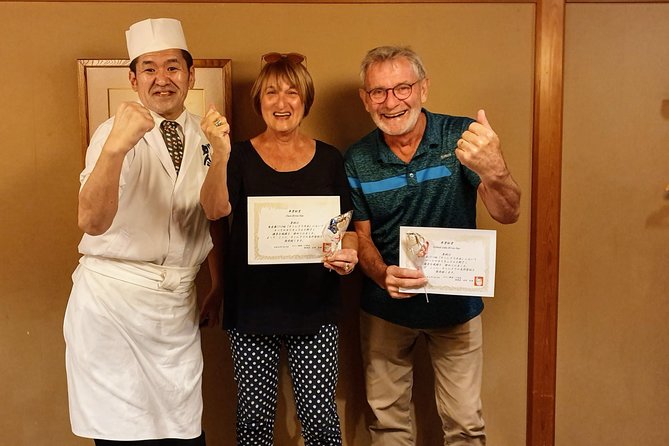
- a hands-on sushi class with a pro chef, where you make multiple nigiri types and eat lunch
You’re not paying for:
- hotel pickup/drop-off (not included)
- transportation
- tastings as part of the market price
- extra meals or drinks
That’s why reviews vary slightly in how people judge value. If your expectation is constant eating during the market portion, you may feel the price is higher than the food you sample. If your expectation is learning sushi skills plus getting lunch you made, the value tends to land closer to fair.
Also, group size is capped at 22, which helps. A small group can mean better attention in the classroom and less time waiting. But it still isn’t a private session, so you’ll be learning alongside other people at set times.
Timing, meeting point, and stairs: the stuff that affects your day
This tour is mostly walking, and the meeting point is specific: Tsukiji Honganji Temple’s main gate. Your guide will be holding a board with Japan Wonder Travel, and they will not wait if you’re late. I’d show up early, not just on time.
Footwear matters. You’ll want comfortable walking shoes because it’s a walking tour through tight market lanes and temple grounds.
Accessibility detail you should know up front: the sushi classroom is on the third floor of a traditional-style building with only stairs. If stairs are hard for you, this is a major decision point.
There’s one more timing detail: the sushi-making experience may be held in Asakusa or Yotsuya depending on venue availability. When that happens, the tour may end in those areas instead of at the original market location. Your end point can also be Tsukiji or Shinjuku depending on the date, and the organizer notes they can’t announce it in advance. If you have another plan right after, leave buffer time.
Who this Tsukiji sushi tour fits best
This is a great fit if you want:
- a first-time-friendly Tsukiji experience with a guide
- hands-on sushi skills you can repeat at home
- cultural context that starts at the temple and flows into seafood practice
- a lunch that’s actually part of the learning, not an afterthought
It also seems to work for families. Reviews mentioned doing it with teenagers, and the structure—market walk, then class—kept attention focused. If you like food but also want the “why,” this format helps.
When you might want a different tour
Choose carefully if any of these apply:
- You need vegetarian, halal, gluten-free, or kosher options. The experience explicitly does not accommodate those requests.
- You have allergies. They can try to accommodate based on your reservation notes, but they don’t promise everything can be safely handled.
- You expect heavy tasting during the market walk. Extra food isn’t included, and the class portion is where the meal value lands.
- You dislike group pacing. Some reviews mentioned group size can limit how much you sample freely in the market.
- You’re expecting the old-school inner market feel. This focuses on the outer market/mini wholesale side after the inner market moved to Toyosu.
Finally, check your day. The fish market (Uogashi wholesaler market) is closed on Wednesdays, Sundays, and other closed market days. If your travel dates hit a closure, the tour still runs, but the market rhythm can shift.
Should you book this Tsukiji guided tour and sushi class?
If your goal is to leave Tokyo with real sushi skills and a seafood story you understand—not just a market walk with random snacks—this booking makes sense. The combination of outer Tsukiji guidance plus a pro chef teaching multiple nigiri types is the core value, and the lunch format keeps it from feeling like you’re paying only for sightseeing.
I’d book it if you:
- want structure and context fast (in a few hours)
- are comfortable with stairs
- are okay with paying extra separately for street-food snacks if you want them
I’d skip or look for an alternative if you need strict dietary accommodations, want lots of included market tastings, or can’t manage the classroom climb.
FAQ
How long is the Tsukiji Fish Market guided tour and sushi-making class?
It runs about 4 hours.
Where is the meeting point?
Meet at the main gate of Tsukiji Honganji Temple (Tsukiji, Chuo City, Tokyo).
Is this tour mostly walking?
Yes. You’ll be walking through the market area and the stops, so wear comfortable walking shoes.
What parts of Tsukiji will you visit?
You’ll visit Tsukiji Honganji Temple, the Tsukiji Fish Market area, Tsukiji Jogai Market, and Tsukiji Nippon Fish Port Market.
What sushi will I learn to make?
You’ll learn to make 5 types of nigiri sushi and one rolled type.
Do I eat what I make?
Yes. After the sushi-making portion, you’ll enjoy your creations for lunch, along with sushi from the sushi master. Dashi soup and green tea are also provided.
Where is the sushi-making classroom located?
It’s in a Japanese traditional-style building in the market area, and it is on the third floor, with only stairs.
Are there vegetarian or dietary options?
Vegetarian, halal, gluten-free, and kosher requests are not accommodated. If you have allergies or restrictions, you can note them during booking; accommodation may be attempted but not guaranteed.
Is the market open every day?
The fish market (Uogashi wholesaler market) is closed on Wednesdays, Sundays, and other closed market days.
What if I cancel or arrive late?
You can cancel for a full refund up to 24 hours before the experience starts. If you arrive late, the tour cannot be extended, and no refunds are given for late arrivals on the day of the tour.