REVIEW · OSAKA
Osaka/Kyoto: Hiroshima Miyajima Bus Tour & Shinkansen Ticket
Book on GetYourGuide →Operated by H.I.S. Co Ltd(TIC) · Bookable on GetYourGuide
Nuclear memory, island beauty, all in one day. This nonstop-feeling itinerary strings together Hiroshima’s Peace Memorial Park, the Atomic Bomb Dome, a ferry glide to Miyajima, and the iconic shinkansen in one long day that still feels well-paced.
I like the way the tour builds emotion on purpose: you get the sobering Peace sites first, then you end with scenery at Itsukushima Shrine. I also love the practical rhythm—round-trip shinkansen from Kyoto or Shin-Osaka, air-conditioned bus transfers, and earphone guides so you can actually hear the story as you walk. One drawback: it’s a long day with lots of walking, and the museum time can feel short when you get there and the crowds kick in.
In This Review
- Key highlights you should care about
- A day trip that actually feels structured (even at 12 hours)
- From Kyoto or Shin-Osaka by shinkansen: the easy part of the journey
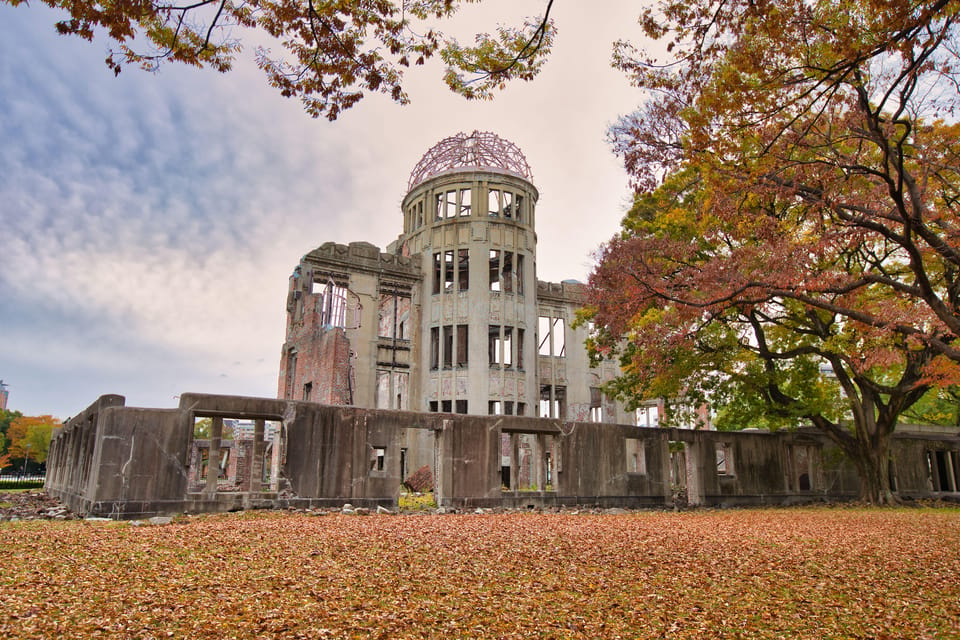
- Hiroshima Peace Memorial Park: walking into the Atomic Bomb Dome
- Peace Park timing, crowds, and why you still get the story
- Hiroshima okonomiyaki lunch: your most comforting “breather” of the day
- The drive to the ferry: quick views, no long detours
- Ferry ride to Miyajima and Itsukushima Shrine
- Miyajima free time: 60 minutes to choose your island vibe
- Group tour reality: earphones, meeting points, and how guides keep control
- Price and value: what $277 buys you in practice
- Who this tour fits best (and who should skip it)
- Should you book the Osaka/Kyoto to Hiroshima and Miyajima day tour?
- FAQ
- Where does the tour start from?
- How long is the tour?
- Is this a private tour?
- What’s included in the price?
- What are the lunch choices for dietary restrictions?
- What happens if the Hiroshima Peace Memorial Museum is closed?
- How much time do you get at the Atomic Bomb Dome and the museum?
- How much free time do you have on Miyajima?
- Are earphones provided?
- Is this tour wheelchair accessible?
Key highlights you should care about
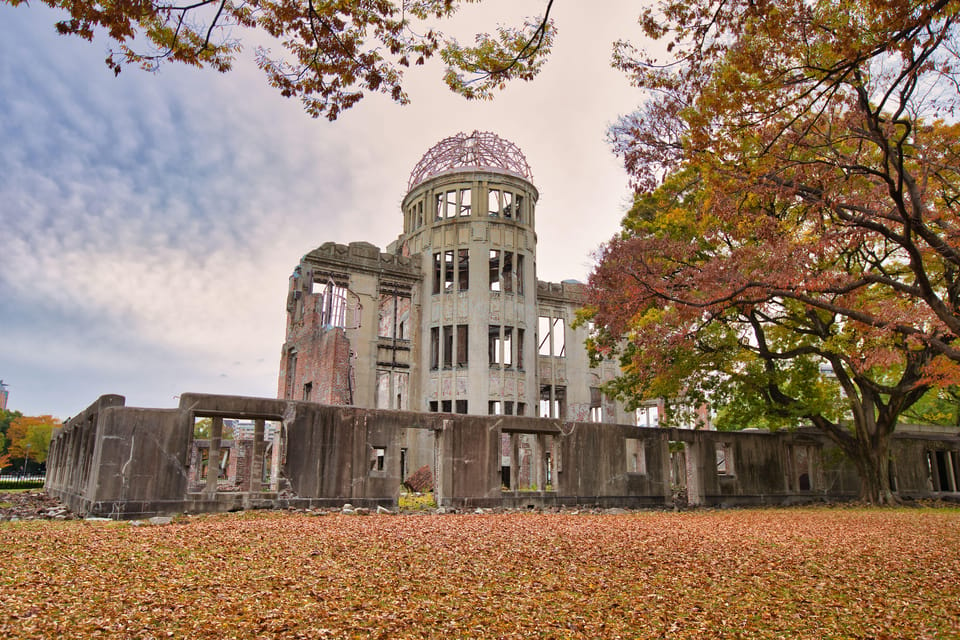
- Atomic Bomb Dome + Peace Memorial Museum built into one focused Hiroshima block
- Shinkansen comfort handling the long distance without stress
- Ferry to Miyajima for that slow, scenic reset after Hiroshima
- Itsukushima Shrine entry plus a full hour to wander the island on your own
- Hiroshima okonomiyaki lunch with real local toppings and set dietary options
- Tight timing with earphones so you don’t lose the group
A day trip that actually feels structured (even at 12 hours)
If you want Hiroshima and Miyajima but don’t have time for an overnight, this tour does the heavy lifting. The core idea is smart: you’re not trying to figure out trains, transfers, and ferry timetables. Instead, you follow a guide, ride scheduled transport, and hit the big targets with enough time to feel something—not just check boxes.
What makes it work is the internal order. You start with the Peace Memorial Park area and the Atomic Bomb Dome, which are heavy sights. Then you switch gears to the calm water and scenery of Miyajima. Reviews consistently call out that ending with the shrine and island feels like the right emotional pacing. You’re not forced to “cheer up” after the museum, but you do get a softer landing at the end of the day.
You can also read our reviews of more tours and experiences in Osaka.

From Kyoto or Shin-Osaka by shinkansen: the easy part of the journey
The day begins with a choice of starting points: Kyoto Station or Shin-Osaka Station. From there, you take the shinkansen to Hiroshima Station, about 1.5 hours. The tour staff gives you your round-trip shinkansen tickets at the meeting point, and then you meet your guide for a quick setup and safety briefing.
This is the portion I think you’ll appreciate most. You’re sitting comfortably while Japan’s fastest rail does the long jump for you. When you’re planning a full day with multiple moving parts, the worst thing is uncertainty. Here, the train segment is fixed and timed, which helps everything after it stay on track.
Hiroshima Peace Memorial Park: walking into the Atomic Bomb Dome
Once you arrive in Hiroshima, the bus takes you from the station area into the sights. On the way, you pass Hiroshima Castle on a scenic drive—good for getting a sense of the city—though it’s not a full stop.
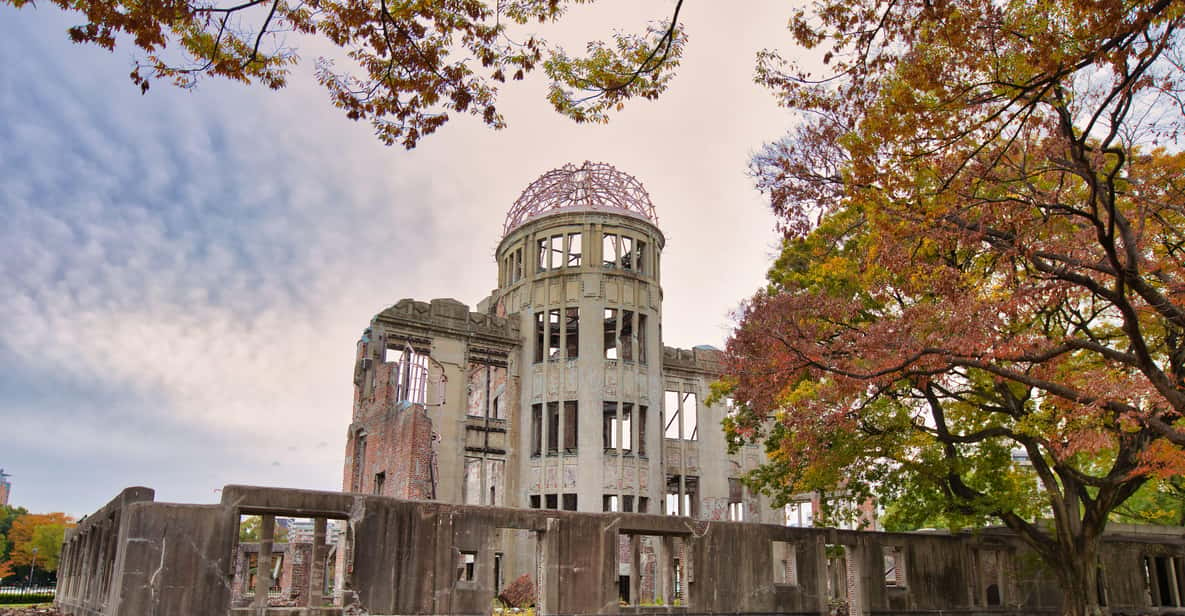
The first real stop is the Atomic Bomb Dome inside the Peace Memorial Park area. You’ll have around 30 minutes here. That half hour can feel short depending on your style, but it’s enough time to walk the perimeter area, take photos if you want, and look closely at the structure itself. The key point is not the photo. It’s the feeling you get when you see the dome’s damaged condition and realize it’s a preserved witness, not a rebuilt landmark.
Right after, you move to the Hiroshima Peace Memorial Museum for about one hour. This is the part that can overwhelm even if you’re prepared. The museum is busy, and one of the most common practical notes is that crowds can limit how much you can read. Still, the guided context helps. You’re not just wandering rooms; you’re learning what to look for as you go.
A small heads-up that matters: if the museum is closed on your date, the tour swaps to Hiroshima National Peace Memorial Hall for the Atomic Bomb Victims (the closure windows listed are Dec 30–31 and Feb 16–21).
Peace Park timing, crowds, and why you still get the story
The schedule is built like a steady line:
- Atomic Bomb Dome first
- Museum second
- Then lunch before the ferry
That ordering matters. If you hit the island first, you can end up feeling depressed at the end of the day. But with Hiroshima first, Miyajima becomes a reset rather than a contrast you can’t process.
The one thing to plan for is crowd pressure. The museum has heavy foot traffic, and even with guided movement, you’ll feel the density. If you’re the type who wants to read every panel carefully, give yourself permission to skim the hardest-hitting exhibits and focus on the main sections your guide points out.
Hiroshima okonomiyaki lunch: your most comforting “breather” of the day
Lunch is Hiroshima-style okonomiyaki, and it’s included. This isn’t generic “Japanese pancakes on the side.” The tour’s lunch is set up as a local experience with a set topping list: pork, cabbage, bean sprout, fish powder, noodles, and eggs. The plan also includes multiple dietary options you choose in advance:
- regular (with pork)
- no pork with eggs
- no pork, no fish powder, no eggs
If you have allergies or dietary restrictions, the important practical rule is this: inform the team in advance when you book. The tour notes that they can’t make menu changes on the day of the tour. One review detail worth factoring in is that some lunches are handled with separate preparation tools/utensils for allergy needs, which is a big deal when you’re cautious about cross-contact.
You’ll also be asked not to bring your own food and drinks into the restaurant. That sounds minor, but on a 12-hour day it can save you stress. You’ll want to bring water only if the day’s instructions allow it from the start, and otherwise trust the scheduled stops.

The drive to the ferry: quick views, no long detours
After lunch, you head back onto the bus for the transfer toward the ferry, about 30 minutes. The tour also includes a short scenic feel here without turning the day into a random city tour. This is where the tour’s “tight but not rushed” pacing shows up.
You don’t get long sightseeing breaks in between Hiroshima and Miyajima—you’re moving. The upside is that you still arrive at the island with enough time to enjoy it rather than spending your energy stuck in logistics.
Ferry ride to Miyajima and Itsukushima Shrine
Next comes the ferry ride, short but memorable: around 10 minutes each way. The ferry segment is one of those practical joys. You get a break from bus windows and you see the sea setting the tone for Miyajima.
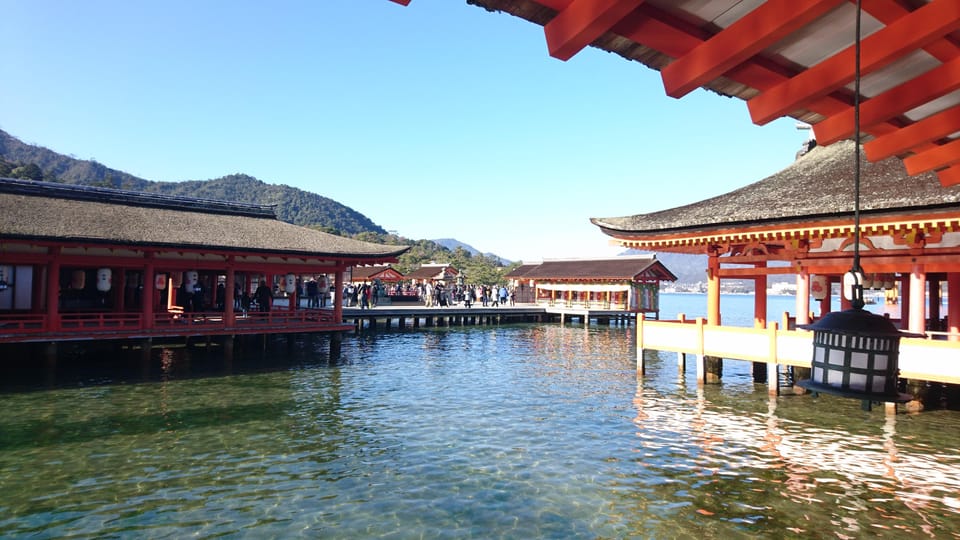
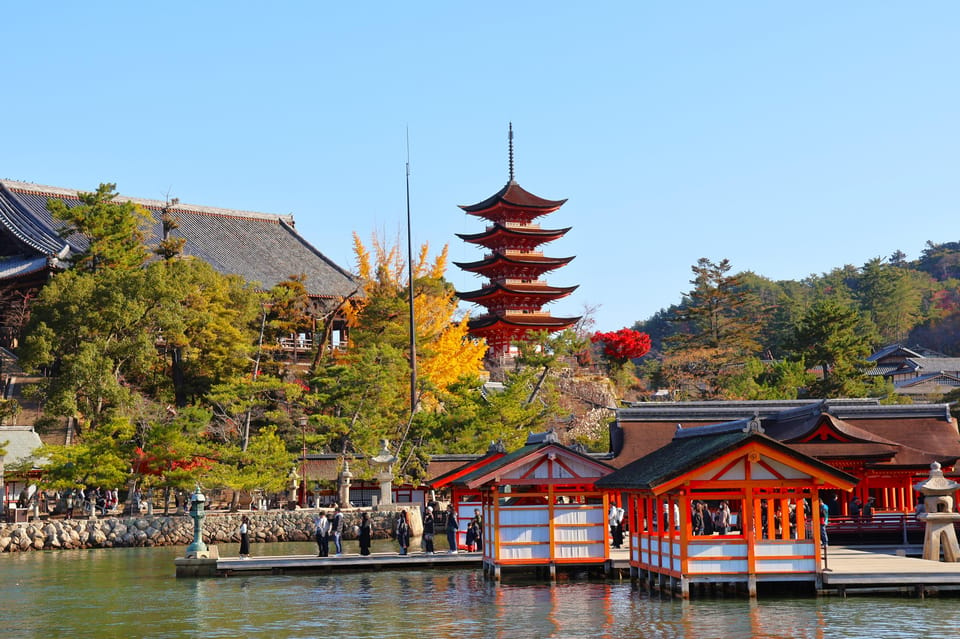
On Miyajima, your first major stop is Itsukushima Shrine. You’ll have around one hour for sightseeing, including the shrine grounds. This is where the scenery does a lot of emotional work. The shrine setting against the water is the classic reason people come, and the time slot is long enough to walk, take in the details, and get photos without the feeling that you’re sprinting.
If you like small “local character” details, Miyajima is also known for deer in the shrine area, and that tends to add a bit of quirky realism to your walk.
Miyajima free time: 60 minutes to choose your island vibe
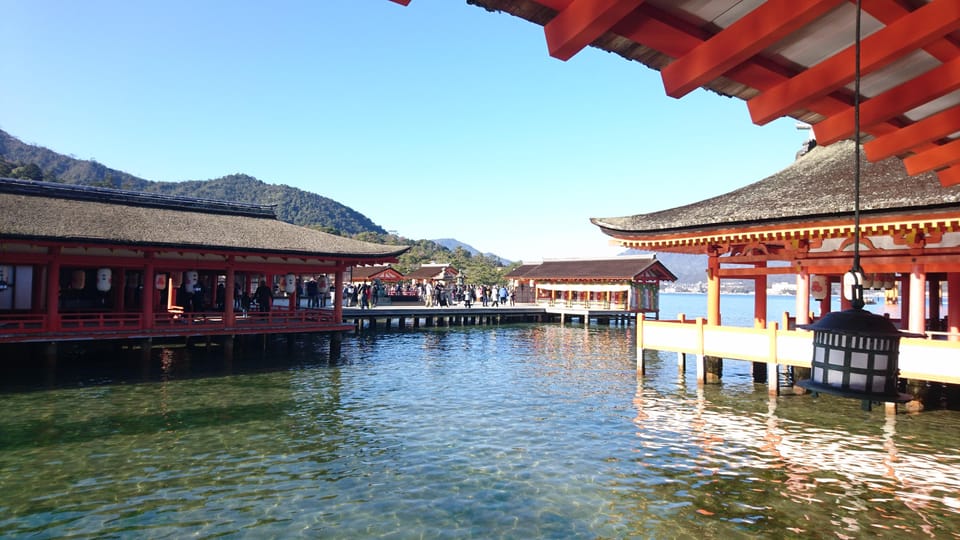
After Itsukushima Shrine, you get about one hour of free time on Miyajima. For many people, that sounds short—and it is. But it’s still useful if you plan your goals.
Here are the most sensible ways to spend it:
- Do the waterfront loop near the shrine area and soak up the views while it’s not your whole day
- Hit a couple of souvenir and snack stops, since Miyajima food streets can be tempting
- Walk toward nearby temples/pagodas if you want variety, but keep it realistic because your return timing is fixed
One review note I agree with logically: ending the guided portion with your own wandering time lets you choose the pace that fits your mood. If you feel like a slower wander, you can do that. If you want more active steps, you can add a short hike.
Group tour reality: earphones, meeting points, and how guides keep control
This is not a private tour. You’ll be in a shared group with other guests, so your day is managed for efficiency. That’s why it works, but it also means you’ll want to be ready to follow the group during transfers.
You’ll get earphone guides for convenience while you’re walking and inside places. They’re worth using. One practical policy detail: you’re expected to handle the earphones carefully and return them after use. If you lose or damage them, you may be asked to pay a replacement fee of up to 18,000 yen.
As for guides, this tour clearly attracts staff who bring the day to life. Names that show up in the guide rosters and are praised for delivery include Azusa, Yuki, Hiro, Kane, and Masahiko Joguchi (also called Joe). The pattern is consistent: humor plus clear explanations plus calm group control, even when Hiroshima and Miyajima are crowded.
Price and value: what $277 buys you in practice
At $277 per person for a roughly 12-hour day, the price is easier to understand if you break it into components.
You’re paying for:
- Round-trip shinkansen tickets from Kyoto or Shin-Osaka
- Round-trip bus transportation inside the Hiroshima area and back toward the station
- Entry tickets for Itsukushima Shrine and the Peace Memorial Museum (or the alternate memorial hall if needed)
- Round-trip ferry rides to Miyajima
- A live English guide
- Okonomiyaki lunch in Hiroshima style
If you tried to stitch this together on your own, you’d spend time coordinating train seats, transfers, ferry timing, museum entry, and restaurant logistics. The tour is built to remove that friction. That’s what you’re really buying: your day becomes predictable, and your brain stays on sightseeing instead of schedules.
Who this tour fits best (and who should skip it)
This tour is a great fit if you:
- Want Hiroshima and Miyajima in one go from Osaka or Kyoto
- Prefer guided structure over route-planning
- Enjoy history but also want a scenic, calming end to the day
- Value included transport and a set meal so the day stays smooth
It’s less ideal if you:
- Have trouble with walking. The tour itself warns that there’s a lot of walking and advises not booking if walking is an issue.
- Use a wheelchair. It’s not suitable for wheelchair users.
Should you book the Osaka/Kyoto to Hiroshima and Miyajima day tour?
Yes—if you want a low-stress way to see the big Hiroshima and Miyajima highlights in one day, this is an efficient choice. The biggest reason to book is the combination of shinkansen comfort, a guided Peace Park experience, a ferry break, and an island finale with Itsukushima Shrine—all handled for you.
I’d especially lean toward booking if you like the idea of a day where:
- Hiroshima hits first, with context
- Miyajima gives you space to breathe
- You still get a proper meal included, not just snacks on the run
Just go in with realistic expectations: it’s packed, the museum is likely crowded, and some stop times (like the Atomic Bomb Dome and Peace Museum) are shorter than you might wish. If you can accept that, you’ll get an unforgettable day with real meaning—and real scenic payoff.
FAQ
Where does the tour start from?
You can start from either Kyoto Station or Shin-Osaka Station (meeting point may vary depending on which option you booked).
How long is the tour?
The total duration is 12 hours.
Is this a private tour?
No, it’s not private. You’ll be with other guests in a shared group.
What’s included in the price?
It includes round-trip shinkansen tickets, round-trip air-conditioned bus transportation, Itsukushima Shrine entry, Hiroshima Peace Memorial Museum entry, round-trip Miyajima ferry ride, a local guide, and Hiroshima-style okonomiyaki lunch.
What are the lunch choices for dietary restrictions?
Lunch is Hiroshima-style okonomiyaki, with options including: regular (with pork), no pork with eggs, and no pork/no fish powder/no eggs. You should inform the team of allergies or dietary restrictions when booking.
What happens if the Hiroshima Peace Memorial Museum is closed?
If it’s closed, the tour visits Hiroshima National Peace Memorial Hall for the Atomic Bomb Victims instead (with listed closure dates of Dec 30–31 and Feb 16–21).
How much time do you get at the Atomic Bomb Dome and the museum?
You get about 30 minutes at the Atomic Bomb Dome and about one hour at the Peace Memorial Museum.
How much free time do you have on Miyajima?
You get about one hour of free time on Miyajima.
Are earphones provided?
Yes. Earphone guides are provided, and you need to return them after use. If they’re lost or damaged, a replacement fee of up to 18,000 yen may apply.
Is this tour wheelchair accessible?
No. The tour is not suitable for wheelchair users.