REVIEW · TOKYO
Tokyo After 5: Authentic Japanese Food & Drink Night Tour
Book on Viator →Operated by Intrepid Urban Adventures - Japan · Bookable on Viator
Tokyo at night tastes better with a plan. This Tokyo after 5 tour strings together real local stops in Ginza and nearby neighborhoods, so you get street life plus food you’d struggle to order on your own. You’ll also get the kind of guided context that makes the night feel like more than just eating.
I especially like the way you’ll watch and participate, not just sample. The monjayaki moment on Tsukishima Monja Street is hands-on and fun. One big consideration: this tour does not offer vegetarian, vegan, or gluten-free options, so you’ll need to be flexible with what’s on the menu.
In This Review
- Key things that make this tour work
- Night Walking With a Local Food Interpreter in Ginza
- Mitsukoshi Ginza and Wagashi: a sweet start right at 5+
- Ginza after 5: lights, a little shopping culture, and food context
- Tsukishima Monja Street: monjayaki on the grill, and why it matters
- Yurakucho Yakitori Alley: tare sauce, grilled skewers, and after-hours sipping
- Two included drinks: small cost, big mood
- Price and value: is $122.33 reasonable for this format?
- Guides, English levels, and what to expect from the human factor
- Walking, stairs, and staying comfortable at night
- Who should book this Tokyo after 5 food and drink tour?
- Quick FAQ
- FAQ
- How long is the Tokyo After 5 tour?
- Where do I meet the guide?
- Where does the tour end?
- How many people are in the group?
- What food is included?
- What drinks are included, and how do they handle alcohol age rules?
- Are dietary options like vegetarian, vegan, or gluten free available?
- Is public transportation included?
- Is a mobile ticket used?
- What happens if weather is bad?
- Should you book? My straight answer
Key things that make this tour work
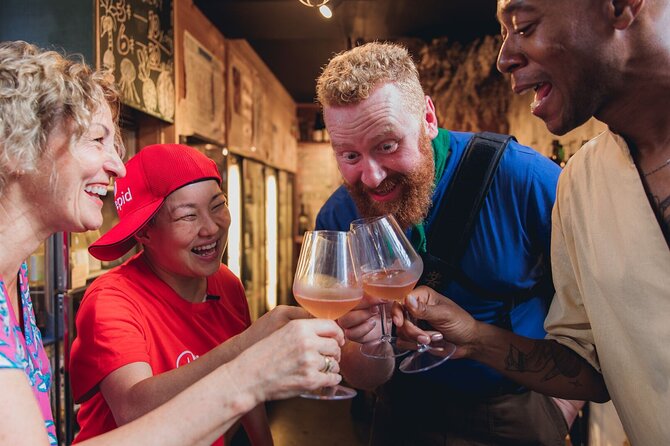
- Small group size (max 8) means you actually stay together and can ask questions as you go
- Two included drinks (sake/beer or a soft drink if you’re under 20) turns the night into a proper after-work hang
- Table grilling for monjayaki gives you a Tokyo-original food moment, not just another restaurant stop
- Local-run venues help you eat where locals go, not where menus are written for tourists
- Ginza-to-Tsukishima-to-Yurakucho routing uses public transport so you’re not guessing your way through Tokyo at night
Night Walking With a Local Food Interpreter in Ginza
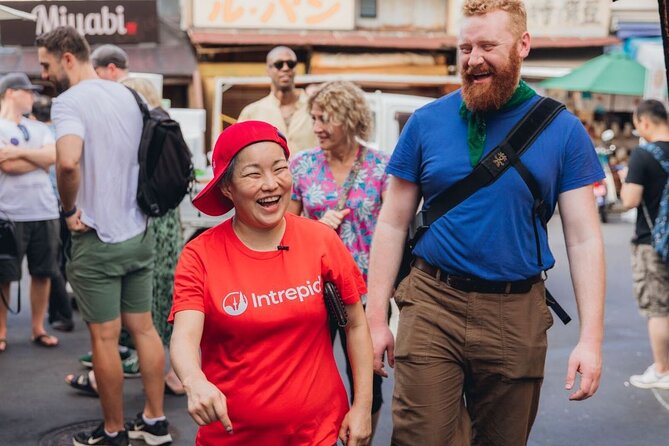
Tokyo after dark can feel both exciting and intimidating. The sidewalks are busy, the subway is a puzzle, and menus are sometimes more art than information. This tour solves a practical problem: it brings you to a handful of local spots with an English-speaking guide who helps you translate and understand what you’re eating.
I like that the pace is built for an evening. You’re not spending the whole night in one place. Instead, you’ll move through Ginza at golden-hour energy, then into neighborhoods where the mood changes—more casual, more loud, more live. That shift matters because it mirrors how Tokyo food culture works: department-store sweets during the early evening, then grilled comfort food when the city settles in.
A nice bonus is how the tour is structured around after-5 timing. The meeting point is in Ginza, a district that’s all lit-up luxury and big brand signage before dinner. Then the route heads toward places where small cooking and small bars do the heavy lifting.
You can also read our reviews of more tours and experiences in Tokyo.
Mitsukoshi Ginza and Wagashi: a sweet start right at 5+
The night begins at Mitsukoshi Ginza, right in front of the Lion statue facing Chuo Street. It’s a very obvious landmark, and that’s a big deal in Tokyo. You’re likely to find your way here even if you’re a little jet-lagged.
You’ll start with a short orientation period and a snack moment—wagashi, Japan’s traditional sweets. This is not just a sugary warm-up. It helps set the tone for the evening: Japanese food isn’t only about filling your stomach. It’s also about seasonality, texture, and careful presentation. Even if wagashi isn’t your thing, this first stop gives you a baseline for the rest of the night.
You might also notice that department stores feel extra tall and extra step-heavy at night. One review note I’d take seriously: stairs can be part of the experience. So if you’re carrying a heavy bag or have knee issues, pack light and plan for some vertical walking.
Ginza after 5: lights, a little shopping culture, and food context
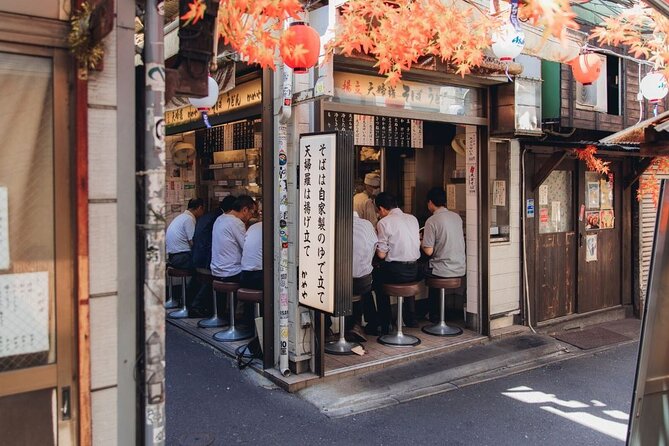
After your first snack, you’ll stroll through Ginza, the polished neighborhood where people do evening shopping and quick errands. The tour keeps this portion purposeful. You’re not just wandering for the sake of wandering—you’re getting context for how the area lives after work.
There may be a stop connected to the famous stationery scene at Itoya, a store that stationery lovers tend to treat like a destination. It’s a good pause because it breaks up the food focus for a few minutes, and it also gives you something to do if you’re traveling with someone who gets bored watching other people eat.
Here’s the practical value: Ginza is a place where you can easily get lost in plain sight. Streets are wide, signs are everywhere, and train entrances can look similar. Your guide helps you keep the route straight so you spend your energy on eating, not re-orienting.
Tsukishima Monja Street: monjayaki on the grill, and why it matters
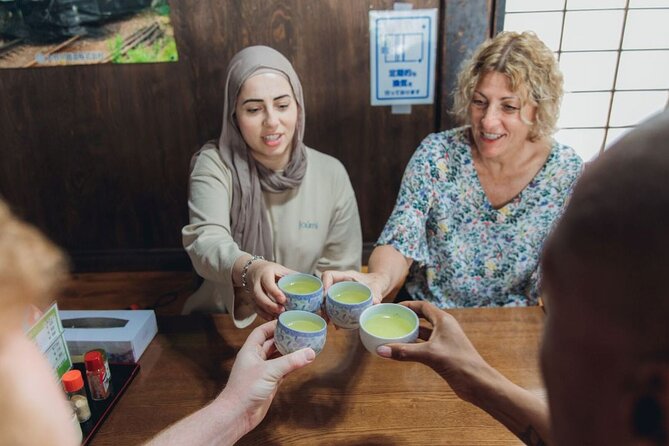
Then you’ll head to Tsukishima Monja Street, known for monjayaki, a Tokyo specialty sometimes described as a pan-fried pancake. This is the stop that most people remember, because it’s interactive.
At the grill, you’ll see the batter and toppings cooked right there, and the atmosphere is part of the food. The sizzling cooking changes how you experience the dish. You’re not waiting for plates to arrive in silence. You’re watching it happen while your guide explains what you’re looking at and why monjayaki has its own identity.
One of the most useful things your guide can do here is translate the menu logic. Japanese menus often assume local knowledge: terms for textures, sauces, and how spicy or mild something will be. With help, you’ll avoid ordering the wrong thing and you’ll understand the difference between a “similar looking” snack versus the real deal.
Now, a reality check. Monjayaki is cabbage-forward and works differently than Western-style pancakes. If you strongly dislike cabbage or wet, saucy textures, this is the moment that could test you. Most people enjoy it, but it’s not a safe pick if you’re picky about ingredients.
Yurakucho Yakitori Alley: tare sauce, grilled skewers, and after-hours sipping
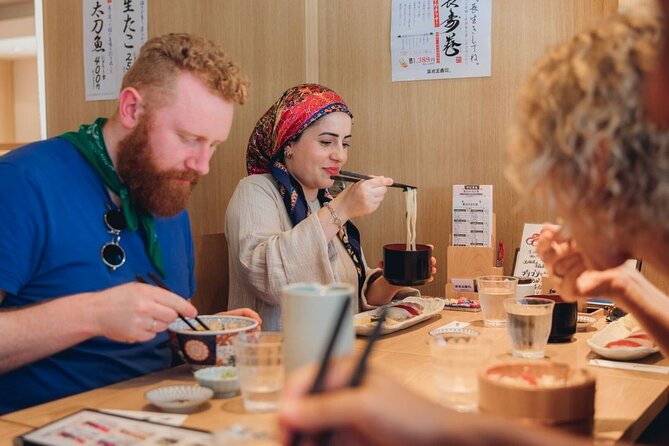
Your final eating stretch lands in Yurakucho, in an area tied to farm-to-table dining alley vibes and then finishing in Yakitori Alley. This is where the evening turns into the classic Tokyo izakaya rhythm: smoke, clinking glasses, and grilled aromas that pull you in before you even find the seat.
You’ll enjoy yakitori here, paired with sake or beer (two drinks are included overall). Yakitori is another good example of why this tour feels more authentic than a single-restaurant dinner. You’ll likely notice differences between places—especially around the sauce.
Those sauces matter. Many yakitori spots use tare-style sweetness and salt balance that can change the entire bite. Even if you think you already know yakitori, this is one of those foods where local technique and local sauce choices create variety.
Timing-wise, this stop also feels like the right kind of after-work winding down. You’ll be eating when the city is moving into evening mode—people are relaxing, not rushing home. That’s when grilled street-adjacent dining hits its best vibe.


Two included drinks: small cost, big mood
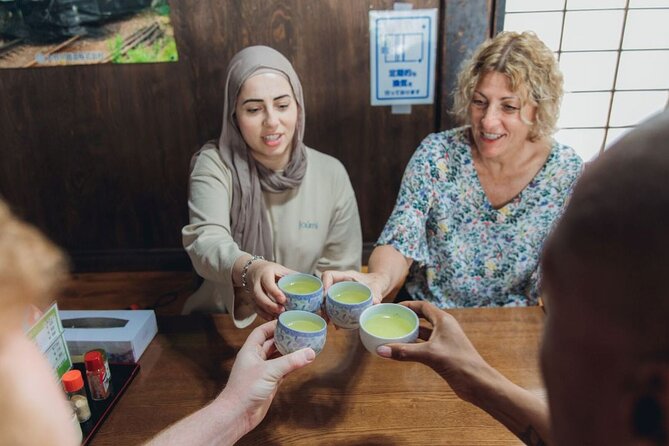
The tour includes two drinks. That alone can change the math of value. In Tokyo, you can easily spend a surprising amount on even a couple of basic drinks, especially if you’re not sure what to order.
For legal drinking, Tokyo’s rule is 20 years old. If you’re under 20, you’ll still get a non-alcoholic option instead. This is one of those details that makes the tour smoother, because the included-drink structure stays consistent.
Also, the included drinks are not just a perk. They act like a social bridge. When you’re sitting at small bars, it’s easier to chat with your guide and understand what you’re eating. The pace becomes less “tour stop checklist” and more “actually having fun.”
If your group is into sake, it’s worth paying attention to the way your guide explains it. Even when you don’t become a sake expert, you’ll start noticing the differences in how it’s poured and served, and what that signals about the bar’s style.
Price and value: is $122.33 reasonable for this format?
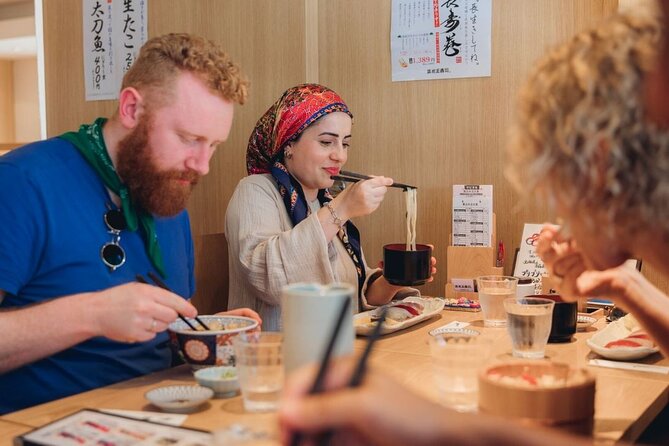
At $122.33 per person for about 3 hours 30 minutes, this tour is priced like an organized evening with real food and guided transport support. For Tokyo, that’s not unusual. The difference is what you get for the money.
You’re paying for:
- Three local food moments (wagashi, monjayaki, and yakitori)
- Two included drinks
- Two subway tickets
- A guide who helps with translation and food customs
- Entry into local-run venues and bar settings you might otherwise avoid
The value gets best when you’re the kind of traveler who wants to eat multiple things without turning it into a solo logistics project. If you’re comfortable navigating public transport and ordering Japanese food, you could do parts of this on your own. But doing all of it with a small group and a guide is what removes stress.
Where value can dip: if you hate monjayaki’s cabbage profile, or if your dietary needs are strict (this tour can’t do vegetarian, vegan, or gluten-free). In that case, you may feel like you’re paying for food you can’t fully enjoy.
Guides, English levels, and what to expect from the human factor
This kind of food tour lives or dies on the guide. The good news: many guides are praised for making the night smooth and fun, with strong explanations and helpful translation.
You’ll hear names like Yuko, Yuki, Mizuki, Shoehi, and Rocky. Some guests highlight Yuko’s ability to handle subway movement smoothly, and they also mention a fun sake-pouring style during the night. Others praise Mizuki for humor and for relating well to guests, and they credit Shoehi with a great, enjoyable experience. Rocky, for his part, is noted as fun and going above and beyond even early in his official guide role.
The other reality: English ability can vary from guide to guide. A few people felt the explanations were thin or hard to follow, and that affected how much they got out of the cultural context. So here’s my advice: don’t assume you’ll receive a detailed food lecture. Do expect menu help and basic food customs, but keep your expectations flexible.
Also, be okay with the fact that some evenings can feel like you get fewer than the planned variety of eating moments. In a small-group walking tour, small delays happen—subway timing, restaurant flow, elevator waits, or just the pace of the group. If you go in with an open mind and expect an evening out rather than a museum-style script, you’ll usually be happier.
Walking, stairs, and staying comfortable at night
The tour involves moderate walking, plus some vertical movement—especially around a department store start. Comfortable walking shoes are not a suggestion; they’re the difference between enjoying the night and thinking about your feet.
Also, you’ll use public transport, and you’ll likely be standing in busy areas. Pack light, keep your phone charged for your mobile ticket, and avoid anything that slows down the group when it’s time to move.
Finally, remember the pace is part of the experience. The point is to connect food with the neighborhoods where it belongs, which means movement is non-negotiable.
Who should book this Tokyo after 5 food and drink tour?
You’ll likely love this tour if you:
- Want three different Japanese food styles in one evening
- Enjoy trying unfamiliar snacks like monjayaki, not just the safest hits
- Like the idea of local-run bars and restaurants with English support
- Want a small-group night with two included drinks
You might skip or rethink it if you:
- Need vegetarian, vegan, or gluten-free meals
- Can’t stand cabbage-forward foods
- Expect a long, detailed cultural lecture in perfect English
- Are extremely sensitive to walking and steps
Quick FAQ
FAQ
How long is the Tokyo After 5 tour?
It runs for about 3 hours 30 minutes.
Where do I meet the guide?
You meet at Mitsukoshi Ginza, in front of the Lion statue facing Chuo Street.
Where does the tour end?
The tour ends at Ginza Station.
How many people are in the group?
Maximum group size is 8 travelers.
What food is included?
You’ll enjoy three local dishes: wagashi, monjayaki, and yakitori.
What drinks are included, and how do they handle alcohol age rules?
The tour includes two local drinks, such as sake or beer (or a soft drink for customers under 20). Tokyo’s legal drinking age is 20.
Are dietary options like vegetarian, vegan, or gluten free available?
No. The tour is not able to cater to vegetarian, vegan, or gluten-free needs.
Is public transportation included?
Yes. The tour includes subway tickets for the needed public transport.
Is a mobile ticket used?
Yes, the tour features a mobile ticket.
What happens if weather is bad?
This experience requires good weather. If it’s canceled due to poor weather, you’ll be offered a different date or a full refund.
Should you book? My straight answer
Book it if you want a Tokyo night that mixes food you can’t easily replicate solo with practical guidance through neighborhoods that make sense only once you’re there. The best parts are the hands-on monjayaki cooking and the way the ending yakitori-and-sake stretch turns into a real night out.
Pass if you need strict dietary accommodations or you’re not willing to try monjayaki’s cabbage-forward style. Also, be aware guide English and the exact number of eating moments can vary by evening—so go in hoping for a fun local food crawl, not a flawless step-by-step script. If you’re hungry and flexible, this is a strong pick for experiencing Tokyo after 5.