REVIEW · TOKYO
Tokyo: Asakusa Walking Tour with Sensoji Temple Visit
Book on GetYourGuide →Operated by Localized Walking & Food Tours · Bookable on GetYourGuide
Tokyo’s old-school soul is here. This 2-hour Asakusa walking tour pairs the big-name temple sites with nearby market streets, so you don’t just see Tokyo’s famous landmarks—you understand what you’re looking at. I especially like the way the route builds from the Thunder Gate into shopping lanes, and I also like that the guide makes the area feel practical, not like a museum. One thing to consider: it’s a tight walking loop, so you’ll want to keep up and be ready for crowds in the temple and shopping sections.
A good guide matters in Asakusa, and this tour often runs with friendly English-speaking locals such as Paulina, Keiko, Aya, Hiroko, and Loc. Expect explanations with humor, plus time for photos and a little breathing room once you’re inside Sensō-ji. Because you’re moving for the full 2 hours, the tour may feel less fun if you’re hoping for long, unhurried wandering on your own.
In This Review
- Why Asakusa feels like Old Tokyo
- Quick reasons this tour hits the mark
- Meeting at Kaminarimon: how the walk sets your tone
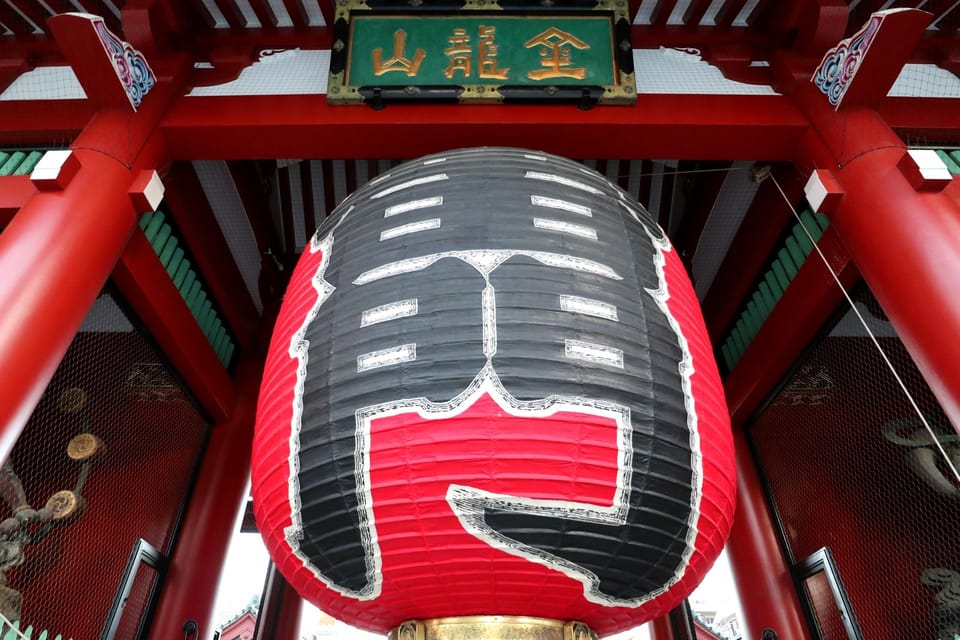
- Thunder Gate to Sensō-ji: what to notice beyond the big view
- Nakamise Shopping Street: shop streets with meaning
- Asakusa Shrine: the stop that rounds out the story
- Hoppy Street and Shin-Nakamise: variety in a short walk
- Azuma Bridge finish: turning the tour into your next plan
- Price and value: why $22 can be a smart spend
- The pace: comfortable, but not a sit-down tour
- Best moments to plan for (photos, incense, and crowd time)
- Who should book this Asakusa tour
- Should you book this Asakusa walking tour?
- FAQ
- Where do I meet the guide?
- How long is the tour?
- What sights are included?
- Is the tour in English?
- Is the tour wheelchair accessible?
- Can I get a refund if I cancel?
- Do I have to pay right away?
Why Asakusa feels like Old Tokyo
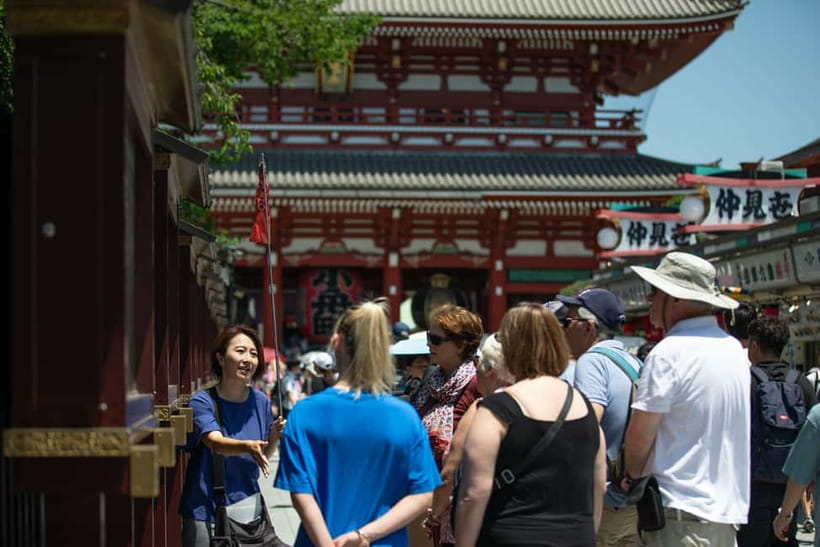
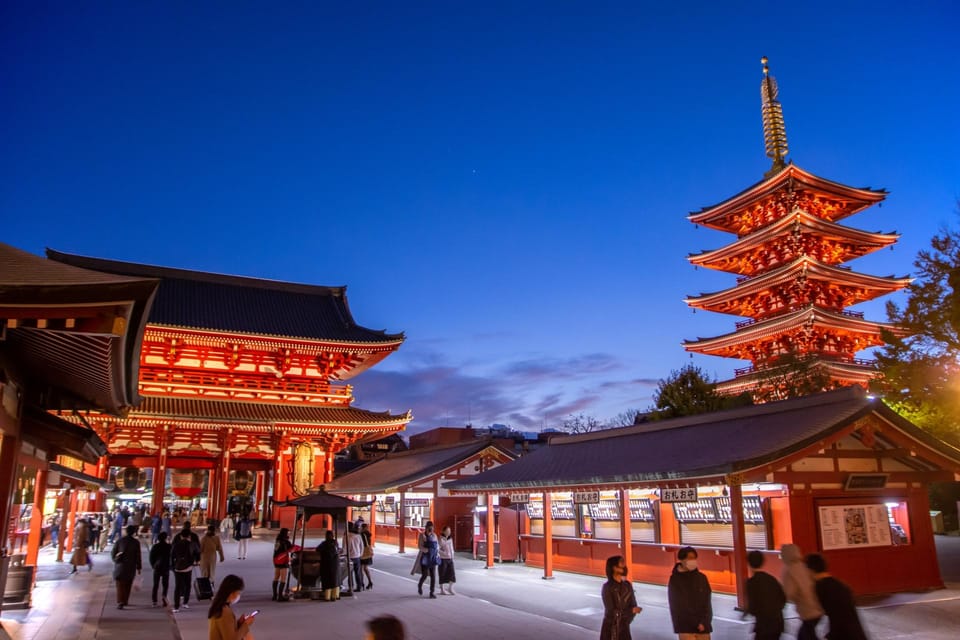
Asakusa is one of those places where Tokyo’s modern pace slows down just enough to feel human. The streets still give you that “everyday Tokyo” feeling, with shopfronts, snack counters, and temple-focused foot traffic all mixing together. And the heart of it is Sensō-ji (Asakusa Kannon), Tokyo’s long-established Buddhist sanctuary.
What makes this tour work is that it doesn’t treat Sensō-ji as a standalone stop. Instead, it links the temple to the commercial streets that historically fed travelers and locals alike. You get a sense of why this neighborhood became a destination, not just a backdrop for photos.
Quick reasons this tour hits the mark
- Thunder Gate orientation: You start at Kaminarimon, so you know how to read the temple complex from the first minute.
- Real ritual moments: You’ll be guided through what people do at the incense area, not just where to stand for a picture.
- Nakamise Street context: You walk the market lane with explanations that help you separate tourist souvenirs from everyday traditions.
- A shrine stop most people skip: Asakusa Shrine gets its own photo stop and guided look, so your visit feels fuller.
- Hoppy Street and Shin-Nakamise: You get extra variety beyond the main temple-and-shopping corridor.
- Finishes at Azuma Bridge: You leave with an easy next-step location for onward exploring or lunch nearby.
You can also read our reviews of more tours and experiences in Tokyo.
Meeting at Kaminarimon: how the walk sets your tone
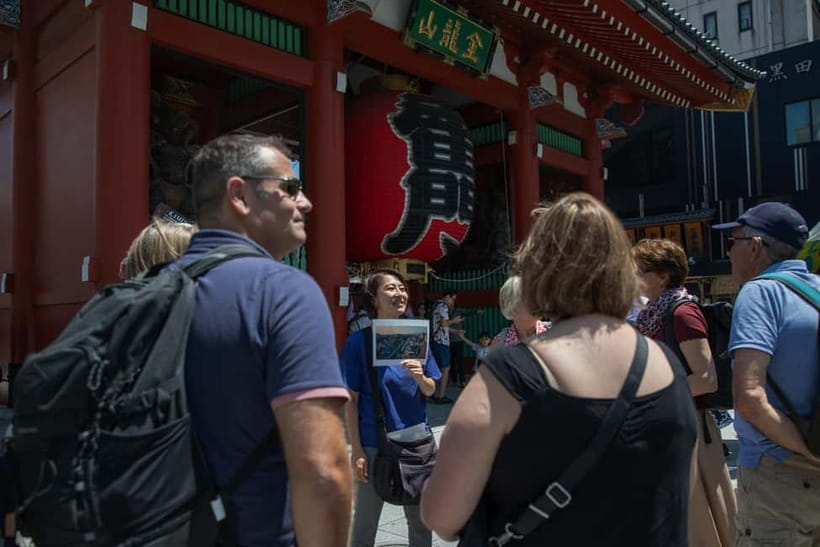
The tour meeting point is right in front of the Kaminarimon Gate, specifically on the left side near the Tokiwado Kaminari-okoshi Honpo shop. Your guide will hold a sign and is expecting you there—so arriving on time matters. In busy Asakusa, “five minutes late” can turn into “we’re lost in the crowd,” and the group has to keep moving.
Starting at Kaminarimon is smart. That gate is the visual cue that tells you you’ve reached the start of something significant. Instead of walking in blind, you begin with structure: you learn what you’re about to see, and you’re less likely to miss the details that make Sensō-ji feel special.
Thunder Gate to Sensō-ji: what to notice beyond the big view
You’ll spend time at Kaminarimon first, and then move toward Sensō-ji for a guided visit and photo stops. This part is where the tour earns its value because the guide helps you notice more than just the main buildings.
Here are the details you’ll want to keep an eye out for:
- The gate itself: Kaminarimon isn’t just an entrance. It’s a statement—big scale, strong symbolism, and a strong sense of arrival.
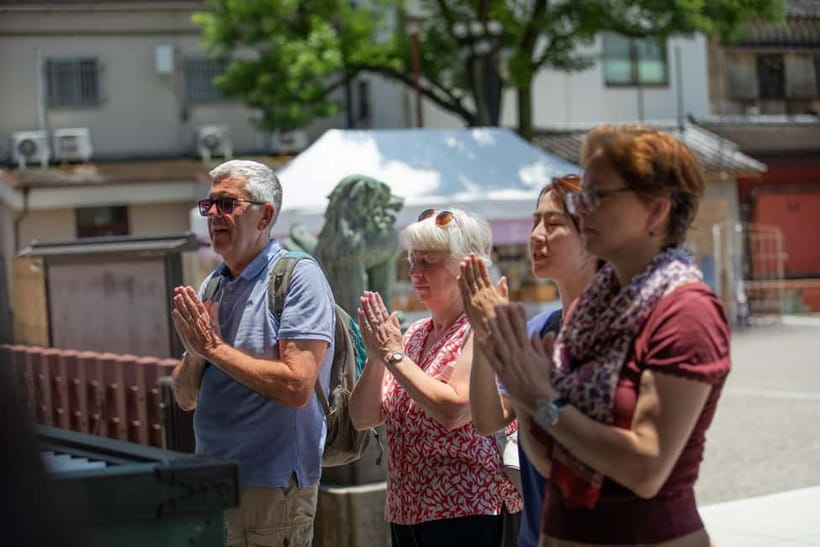
- Incense-burning rituals: The guide explains the meaning and the flow of what people do at the incense area. Even if you’re not sure how to participate, you’ll understand what you’re witnessing.
- Temple features at human pace: With a guide steering your attention, you don’t have to guess which carvings, statues, or architectural elements deserve your time.
Sensō-ji can be chaotic, especially when tour groups stack up and visitors fill the grounds. Having a guide helps you avoid the “stand still and hope” approach. You’re guided to key viewpoints, then you get time to look around and take photos on your own.
Nakamise Shopping Street: shop streets with meaning
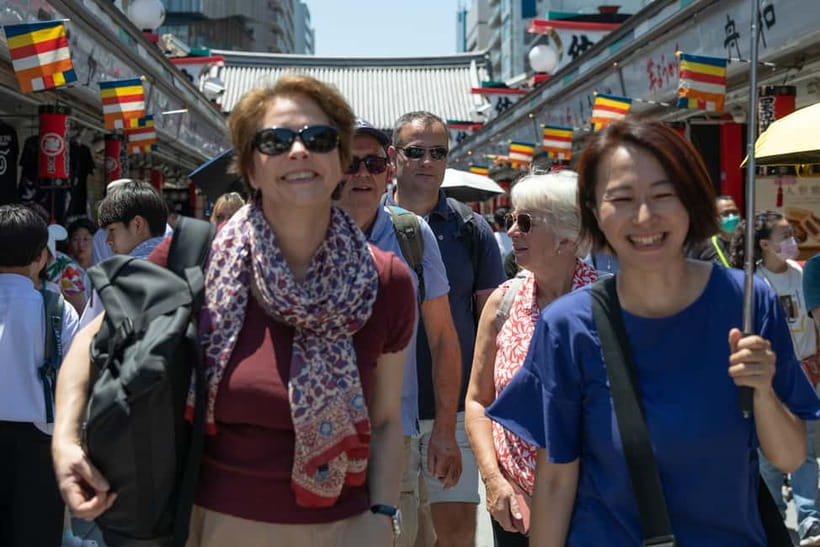
From the gate area you move into Nakamise Street, one of Japan’s older shopping lanes. This is where the tour shifts from spiritual landmark to daily-life Tokyo.
Nakamise is famous, but you’ll enjoy it more with context. You’ll get a guided look that helps you understand:
- Why this street exists where it does
- What kinds of shops and goods you’re seeing
- How the area’s “market rhythm” connects to temple visitors
This is also a great place to slow down for snacks and small buys. The tour itself is only a couple hours total, so you won’t have time to over-shop, but you can pick one or two items you’ll actually use or eat right away.
If you’re traveling with kids or teens, this is a high-interest section. Even some guides specifically tailor small comments for younger guests, which makes the walk feel less lecture-like and more like a shared adventure.
Asakusa Shrine: the stop that rounds out the story
After Nakamise, you’ll head to Asakusa Shrine for another photo stop and guided visit. This is important because it prevents your experience from being only Buddhist temple focus.
Think of it as a balance point: you see how the neighborhood’s spiritual life isn’t a single-note experience. A shrine visit also gives your feet a slight mental reset from the busiest temple corridors, while still staying close to the main action.
You’ll have the chance to orient yourself, take pictures, and learn what you’re looking at so the stop feels earned, not accidental.


Hoppy Street and Shin-Nakamise: variety in a short walk
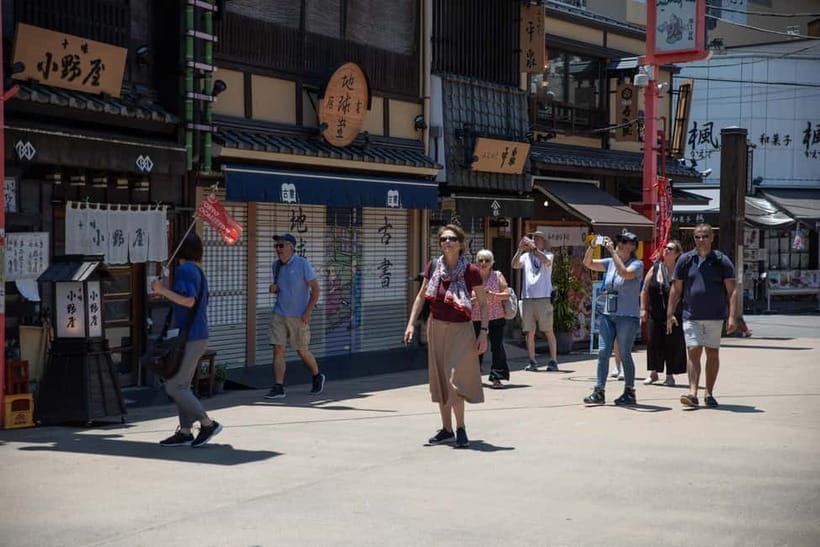
Most first-time visitors focus on the main temple frontage and Nakamise. This tour adds two extra flavor stops: Hoppy Street and Shin-Nakamise Shopping Street.
That matters more than it sounds. It’s easy to “do Asakusa” by hitting the headline sights. It’s harder to get a real feel for the neighborhood as a living place where locals shop, snack, and hang out between temple waves.
Hoppy Street is a quick guided visit, and Shin-Nakamise gives you a different texture from the main shopping stretch. You still get that traditional-market vibe, but it feels less like a single crowded bottleneck and more like a neighborhood corridor.
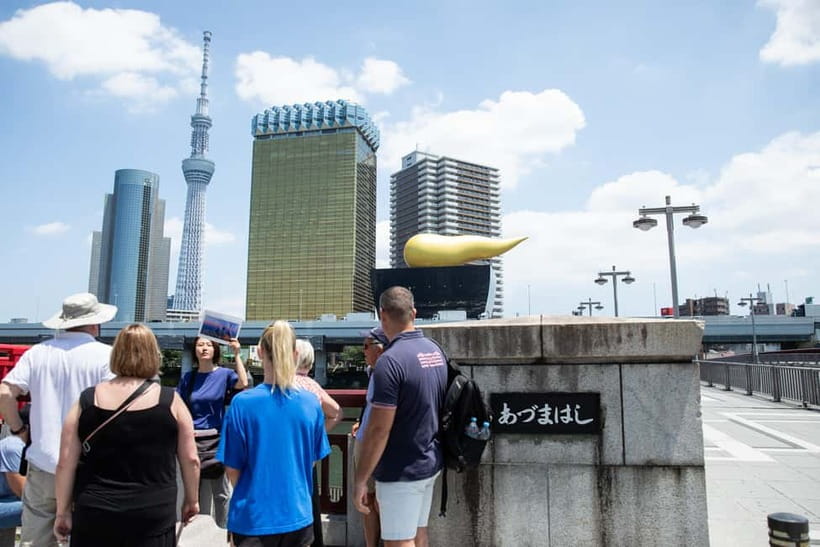
Azuma Bridge finish: turning the tour into your next plan
The tour ends at Azuma Bridge. That finish point is useful because it helps you transition smoothly into the next phase of your day without having to backtrack.
Once you’re done, you’ll be standing in an area where it’s easier to find direction—whether that means continuing along the river area, heading toward lunch, or adding one more sight before you move on.
Also, guides often share practical ideas at the end, such as where to eat nearby or what to do next. In this area, that advice can save you time because restaurant choices are everywhere, but good choices still require sorting.
Price and value: why $22 can be a smart spend
At $22 per person for a roughly 2-hour English guided walk, the price is less about “entry ticket value” and more about what you gain from a good guide.
Without a guide, you can absolutely wander Asakusa on your own. But you’ll spend more mental energy figuring out what’s meaningful. With a guide, you spend that time watching the rituals, understanding the landmarks, and learning what makes the market streets connect to the temple.
A couple practical value points:
- You get guidance at the moments when it’s hardest to read the scene (gate-to-temple, incense area, and the busy market sections).
- You get structure so you don’t waste your 2 hours circling the same crowd-dense spots.
- You get language support in English, plus explanations that help you ask better questions and take better photos.
For many people, that’s the whole deal: buying time and clarity at the same price as a couple of coffees.
The pace: comfortable, but not a sit-down tour
This is a walking tour, and it stays active. You’ll have photo stops and guided segments, plus a set free-time window at Sensō-ji where you can slow down. But you shouldn’t plan on a long, slow meander the whole time.
In practice, this type of pace works best when you’re:
- Curious about how places work, not just how they look
- Willing to walk steadily through crowds
- Interested in stories, rituals, and cultural context
If you prefer very slow sightseeing or lots of independent wandering, this may feel a bit structured. Still, the free time at Sensō-ji helps, and ending at Azuma Bridge makes it easy to keep your day flexible after the tour.
Best moments to plan for (photos, incense, and crowd time)
Here’s how I’d approach your camera and your curiosity in this area, based on how this tour is typically paced:
- Kaminarimon photos: Get oriented first. Once you know where the gate frames the entrance, your shots get easier.
- Incense area: Watch what people do for a few seconds before stepping in. If you want to participate, you’ll feel less awkward when you understand the sequence.
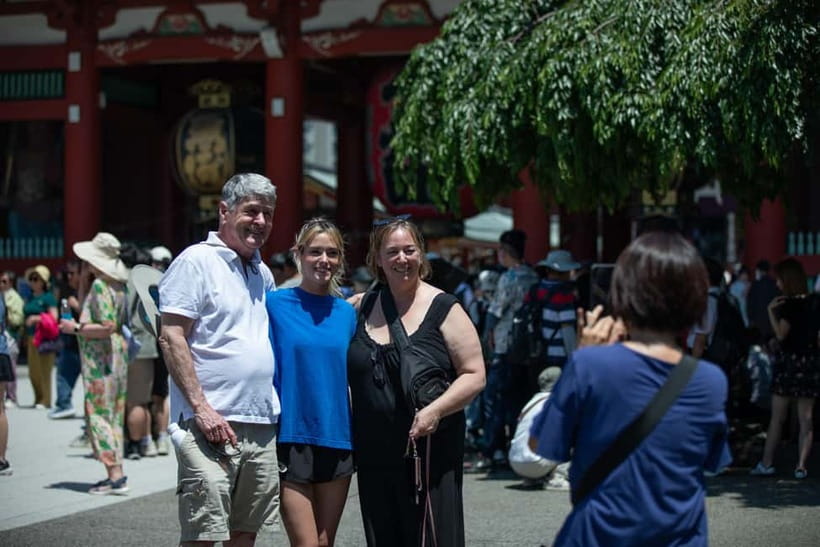
- Sensō-ji free time: Use it for photos and quiet looking. Don’t let the shopping noise pull you away too quickly.
- Nakamise Street: If you plan to buy snacks or small souvenirs, keep your spending light. This is where the tempting pile-up happens.
Crowds are part of Asakusa’s charm, but they can also steal focus. A guide helps you cut through that, and the route keeps you from losing the thread.
Who should book this Asakusa tour
This tour is a great fit if you want:
- A high-quality intro to Asakusa’s top sights in a short time
- English explanations with real context, guided by locals like Paulina, Keiko, Hiroko, Aya, Loc, and others you may be paired with
- A balanced plan that mixes temple, shrine, and market streets
It’s also a solid choice for families because the pacing is manageable and the focus is often on making the sights understandable for different ages.
If you already know a lot about Japanese religion and temple architecture, you’ll still likely enjoy the market and shrine additions. But you might find you want more time per stop. In that case, pair this with one extra independent hour after the tour.
Should you book this Asakusa walking tour?
I’d book it if you’re the kind of traveler who likes to understand what you’re seeing. Starting at Kaminarimon, getting guided context for Sensō-ji and incense, and then walking Nakamise with meaning is a smart way to get more from less time.
I’d skip it only if you strongly prefer a totally self-guided day and you’re happy to research on your own at each stop. Otherwise, the $22 price is usually a good deal for the clarity you gain in a crowded, high-interest area.
If you can, arrive a little early so you’re not stressed at the meeting point. Asakusa rewards a calm start.
FAQ
Where do I meet the guide?
Meet in front of the Kaminarimon Gate on the left side. It’s near the Tokiwado Kaminari-okoshi Honpo shop, and the guide will be holding a sign for the tour.
How long is the tour?
The tour lasts 2 hours.
What sights are included?
You’ll visit Kaminarimon, Nakamise Shopping Street, Sensō-ji Temple, Asakusa Shrine, Hoppy Street, and Shin-Nakamise Shopping Street, finishing at Azuma Bridge.
Is the tour in English?
Yes. The live tour guide speaks English.
Is the tour wheelchair accessible?
Yes, it’s listed as wheelchair accessible.
Can I get a refund if I cancel?
Free cancellation is available up to 24 hours in advance for a full refund.
Do I have to pay right away?
No. You can reserve now and pay later to keep your plans flexible.