REVIEW · TOKYO
Tokyo Castle & Imperial PalaceーShogun Walking Tour
Book on Viator →Operated by Local Guide Stars · Bookable on Viator
Samurai defense lines still shape Tokyo. I really like the small-group size and the stop-by-stop way the guide explains what you’re seeing around the Imperial Palace. You get Edo Castle security logic, Japan’s 2,600-year imperial story, and a peaceful garden break—without turning it into a lecture.
This is also a great value because the route focuses on outdoor, historically meaningful spots you might walk past on your own. The pace fits a quick first visit, and you’ll leave with a clearer sense of how shogun-era protection worked.
One heads-up: you will walk and there are steep slopes and stairs, plus a security check near the palace grounds. Wear comfy shoes and bring a little patience for lines.
In This Review
- Key highlights worth showing up for
- Guard towers, gates, and the shogun-era logic you can see
- Meeting at Starbucks Kokyo Gaien and how the 2-hour format works
- Stop 1: Sakurada Tatsumi Yagura turret and the security you can spot
- Stops 2–6: Kokyo Otemon Gate and the guardhouse line-up
- Stop 2: Kokyo Otemon Gate (the shogun-protection moment)
- Stop 3: Constable Guardhouse (lower-ranking samurai, specific duty)
- Stop 4: Hyakunin Bansho Guardhouse (a bigger station, a bigger job)
- Stop 5: Obansho Guardhouse (higher rank, closer to the inner gate)
- Stop 6: Fujimi-yagura watchtower (what it lets you see)
- Stop 7: Kokyo Sannomaru Shozokan scale model and palace souvenir time
- Stop 8: East Gardens and the former main tower ruin
- Stop 9: Ninomaru Garden koi pond and seasonal plants
- The finish: ginkgo-lined avenue near Tokyo Station
- Price and value: $23.88 for a 2-hour guided story on real ground
- English-only touring and the security check you should plan for
- Who this tour suits best
- Should you book the Tokyo Castle & Imperial Palace Shogun Walk?
- FAQ
- How long is the Tokyo Castle & Imperial Palace – Shogun Walking Tour?
- What group size should I expect?
- Is the tour offered in English?
- Where does the tour meet?
- Do I get a ticket on my phone?
- Are there admission tickets for the stops?
- Is the Emperor’s residence open during the tour?
- Is there a security check?
- How much walking and stairs are involved?
- Is free cancellation available?
Key highlights worth showing up for
- Up to 10 people on your walk, so questions don’t get lost
- Edo Castle defense design, explained through towers and multiple guardhouses
- Real Imperial Palace area viewing, including gates, ruins, and garden stops
- Seasonal garden time at Ninomaru with koi, plus a calmer moment near the pond
- Strong guiding style: names like K, Ai, Keiko, Tomo, and Shin are repeatedly praised for clear, fun storytelling
Guard towers, gates, and the shogun-era logic you can see
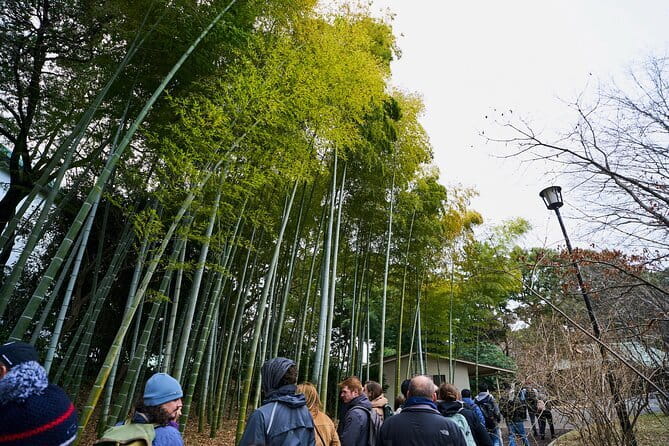
Tokyo’s Imperial Palace grounds look calm now. But this area once mattered for survival. The tour’s big idea is simple: Edo Castle was Japan’s largest fortress, and it wasn’t “just big”—it was hard to penetrate. As you walk from point to point, you start noticing how the terrain and architecture work together.
You’ll also hear how the samurai fit into this system. Not just the dramatic image—real roles, rank, and why certain buildings were placed where they were. It helps you understand the shogun era as a functional machine, not just a set of costumes.
And yes, you get the broader frame too: Japan’s imperial system is described as a legacy of about 2,600 years. The guide connects that long timeline to what the shogun era was doing practically around the palace grounds.
You can also read our reviews of more tours and experiences in Tokyo.


Meeting at Starbucks Kokyo Gaien and how the 2-hour format works
You start at Starbucks Coffee in Kokyo Gaien Wadakura Fountain Park (3-1 Kōkyogaien, Chiyoda City). It’s an easy landmark and near public transportation, which matters in Tokyo when you’re trying to avoid “where exactly is that?” stress.
The tour runs about 2 hours and stays small. The operator lists a maximum of 60 travelers for the overall activity, but the experience is described as a small group of up to 10. In practice, that usually means your guide can keep the group together and still answer questions.
Plan for walking. The route includes steep slopes and stairs, and it’s outdoors for much of the time. If you’re visiting in hot weather, do what the reviews suggest and come ready—hat or umbrella, water, and comfortable shoes. Some guides have been known to hand out small comfort items on tough days (like sweets or menthol napkins), but don’t assume it will happen every time.
Timing also helps: there’s typically a natural pace break around the halfway mark. That keeps the walk from feeling like nonstop marching.
Stop 1: Sakurada Tatsumi Yagura turret and the security you can spot
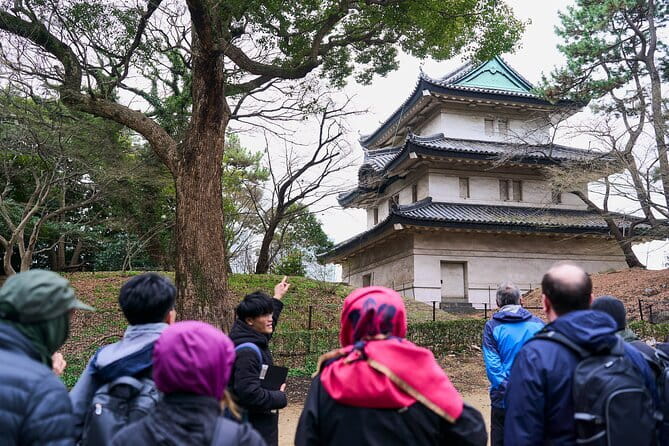
Your first stop is Sakurada Tatsumi Yagura. This is a surviving Edo-period turret—one of those rare things that lets you see “then” without needing special effects.
The key value here is the explanation of security systems that still protect the Imperial Palace today. You’ll learn to look past the tourist view and notice defensive thinking: sightlines, layered protection, and why even a single structure can signal a whole strategy.
This stop is also short (about 20 minutes) and mostly outdoors. It’s a good warm-up because it gives you language for the rest of the walk. Once you understand what you’re looking for, the later gates and guardhouses make more sense.
Stops 2–6: Kokyo Otemon Gate and the guardhouse line-up
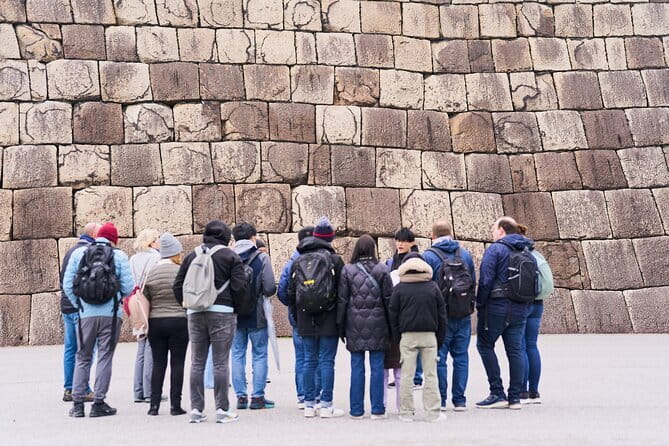
This is the heart of the tour—the part where the guide turns architecture into a story about power and protection.
Stop 2: Kokyo Otemon Gate (the shogun-protection moment)
At Kokyo Otemon Gate, you’ll see two massive gates and stone walls from the original castle. The tour focuses on how design choices supported defense and helped protect the shogun.
Gates in old fortresses weren’t just entrances. They were bottlenecks, control points, and places where defenders could respond effectively. When your guide explains the layout logic, the sight stops being random walls and becomes a sequence.





Stop 3: Constable Guardhouse (lower-ranking samurai, specific duty)
Next is the Constable Guardhouse. This spot was used by lower-ranking samurai, and the tour breaks down who they were and why this location mattered.
Even if you know the headline idea of “samurai guarded the castle,” this part adds the missing detail: roles weren’t identical. Rank influenced duty, positioning, and responsibilities.
Stop 4: Hyakunin Bansho Guardhouse (a bigger station, a bigger job)
Hyakunin Bansho Guardhouse is where many samurai were stationed. Here, the focus is their role in castle security—again, less romance and more function.
This stop is powerful because it shows how fortress defense was built from many layers of people. Big security didn’t happen through one legendary hero. It happened through organized presence.
Stop 5: Obansho Guardhouse (higher rank, closer to the inner gate)
At Obansho Guardhouse, the tour shifts to higher-ranking samurai and their duties. It’s near the inner gate, so the explanation emphasizes why proximity and access control were so important.
You’ll start to see the “hierarchy map” of the defenses: where different ranks stood and why that location mattered. If you like history that connects to real geography, this is one of the most rewarding stretches.
Stop 6: Fujimi-yagura watchtower (what it lets you see)
Fujimi-yagura is an old watchtower with views over the area. The guide explains its role and what made it special in the past.
Even from an outside viewpoint, this stop helps you visualize how defenders monitored movement. Watchtowers were early warning systems. The story here is about information—seeing first, reacting second.
Stop 7: Kokyo Sannomaru Shozokan scale model and palace souvenir time
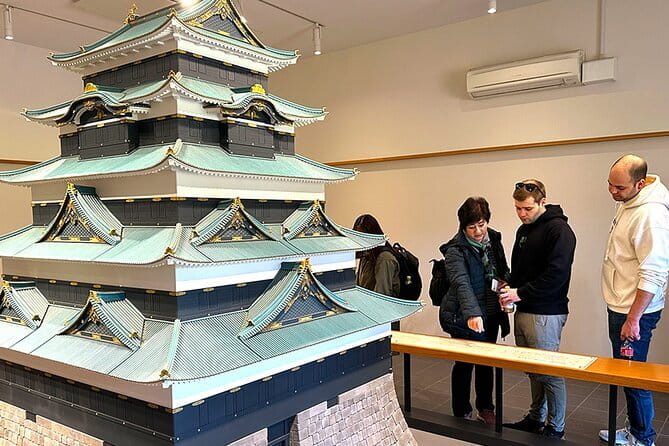
Then you move to Kokyo Sannomaru Shozokan. You can see a scale model of the former Edo Castle, which is a big “aha” moment after all the walking.
This model helps connect the dots between the gates, walls, guardhouses, and towers you just saw. Without that, you might appreciate the buildings individually but still feel like the overall defensive system is vague.
You also get a souvenir shop with palace-related goods. If you want something small and meaningful (not just a generic magnet), this is a sensible place to browse before the tour shifts back into gardens.
Stop 8: East Gardens and the former main tower ruin

The East Gardens of the Imperial Palace include the Edo Castle Ruin area—the former site of the main tower. This is where the tour talks about why it’s no longer standing and what remains today.
This stop can feel a little bittersweet. Big structures are often gone, yet the defensive layout still influences the grounds. The guide’s job is to help you “read” what’s left and understand what the missing piece would have meant.
It’s also a good mental reset. After defense-heavy stops, you get a softer pace and the sense of scale—this is a fortress history that has been reshaped into a park-like setting.
Stop 9: Ninomaru Garden koi pond and seasonal plants
Finally, you reach Ninomaru Garden. The tour describes it as a traditional Japanese garden with seasonal plants and a pond with koi.
This is where the experience balances out. If you came for samurai and Edo Castle, you still get that background. But here you also get a quiet moment that makes the whole story stick. Garden time gives your brain a breather and helps you appreciate why the grounds still feel special.
The best approach: don’t rush photos. Spend a couple minutes just scanning the pond area and the plant layout. Even without perfect timing for peak season, the structure and calm give you a better feeling for the space.
The finish: ginkgo-lined avenue near Tokyo Station
You wrap up in front of a ginkgo-lined avenue stretching out before Tokyo Station. It’s a smart ending point in terms of logistics—you can keep exploring Tokyo without backtracking far.
Also, ginkgo trees are one of those Tokyo details that makes the city feel like itself. Ending with that kind of visual gives you a clean “thank you, now go enjoy the rest of your day” vibe.
Price and value: $23.88 for a 2-hour guided story on real ground
At $23.88 per person for an approximately 2-hour walk, this is one of the more budget-friendly ways to get deep meaning from the Imperial Palace grounds.
Here’s why it feels like value:
- You’re not paying for transportation or museum entry in the typical sense. Most stops are essentially guided viewing of outdoor historic features.
- The guide turns what could be “pretty walls and gates” into a connected explanation of defense and rank.
- With a small group size (up to 10), you aren’t stuck watching a screen while other people ask questions.
If you love history but hate feeling lost, the guide bridges the gap between “seeing” and “understanding.” And if you’re visiting Tokyo for the first time, this tour gives you context fast—Edo Castle and the shogun era become less abstract.
English-only touring and the security check you should plan for
This tour is conducted in English only. Japanese language support isn’t available, so if you’re depending on translation, you’ll want to consider that.
You should also plan for a security check to enter the Imperial Palace grounds. Don’t bring knives or alcohol. That’s a simple rule, but it’s important because it can affect what you can carry in your day bag.
One more key detail: the Emperor’s residence is not open to the public, so don’t expect palace residence viewing beyond the areas that are open for visitors.
Who this tour suits best
This is a strong fit if:
- You want a compact introduction to the Edo Castle system and how samurai roles connect to the grounds
- You like guided explanations that help you interpret gates, walls, towers, and guardhouses
- You prefer small-group walking tours over big bus crowds
It may not be your best match if:
- You hate stairs and steep slopes
- You need a mostly indoor experience (this is largely outdoor viewing)
- You expect access to the Emperor’s residence itself
Should you book the Tokyo Castle & Imperial Palace Shogun Walk?
I’d book it if you’re the type who likes history you can see. The best part is how the tour reads the Imperial Palace grounds as a defensive map—layers, positions, and roles. At $23.88 for about two hours, it’s a solid, low-stress way to get orientation and meaning early in your Tokyo trip.
If you’re choosing between this and a self-guided wander, go guided. The grounds are beautiful, sure. But without the explanations, the story of Edo Castle security and how different guardhouses function can stay half-guesswork.
If you’re sensitive to heat or have mobility concerns, plan extra for comfort and pace yourself. Bring water, wear grippy shoes, and give yourself time at each stop so you’re not sprinting between photo points.
FAQ
How long is the Tokyo Castle & Imperial Palace – Shogun Walking Tour?
It lasts about 2 hours (approximately).
What group size should I expect?
It’s described as a small group of up to 10 people, and the overall activity lists a maximum of 60 travelers.
Is the tour offered in English?
Yes. The tour is conducted in English only, and Japanese language support is not available.
Where does the tour meet?
The meeting point is Starbucks Coffee at Kokyo Gaien Wadakura Fountain Park (3-1 Kōkyogaien, Chiyoda City, Tokyo).
Do I get a ticket on my phone?
Yes, it uses a mobile ticket.
Are there admission tickets for the stops?
The stops listed are shown as free admission tickets.
Is the Emperor’s residence open during the tour?
No. The Emperor’s residence is not open to the public.
Is there a security check?
Yes. There is a security check to enter the Imperial Palace grounds. Don’t bring knives or alcohol.
How much walking and stairs are involved?
You’ll need to walk and there are steep slopes and stairs.
Is free cancellation available?
Yes. You can cancel up to 24 hours in advance for a full refund. If you cancel less than 24 hours before the start time, the amount paid is not refunded.