REVIEW · TOKYO
Tokyo: Tsukiji Fish Market Food and Walking tour
Book on Viator →Operated by Traveling Tokyo · Bookable on Viator
Tsukiji can feel like sensory overload. This tour gives you structure while still letting you taste your way through the area. I especially like the no-set-menu approach, and I also like that the pace stays flexible so you can actually enjoy what you’re seeing and eating, not just rush through it.
Two things I truly like: first, you choose and pay for what you want to eat as you go, so the tour doesn’t trap you into a fixed menu you might not love. Second, the guide helps you understand what’s in front of you and where it’s worth your money; guides like Rie and Haydn get mentioned a lot for making the market feel manageable and pointing out good food stalls. One possible drawback: food and drinks are not included, so you’ll need to budget extra cash (yen) for tastings, and the tour starts with a temple stop that may not feel like everyone’s idea of a fish market morning.
In This Review
- Key points that make this Tsukiji tour worth your time
- Tsukiji Made Manageable: Why This Small-Group Format Works
- Price and What You Really Get for $30
- Meeting at Tsukiji Station and How the 2-Hour Walk Flows
- Tsukiji Hongwanji Temple: A Peaceful Start Before the Food Frenzy
- Tsukiji Fish Market: How to Eat Fresh Without Getting Lost
- What you can expect to sample
- Tsukiji Jogai Market: Street-Food Energy and More Snack Choices
- The No-Set-Menu System: How to Make It Worth Your Money
- My practical advice for the “pick-your-own” format
- Guides Make the Market Click: What People Applaud
- Who This Tour Suits Best (and Who Might Want Something Else)
- Should You Book This Tsukiji Food and Walking Tour?
- FAQ
- How long is the Tsukiji Fish Market Food and Walking tour?
- What is included in the tour price?
- Are foods and drinks included?
- Is there a set menu?
- Where do we meet?
- How large is the group?
- Do I need a mobile ticket?
- Should I bring cash?
- Is the tour suitable for most people?
- What’s the cancellation policy?
Key points that make this Tsukiji tour worth your time
- Pick-your-own tastings: no fixed menu, so you control what you try.
- Small group size: up to 10 people, which keeps the walk from turning into a traffic jam.
- Two market stops: Tsukiji Fish Market plus Tsukiji Jogai Market for more street-food variety.
- Temple context included: Tsukiji Hongwanji Temple helps you slow down and understand the area.
- Cash and vendor advice: you’ll get practical guidance on where to spend and what to sample.
- English-speaking local guides: multiple guide names (Rie, Haydn, Minori, Jim Allen, Joe, Yayoi) show up for a reason.
Tsukiji Made Manageable: Why This Small-Group Format Works
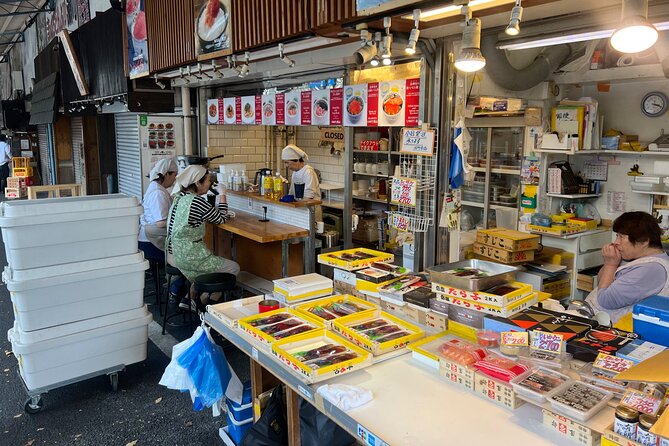
Tsukiji has a reputation. It’s famous, it’s loud, and the streets can feel like they’re moving faster than you are. What I like about this tour is that it gives you a path through the chaos without turning the experience into a checklist.
With a maximum of 10 travelers, you’re not fighting the crowd every minute. The guide can stop, explain, and help you decide what’s a good choice right then, which matters because the best snack spots don’t wait around. This is also why the tour’s flexible schedule is such a plus; it adapts to what your group wants to see and taste instead of sticking to a strict script.
You can also read our reviews of more tours and experiences in Tokyo.
Price and What You Really Get for $30
At $30 per person, this tour feels like a low-cost way to buy something you’d otherwise struggle to assemble on your own: navigation plus a knowledgeable guide for the key cultural stops.
Here’s the trade-off. The tour price covers the guide and admissions (Tsukiji Hongwanji Temple, Tsukiji Fish Market, and Tsukiji Jogai Market). But foods and drinks are not included. That means you’re paying the $30 for the experience wrapper, then you pay separately for the actual bites.
A review tip that’s easy to plan around: bring yen for food samples because many vendors use cash. One comment specifically suggests having around 10,000 yen ready for tasting. I’d treat that as a realistic ballpark, then adjust based on how adventurous you are and how many items you want to try.
Meeting at Tsukiji Station and How the 2-Hour Walk Flows

The meeting point is Starbucks Coffee by Tsukiji Station (Tsukiji, Chuo City). The tour is about 2 hours total, and it ends back at the meeting point, so you’re not left guessing how to get out once you’re full.
You’ll also get a mobile ticket, which keeps things simple. And since it’s near public transportation and most people can participate, it’s a good choice if you want Tsukiji without turning your whole day into logistics work.
One small note from how people describe the walk: expect standing and close quarters, especially in market areas. It’s not described as extreme, but it’s not a sit-and-eat experience either.
Tsukiji Hongwanji Temple: A Peaceful Start Before the Food Frenzy
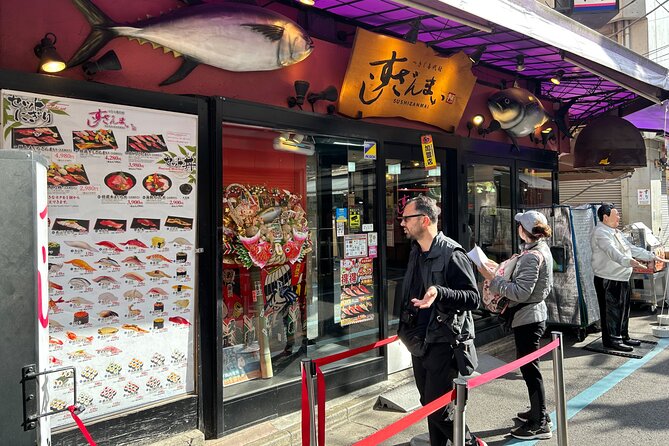
The first stop is Tsukiji Hongwanji Temple (築地本願寺) for about 30 minutes, and admission is included. On paper, a temple stop might sound like an odd prelude to fish-market snacks. In practice, it helps you shift gears.
You get a calmer start and a chance to learn a bit about the area before you step into the most intense part of Tsukiji. Plus, a couple guides are praised for giving clear explanations at this stop—Haydn is highlighted for making the temple portion a peaceful experience.
If you hate anything that isn’t directly edible, this might be the one part you’d skim. But if you like context, this is the time to slow down and set your brain to catch details in the market.
Tsukiji Fish Market: How to Eat Fresh Without Getting Lost
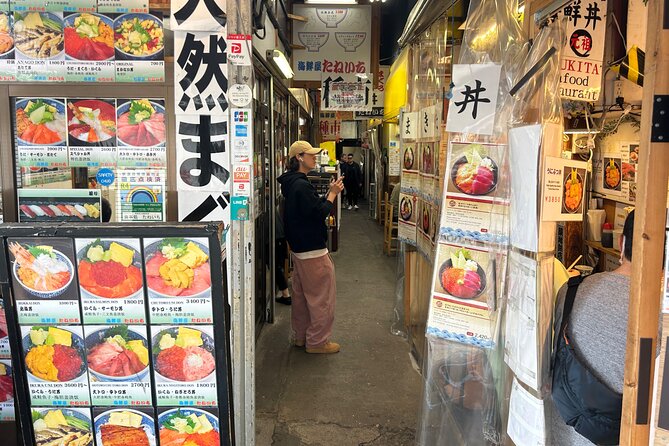
After the temple, you head into Tsukiji Fish Market, where the focus is history, culture, and sampling. Your local Japanese English-speaking guide walks you through the market and helps connect what you’re seeing with why it matters.
This is where the tour earns its keep. Tsukiji Fish Market can be overwhelming if you’re wandering solo. People repeatedly mention that their guides made the route easy and stress-free, and that they helped them find the best stalls rather than wasting time on random foot traffic.
You’ll also learn traditional ingredients and how they connect to sushi and local dishes. That kind of small education turns the tasting into more than just eating something salty and hoping it’s good.




What you can expect to sample
The tour style is pick-what-you-want. Based on the described tastings, you might try things like:
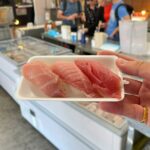
- fresh seafood
- fruit
- Japanese omelets
- fried fish cakes
- and other small bites from market stalls
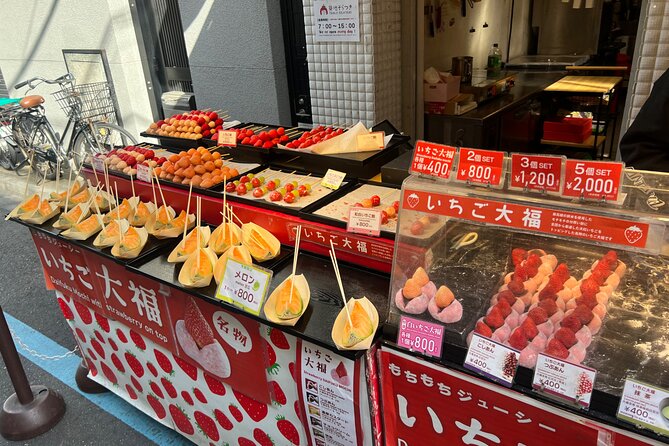
And because the schedule is flexible, your guide can steer you toward what looks best in that moment. One recurring theme from guide highlights: they encourage people to try items they weren’t sure about, including richer seafood tastes like sea urchin and eel. If you want the full Tsukiji experience, that nudge is often worth it.
Tsukiji Jogai Market: Street-Food Energy and More Snack Choices
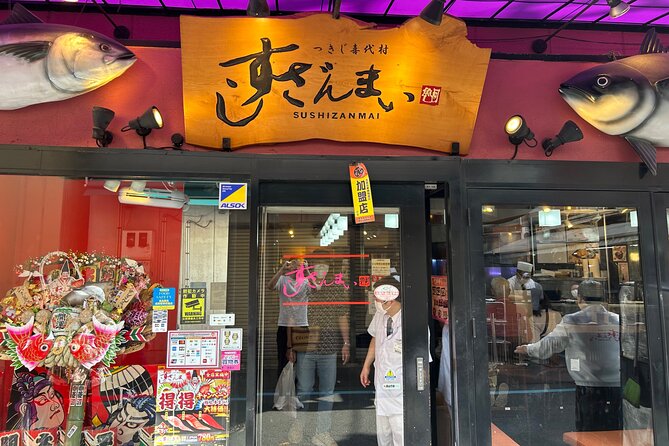
The final major stop is Tsukiji Jogai Market, also included, for about 30 minutes. This is the street-food side of Tsukiji—full of shops and stalls where you can keep sampling after you’ve already gotten your bearings in the fish market core.
This second market segment matters because it expands your options. Even if you thought you already found your favorite seafood snack, Jogai Market gives you another chance to compare flavors, textures, and how vendors prepare things.
People describe the experience as a “choose and pay” tasting walk, which makes Jogai Market a good place to circle back mentally and decide what you want more of before the tour ends.
The No-Set-Menu System: How to Make It Worth Your Money
The biggest difference between this tour and a lot of food tours is that there’s no set menu. You’re not forced into a fixed sequence of dishes. Instead, you choose and pay for what you want to eat.
That’s a smart model for Tsukiji, because everyone wants something different:
- Some people want sushi-style bites
- Some want cooked seafood snacks
- Some want something sweet or fruit-forward
- Some want to try a single bold item and move on
The guide’s role is to help you make those decisions quickly. Multiple guide notes mention advice on what’s a good deal and what’s worth buying, which can save you money and prevent decision fatigue in a crowded market.
My practical advice for the “pick-your-own” format
Bring yen so you aren’t stuck. Aim for 2–4 meaningful tastings rather than trying to sample everything. And if you’re the type who wants to try sea urchin or eel, don’t wait for later in the tour; ask early where the guide recommends those kinds of items.
Also, go in with an open mind. The best part of Tsukiji is that it’s not pretending to be a theme park. If you want a guaranteed comfort-food experience, this might feel intense. If you want real local food energy, it’s a strong match.
Guides Make the Market Click: What People Applaud
One thing that shows up again and again is that the guide is the product. People praise guides for:
- making the market manageable
- moving the group efficiently through tight areas
- explaining food and cultural context in a way that’s easy to follow
- being patient and friendly
- building a comfortable pace instead of rushing
Specific guide names you’ll hear include Benjamin, Jim, Rie, Haydn, Minori, Nicolas, Joe, Yayoi, and Shino. They’re credited with doing two high-value things: sorting out the chaos and steering people toward great stalls and value purchases.
There’s also a recurring theme about avoiding tourist traps. The practical version of that is: you’ll get pointed advice on where to buy and what to skip, which helps you spend your tasting budget on food you actually want.
Who This Tour Suits Best (and Who Might Want Something Else)
This is a great fit if:
- you want authentic market food without navigating alone
- you like learning what you’re eating (ingredients and context)
- you want flexibility to match your taste
- you prefer small groups where you can actually ask questions
It may be less ideal if:
- you hate temple stops on food-centric tours
- you’re trying to keep daily food spending extremely low
- you don’t want to carry cash and make on-the-spot choices
Should You Book This Tsukiji Food and Walking Tour?
If you’re going to Tsukiji anyway, I’d book this. The $30 price buys you admissions, a guide, and a smart route through the two biggest food areas. Then you top it off with tastings you choose, which is a very honest way to experience the market.
I’d especially recommend it if you’re worried about getting overwhelmed or wasting time wandering. The guide help is repeatedly framed as the difference between a stressful market scramble and an enjoyable, organized snack hunt.
Just go in prepared: bring yen, expect to pay for the bites, and remember the tour begins with Tsukiji Hongwanji Temple. If that first stop won’t bother you, this is a strong value way to see Tsukiji and eat like you know what you’re doing.
FAQ
How long is the Tsukiji Fish Market Food and Walking tour?
It’s about 2 hours (approx.).
What is included in the tour price?
You get a local Japanese English-speaking guide, learning about Tsukiji’s history and culture, and entry/admission for Tsukiji Hongwanji Temple, Tsukiji Fish Market, and Tsukiji Jogai Market.
Are foods and drinks included?
No. Foods and drinks are not included, and you choose/pay for dishes you want to eat.
Is there a set menu?
No set menu. You choose and pay for the dishes you want to eat.
Where do we meet?
You meet at Starbucks Coffee – Tsukiji Station, Chuo City, Tsukiji (address listed in the tour info).
How large is the group?
The tour has a maximum of 10 travelers.
Do I need a mobile ticket?
Yes, the tour uses a mobile ticket.
Should I bring cash?
The tour notes that foods and drinks aren’t included, and it’s a market setting. One practical tip from the experience is to have yen for food samples at stalls.
Is the tour suitable for most people?
Most travelers can participate, and service animals are allowed.
What’s the cancellation policy?
You can cancel for a full refund up to 24 hours in advance. If you cancel less than 24 hours before the start time, the amount paid is not refunded.