REVIEW · OSAKA
Osaka Local Foodie Walking Tour in Dotonbori and Shinsekai
Book on Viator →Operated by MagicalTrip Inc. · Bookable on Viator
Osaka’s street food hits fast and hard. In about three hours, this small-group walk threads you through Shinsekai and Dotonbori with tastings, side-street wandering, and photo-worthy landmarks like Tsutenkaku and the Glico sign. You’ll also get context for Osaka’s food culture and the neighborhoods that shaped it, guided by locals such as Aika and Yuma.
I love that the tour has a clear food payoff: kushikatsu, okonomiyaki, and takoyaki are all built into the route, along with 3 drinks (alcoholic options available). I also like how the walking route does more than just hit big names; it takes you through alley streets and shopping lanes, so you get the Osaka feel in between meals.
One consideration: the food plan is a set menu, and the pace can feel a bit brisk. If you’re hoping for lots of extra stalls or a slower, sit-down vibe, and if you need gluten-free or vegan options, you’ll want to think twice (or plan a different tour).
In This Review
- Key highlights worth knowing
- Shinsekai and Dotonbori: two neighborhoods, one appetite
- Getting oriented: FamilyMart start and an easy finish at Glico
- Tsutenkaku and Jan-Jan Yokocho: kushikatsu under the tower
- Shinsaibashi-suji shopping lane: the “80 years ago” alley vibe
- Dōgu-ya-suji and the knife-shop lane: souvenirs with a purpose
- Hozen-ji Temple and Ukiyo Alley: snack time in a shrine-side mood
- Glico sign photo time and finishing at Sennichimae Doguyasuji
- Price and value: what $111.42 buys you in real calories
- Pacing and comfort: you’ll walk, and you’ll walk fast-ish
- Dietary needs: vegetarian is possible, but vegan and gluten-free are not
- Who should book this Osaka food walk
- Should you book it?
- FAQ
- What does the tour include for food and drinks?
- How long is the Osaka local foodie walking tour?
- Where do I meet and where does the tour end?
- Is the tour good for families or mixed ages?
- Can I do this tour if I’m vegan or gluten-free?
- Is vegetarian available, and does it include dashi?
- How big is the group and is transportation included?
Key highlights worth knowing
- Small group, max 7 people, so you’re not just herded from shop to shop
- Tastings are built-in: 6 kushikatsu pieces, 1 okonomiyaki piece, and a box of takoyaki, plus 3 drinks
- You get Osaka icons plus alley streets: Tsutenkaku, Hozen-ji, Ukiyo Alley, and the Glico sign
- Shopping lane time is real: Dōgu-ya-suji includes a famous knife shop area for souvenirs
- Vegetarian is possible, but not totally dashi-free (important for some diets)
- Weather is part of the plan: summer heat can be intense, so water and breaks matter
Shinsekai and Dotonbori: two neighborhoods, one appetite
If Osaka has a personality, it’s loud, funny, and food-first. This tour works because it links two sides of that personality.
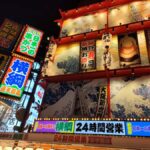
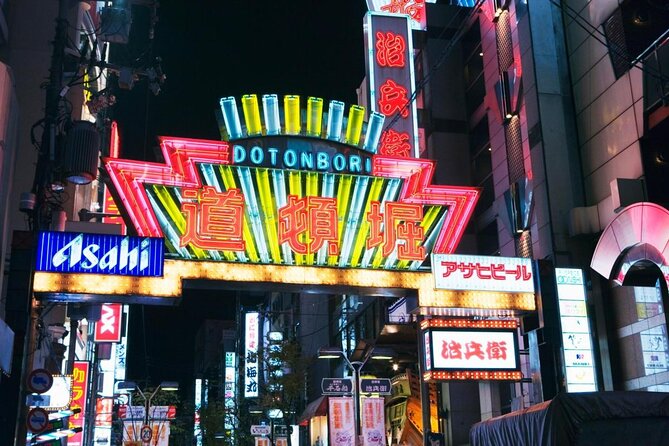
Shinsekai leans nostalgic and street-level. It’s tied to older merchant streets and places where you can feel the city’s everyday rhythm. Dotonbori, on the other hand, is where Osaka leans into spectacle—neon energy, souvenir shopping, and landmark photo spots. Doing both areas in one loop is useful because you’re not guessing what to prioritize on Day 1.
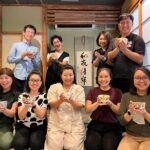
And the tour format matters. With a max group size of 7, you usually spend less time waiting and more time walking, eating, and asking questions. Guides like Emi and Justin have been praised for connecting what you’re eating to how people live day-to-day, not just tossing out facts.
You can also read our reviews of more tours and experiences in Osaka.
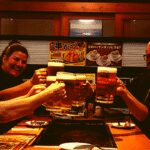
Getting oriented: FamilyMart start and an easy finish at Glico
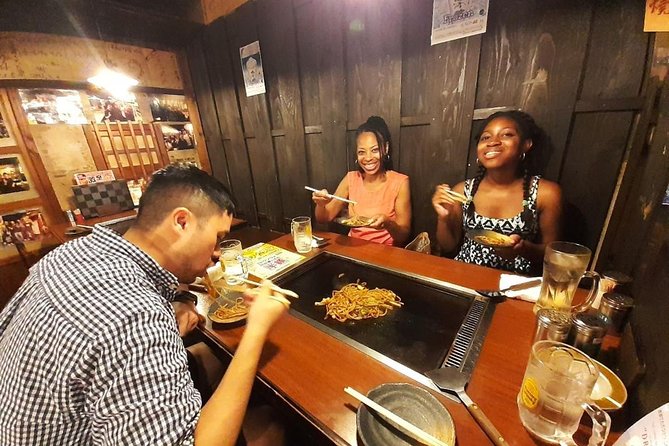
The meeting point is FamilyMart Japan at Nishinari Ward (Sannō, The West Side area). The end is right by the Glico Sign in Dotonbori. That ending matters more than it sounds.
By the time you finish, you’re already in the thick of the Dotonbori sights. So you can turn the tour into the start of a night out: snacks on your way back, shopping, or grabbing dinner nearby without a long commute.
One practical note: the tour starts on time, and arriving late means you can miss part of the route. In Osaka crowds, that’s not a small risk—so give yourself breathing room at the start.
Tsutenkaku and Jan-Jan Yokocho: kushikatsu under the tower
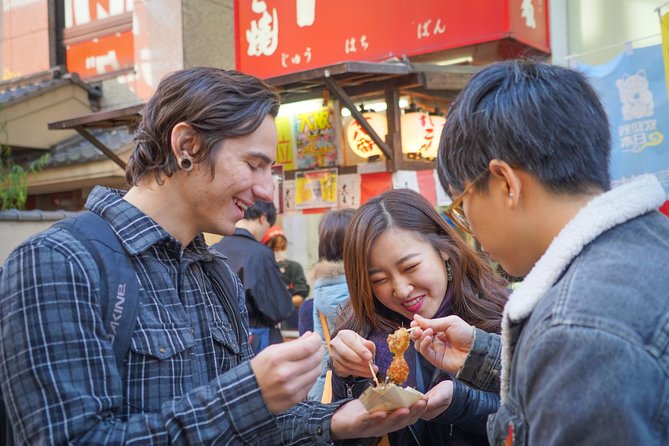
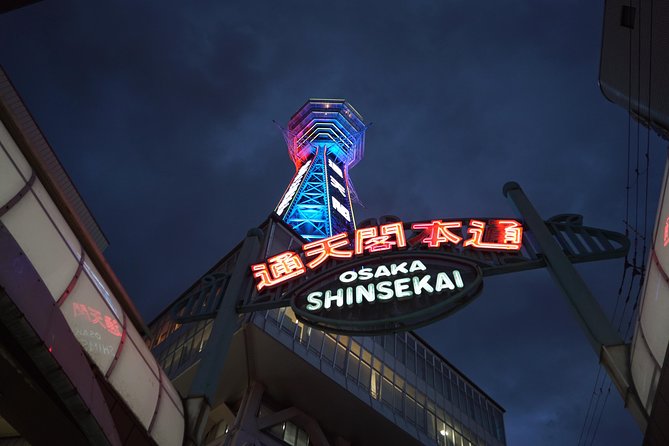
Stop 1 anchors the Shinsekai half of the tour. You’ll walk through Jan-Jan Yokocho alley with Tsutenkaku Tower watching over the area, then enjoy kushikatsu—deep-fried skewers with meat and vegetables.
This is a great first bite because it’s iconic but also very Osaka. It’s the kind of food that feels like it belongs on a street crawl, not on a formal restaurant plate. Plus, the tour allocates about 30 minutes here, so you’re not rushed.
What to expect:
- A short alley walk that sets the mood for Shinsekai
- Kushikatsu as the main included dish at this stop
- Admission ticket time included for this phase
A small drawback: because you’re starting with a strong street-food hit, you’ll want comfy walking shoes right away. Shinsekai is fun, but it’s not the place for slick soles.
Shinsaibashi-suji shopping lane: the “80 years ago” alley vibe
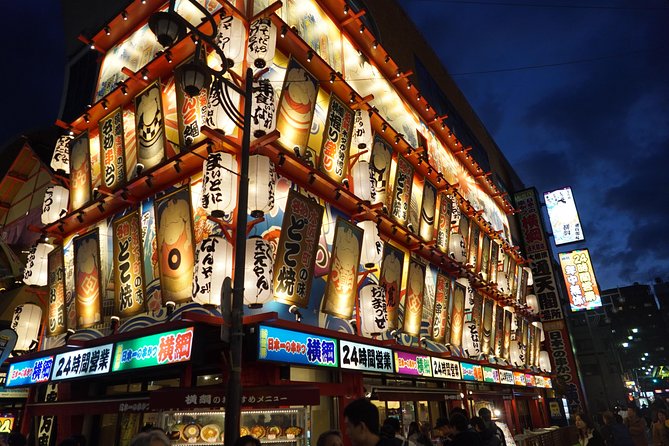
Next you’ll move into the Shinsaibashi-suji shopping street area for a short stop (about 20 minutes). The tour highlights this as a museum-like lane showing how Osaka’s center looked more than 80 years ago.
Even if you’re not shopping, this segment is valuable because it changes your pace. It’s not just eating—you’re getting a sense of the city’s old retail streets, the idea of lanes as social spaces, and how the city’s shopping geography still shapes what you see today.
This stop is also marked as free, so you’re mostly paying in time, not extra costs.
If you’re the kind of traveler who likes to understand the “why” behind a neighborhood, this part tends to land well. It also gives your brain a breather before the Dotonbori alley-and-photo phase.
Dōgu-ya-suji and the knife-shop lane: souvenirs with a purpose
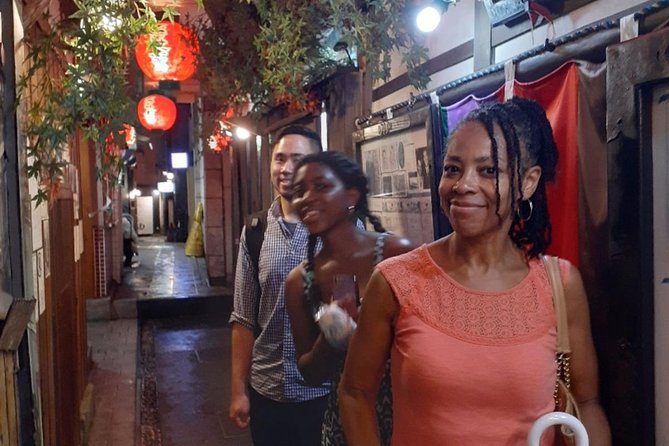
Now you shift toward Dotonbori and the Dōgu-ya-suji shopping lanes. This is where the tour becomes part food, part culture, part souvenir hunt.
You’ll get time for souvenir shopping, including around the Hōchō-ya knife shop area. The knife stop is memorable because it feels like a real specialty street rather than a generic mall corridor. If you’ve ever wanted practical keepsakes from Japan—things you can actually use, not just fridge magnets—this is a solid moment to look.
This portion also includes explanation tied to the alley lanes and what you’re seeing nearby, plus an explicit day and night framing in the tour outline. Translation: the guide isn’t just pointing; they’re trying to help you “read” what you’re walking through.
Tip: if shopping is a priority, bring a small bag or foldable tote so you’re not juggling purchases while moving to the next meal stops.



Hozen-ji Temple and Ukiyo Alley: snack time in a shrine-side mood
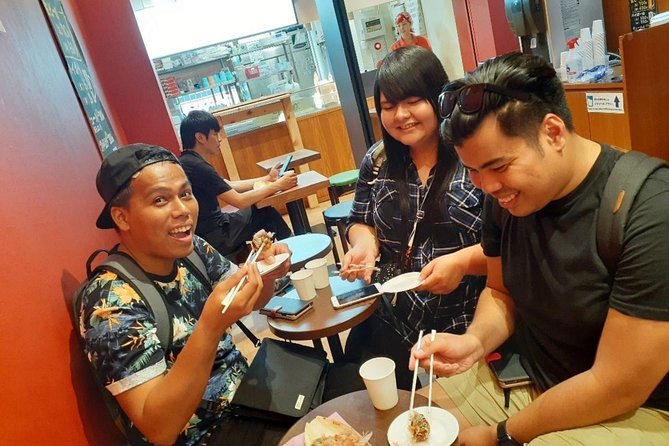
Stop 4 brings you to Hozen-ji Temple, with a walk-and-eat setup through Ukiyo Alley (Ukiyo-koji). You’ll snack on things like takoyaki and sweets during this segment, and the tour notes budgeting around ¥500 for extra snacking in this area.
This is one of the best “Osaka-at-night” moments. The temple setting gives you contrast from the louder, busier neon streets, while still keeping the food crawl energy going. And you get time for photo moments in the surrounding area.
What I like about this stop is the balance:
- You don’t just eat and run
- You get a brief cultural pause
- You still leave with your hands full of snacks
If you’re sensitive to dark or crowded spaces, just know the tour involves evening-style walking in temple surroundings. And keep an eye out for smoking-allowed areas, since the tour notes that route changes might not always be possible.
Glico sign photo time and finishing at Sennichimae Doguyasuji
The tour includes a dedicated photo stop at the Glico sign in Dotonbori. You’ll then head toward Sennichimae Doguyasuji shopping street, where you’ll enjoy Osaka-style okonomiyaki and wrap up the tour around the Dotonbori area.
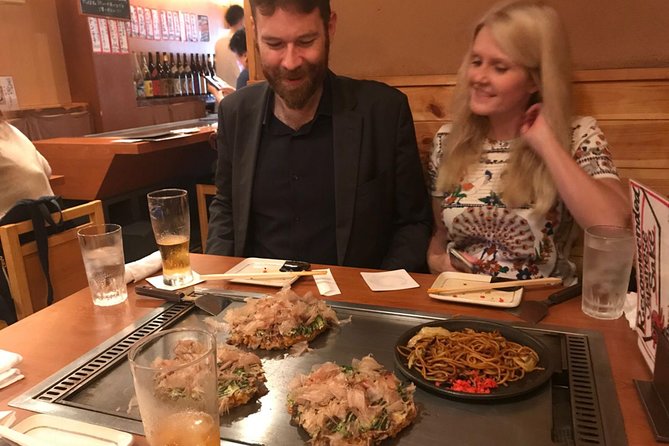
This is the “sendoff” part of the evening. Okonomiyaki tends to feel more filling than takoyaki because it’s a savory pancake-style dish with toppings. The tour lists an included okonomiyaki portion, so you should come out of this with at least one proper Osaka comfort-food finish.
What to expect at the end:
- A final photo moment (Glico sign)
- Okonomiyaki as the last included meal item
- You finish in a neighborhood where you can keep eating or call it a night
If you’re tired, this is also a good time to plan your next step: your legs will thank you for picking a nearby dinner rather than commuting far.
Price and value: what $111.42 buys you in real calories
The price is $111.42 per person for about 3 hours. The tour also says mobile ticket and group discounts apply, and that max group size is 7—which affects how much attention your guide can give you.
Here’s the value math that matters:
- 6 pieces of kushikatsu
- 1 okonomiyaki piece
- 1 box of takoyaki
- 3 drinks (both alcohol and non-alcohol available)
Transportation fees aren’t included; the tour lists 190 JPY for transit.
So is it worth it? For the right traveler, yes. You’re paying for the route logic (Shinsekai + Dotonbori), the guide’s walking flow, and the fact that you’re sampling the Osaka classics in a short time block. For people chasing maximum variety and lots of extra stalls, it can feel more like a tight tasting menu than a huge buffet-style food crawl.
My rule: if you want a guided “greatest hits” Osaka night with enough food to be satisfied, this works. If you want nonstop tiny bites at many micro-stops, you may feel you want more stops than the set menu delivers.
Pacing and comfort: you’ll walk, and you’ll walk fast-ish
This is a walking tour in two heavy-footfall neighborhoods. Even when the food parts are timed, you’ll still spend a meaningful chunk moving between areas.
A common theme from feedback is that the pacing can be quick, and in at least one case, people wanted more narration along the walking segments. That doesn’t mean it’s bad—but it does mean you should come prepared to keep up and to ask questions if you want more detail.
Practical prep:
- Wear comfortable walking shoes with grip
- Bring water if you’re doing this in summer; Osaka can hit extreme heat
- If you’d like slower pacing, tell the guide early (they can often adjust how they move the group)
Dietary needs: vegetarian is possible, but vegan and gluten-free are not
This is the biggest make-or-break issue.
- Gluten-free cannot be accommodated
- Vegan cannot be accommodated
- Vegetarian is available, but you must select the vegetarian option when booking or request it at least a day in advance
Then comes an important detail: even the vegetarian version at the kushikatsu spot still uses dashi (pork broth). If you avoid pork or dashi, you must inform the company in advance so they can prepare other vegetarian dishes.
The tour also warns that allergy-free meals can’t be guaranteed because food is prepared in kitchens not operated by the tour. So if allergies are involved, plan for extra caution and communicate early.
If you’re flexible with vegetarian food that may include dashi, this tour can work nicely. If your needs are strict gluten-free or vegan, you’ll need a different option.
Who should book this Osaka food walk
You’ll likely enjoy this tour if you:
- Want a fast, guided way to cover Shinsekai + Dotonbori in one evening
- Like classic Osaka street foods you can’t easily “decide on” solo
- Prefer a small group (max 7) where you can ask questions
- Want both food and photos (Tsutenkaku and Glico sign are strong anchors)
You might want to skip or compare alternatives if:
- You need gluten-free or vegan options
- You want a ton of additional food stops rather than a set tasting menu
- You dislike brisk walking or prefer long, seated meals
Should you book it?
If you’re new to Osaka and want a guided introduction that still feels street-level, I’d book it. The included food list is tight and clear, and the route makes sense: you start in Shinsekai, build toward Dotonbori, and finish right where the city gets loud.
But book it with eyes open. Know what’s included, plan for real walking time, and double-check dietary needs early—especially if vegetarian and dashi are involved. If you do that, you’ll end the tour with full stomachs, a few great photos, and a better sense of how Osaka turns neighborhoods into meals.
FAQ
What does the tour include for food and drinks?
You get 6 pieces of kushikatsu, 1 piece of okonomiyaki, 1 box of takoyaki, and 3 drinks. Both alcoholic and non-alcoholic drinks are available.
How long is the Osaka local foodie walking tour?
It’s about 3 hours.
Where do I meet and where does the tour end?
The meeting point is FamilyMart Japan in Nishinari Ward, and the tour ends at the Glico Sign in Dotonbori.
Is the tour good for families or mixed ages?
Yes, all ages are welcome.
Can I do this tour if I’m vegan or gluten-free?
No. Gluten-free and vegan cannot be accommodated on this tour.
Is vegetarian available, and does it include dashi?
Vegetarian is available if you choose the option when booking or request it at least by the day before. At the kushikatsu spot, dashi is still used, so you need to tell them in advance if you can’t consume dashi.
How big is the group and is transportation included?
The group size is capped at 7 travelers. Transportation fees are not included (the tour lists 190 JPY).