REVIEW · SEOUL
Local Home Korean Cooking Class & Market Adventure in Seoul
Book on Viator →Operated by Hello K Cooking Class · Bookable on Viator
Seoul cooking gets real when it starts at the market. I like this class because it mixes a guided street-food ingredient hunt with serious hands-on cooking in a home kitchen. You’ll also finish with a proper hajeongsik-style dinner loaded with side dishes, dessert, and a glass of makgeolli. One thing to consider: you’ll need to plan your afternoon around the 3 hours 30 minutes time block, and the meet-up is at Mangwon Station.
What makes it work well for real humans: the group is capped at 10 people, so questions don’t get lost in the shuffle. The other big win for me is the “learn it, then do it” format—market tasting first, then cooking four dishes, then sitting down to eat what you made. If you’re expecting a quick photo stop with no prep work, this one asks a bit more effort than that.
In This Review
- Key Things That Make This Class Worth Your Time
- Mangwon Station Meet-Up and Why You’ll Feel Oriented Fast
- Market Adventure: Street Food, Spices, and What to Buy
- At the Cooking Home: The Hands-On Part That Changes Everything
- Four Dishes and a Real Hanjeongsik Feast
- Why the Small Group Size (Max 10) Feels Like a Personal Class
- Getting Value From a $91 Class in Seoul
- Who This Fits Best (And Who Might Want Something Else)
- Should You Book This Market-and-Home Cooking Class?
- FAQ
- Where is the meeting point?
- How long is the cooking class and market tour?
- How much does it cost?
- What will I cook during the class?
- What is included in the meal at the end?
- What is the group size limit?
- What is the cancellation policy?
Key Things That Make This Class Worth Your Time
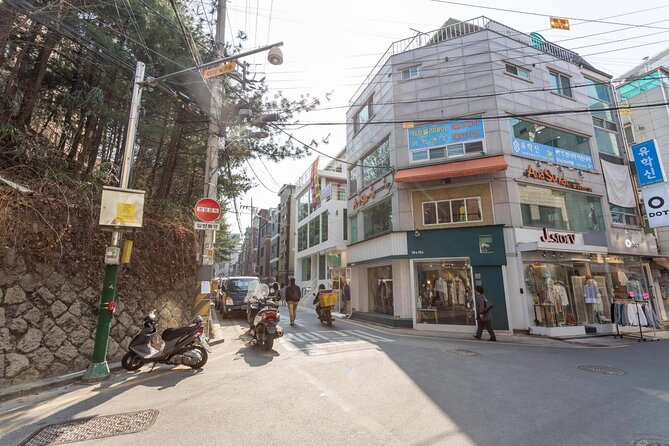
- Mangwon Market focus: You’ll learn what ingredients to look for and why they show up in Korean food
- Hands-on cooking at a real home: You cook, not just watch
- Four dish lineup: Examples include bibimbap and dakgalbi
- Hanjeongsik dinner style: Over 10 side dishes plus dessert
- Small group size (max 10): More attention from your host
- Makgeolli included: A glass of Korean rice wine with the meal
Mangwon Station Meet-Up and Why You’ll Feel Oriented Fast
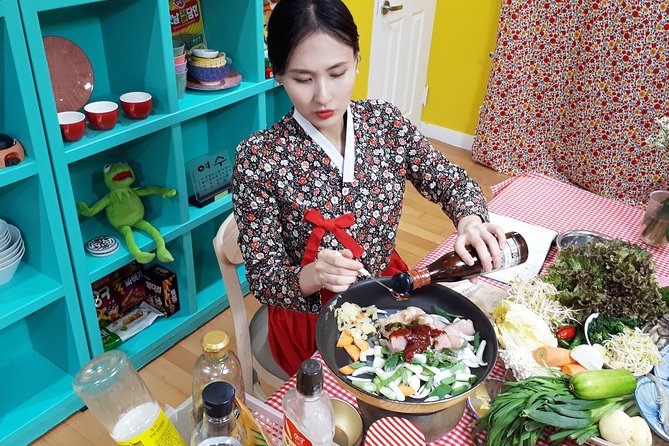
Your tour starts at the Mangwon Station entrance 2, located at 377-20 Mangwon-dong, Mapo-gu, Seoul. Getting there by public transport is part of the design, which is helpful if you don’t want to fight Seoul traffic or taxis after a long day.
The meet-up spot matters because it places you in a neighborhood setting. You’re not bounced from one polished attraction to another—you’re dropped into the everyday “buy food, eat food, talk food” rhythm that makes Korean cooking make sense.
Since the experience is 3 hours 30 minutes, you’ll want to show up on time and come hungry. This isn’t the kind of thing where you can casually wander in late and still keep up.
You can also read our reviews of more tours and experiences in Seoul.


Market Adventure: Street Food, Spices, and What to Buy
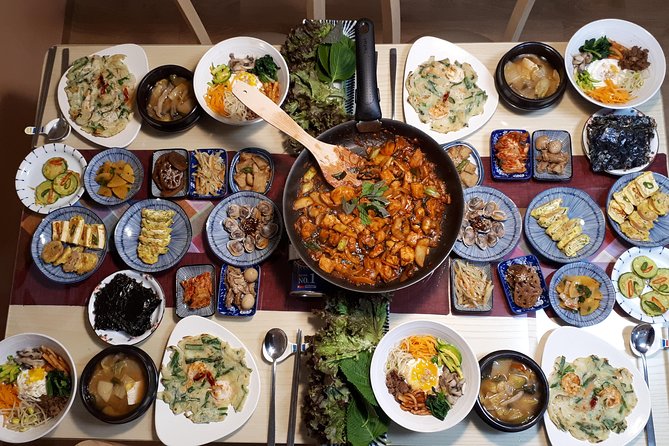
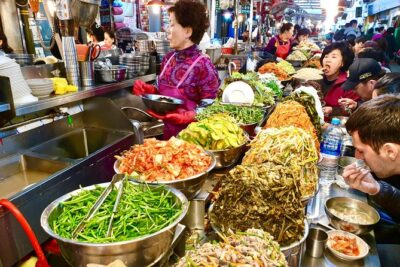
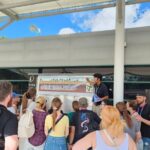
After you meet up, the first major block is a guided market adventure. The goal is simple: learn how people actually shop for Korean meals—street foods first, then ingredients and seasonings you’ll use later in cooking.
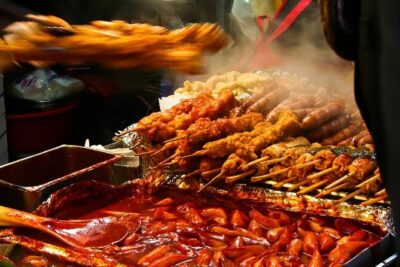
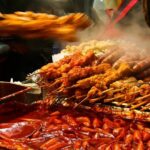
You’ll get to sample street food snacks while your host points out the names and uses of herbs and spices. This is more than tasting. It helps you connect flavors to shopping choices, so when you’re holding an ingredient later, you already know what role it plays.
Here’s the kind of detail that makes the market time feel practical: people mention learning differences in ingredients used for Korean cooking. One example from the experience is the explanation of how Korean cooking often uses spring onions instead of chives. That single swap can change the aroma and the texture of a dish, and it’s the sort of lesson you can’t get from a random restaurant menu.
You might also try items like kwabaeggi during street-food stops, depending on what’s available. Expect to walk, snack, and ask questions as you go—this is the “build your ingredient map” phase.
Practical tip: wear comfortable shoes. Even if you’re not walking far, markets are stop-and-start, and you’ll be moving between stalls and tasting points.
At the Cooking Home: The Hands-On Part That Changes Everything
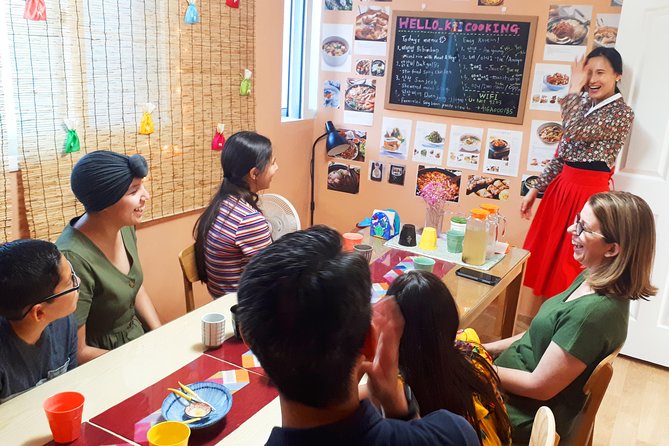
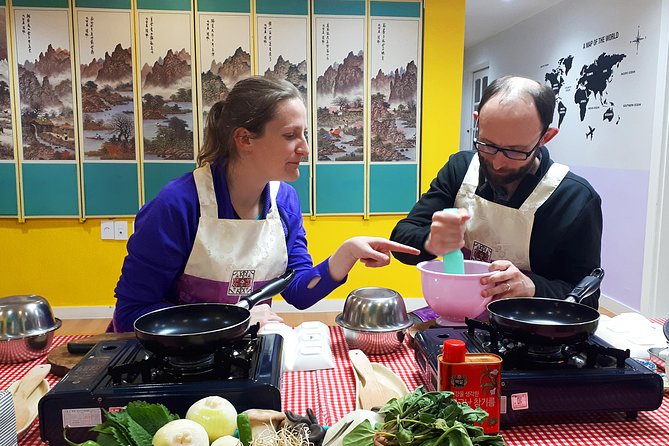
Next comes the cooking class at your host’s home. This is the centerpiece: a 100% hands-on Korean cooking class where you learn traditional techniques and cook your dishes yourself.
The vibe is key. Multiple host stories point to a warm, patient approach—often with humor and lots of encouragement—so it doesn’t feel like you’re in a stiff demonstration. You’re in a home kitchen, not a studio classroom, and that changes how approachable the cooking feels.
You’ll create four Korean dishes, with examples like bibimbap rice and dakgalbi. The bigger point isn’t the exact menu—it’s that you learn how Koreans build flavors in layers: sauces, seasonings, toppings, and side components that make one meal feel like several dishes at once.
If you’re nervous about cooking, don’t be. Several people highlight that the class is fun, easy going, and set up so non-cooks can follow along. The host also shares practical tips during the process, which is usually where cooking classes win or lose. The difference here is that you’re not just taught the steps—you’re taught what to watch for.
Also, don’t be surprised if you pick up a few Korean phrases along the way. One theme across the experience is language help that makes shopping and ordering feel less intimidating later in your trip.
Four Dishes and a Real Hanjeongsik Feast
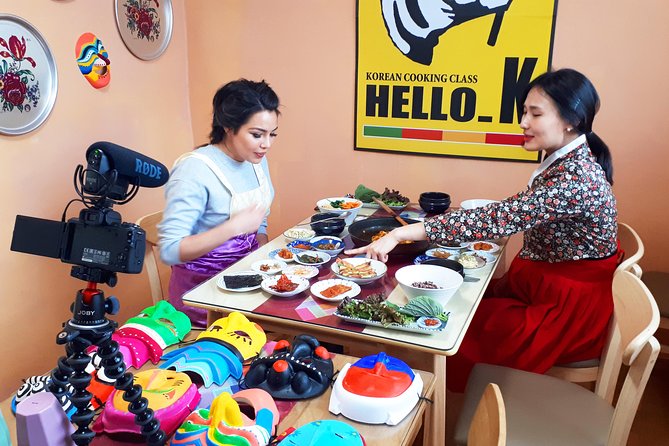
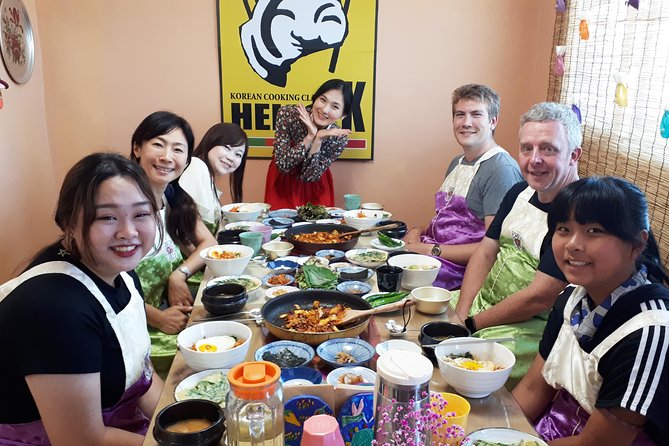
After cooking, it’s meal time: you sit down to enjoy what you made, plus homemade sides, dessert, and a glass of makgeolli. This part is often where cooking classes feel like a reward—and this one is designed to feel like a full Korean table, not a light tasting.
The dinner is hanjeongsik-style, meaning you’ll have over 10 different side dishes. That’s a big deal. In many Korean meals, the main dish is only half the story; the sides carry balance—freshness, crunch, heat, and sweetness—so your palate keeps resetting between bites.
Dessert is included too, and at least one person specifically calls out a honeydew-flavored popsicle as part of the sweet finish. That kind of small, seasonal treat is a nice reminder that Korean meals often think beyond just the “main” food.
And yes, the makgeolli matters. It’s included with the meal, which turns dinner into a proper shared experience instead of a quick sit-down. If you like trying local drinks, you’ll probably enjoy this pairing more than a bottled soda moment.
You’ll come away with two things you can actually use:
- Recipes for the dishes you cooked (people note recipe copies being sent)
- A better understanding of how Korean meals are built around sides, not just a single entrée
Why the Small Group Size (Max 10) Feels Like a Personal Class
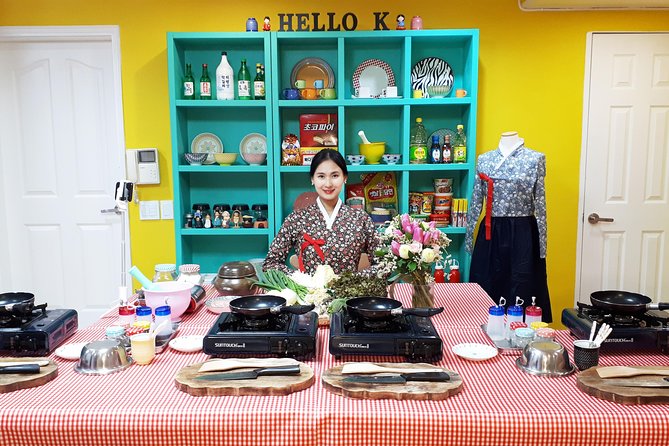
A max group size of 10 travelers changes the whole experience. In a bigger class, you might wait for help. Here, you can get corrections faster, and you’re more likely to have time for your questions.
This also affects the atmosphere. Multiple people highlight that hosts like Sarah and Junghee (names you may encounter as instructors) are friendly, funny, and interactive. In a small group, that personality has room to land. You’re not just hearing instructions—you’re trading ideas and learning how to handle ingredients safely and confidently.
If you’re traveling with kids, this matters even more. People mention older kids enjoying it because the pace stays friendly and the market walking gives a break from only standing over a cutting board.
If you want a class where you can ask follow-up questions like, Why does this sauce taste different than mine?, this is the kind of setup that makes that possible.



Getting Value From a $91 Class in Seoul
At $91 per person for roughly 3 hours 30 minutes, you’re paying for four things: market guidance, ingredient learning, hands-on cooking, and a sit-down meal with sides plus dessert and makgeolli.
In Seoul, you can eat well for less. But what you’re buying here is knowledge you can repeat, plus a local-home setting that most food experiences can’t replicate. The market portion is often the “aha” moment because it teaches you how to shop and spot the right ingredients. Then the cooking portion locks that learning into muscle memory.
The dinner finishes the job, so you’re not doing all the work and then hungry. Over 10 sides also means you get variety without needing to order extra restaurants.
In plain terms: if you like learning by doing, and you want a cultural meal that feels like a real household table, the price starts to look fair fast.
If you only care about eating and you hate any cooking prep, you might feel the time and effort more than the value.
Who This Fits Best (And Who Might Want Something Else)
This class suits you if:
- You want an authentic home-cooking experience rather than a restaurant lesson
- You enjoy food markets and want ingredient explanations as you shop
- You want to take home recipes you can actually recreate
- You like group activities with enough structure to feel easy
It also works for families and mixed-age groups since the format is hands-on but supported. People mention it as a great experience for kids in the 16–28 range, though younger or very picky eaters might still find the sides a lot to process.
You might choose something else if:
- You want a purely passive experience with no chopping, mixing, or cooking steps
- Your schedule doesn’t handle 3 hours 30 minutes in one chunk
- You prefer only restaurant-based meals and don’t care about shopping and ingredient education
Should You Book This Market-and-Home Cooking Class?
If you want Seoul food culture with real context, I think you should book it. The combination of a market adventure, hands-on cooking, and a full hajeongsik-style dinner is the whole package, not a “cook one thing and leave” format.
Your best bet is to book this when you have a flexible afternoon and you’re willing to eat what you cook. If you do, you’ll walk away with clearer flavor logic, a few Korean words you can use on the next day, and recipes you’ll actually want to try again at home.
FAQ
Where is the meeting point?
The meeting point is Mangwon Station entrance 2, at 377-20 Mangwon-dong, Mapo-gu, Seoul, South Korea.
How long is the cooking class and market tour?
It lasts about 3 hours 30 minutes.
How much does it cost?
The price is $91.00 per person.
What will I cook during the class?
You’ll cook four Korean dishes, with examples that include bibimbap rice and dakgalbi.
What is included in the meal at the end?
You’ll enjoy a hanjeongsik-style dinner with over 10 side dishes, dessert, and a glass of makgeolli, along with your homemade dishes.
What is the group size limit?
The experience has a maximum of 10 travelers.
What is the cancellation policy?
You can cancel for a full refund if you cancel up to 24 hours in advance. If you cancel less than 24 hours before the start time, the amount paid is not refunded.