REVIEW · SEOUL
DMZ Tour Seoul to North Korea’s 3rd Tunnel & Majang Lake Crossing
Book on Viator →Operated by VIP TRAVEL Co.Ltd · Bookable on Viator
Cold War memories feel real here.
This DMZ tour in and around the DMZ turns scary headlines into specific stops, from memorial parks to the moment you see North Korea through a telescope. You get an organized day out of Seoul with a pro guide, plus well-timed photo stops and clear guidance at the checkpoints. Even better, guides such as Nancy, Alex, Kelly, Crystal, and Moon show up in the feedback often, and that matters because the story is the whole point.
I love that the day mixes big Cold War set pieces with human-scale meaning: the Bridge of Freedom and Peace Bell at Imjingak Park. I also love the main event, the Third Tunnel of Aggression, where the experience goes from watching to walking.
One drawback: plan for a long day with ID checks and stairs, including inside the tunnel. Bring your passport (or the listed ID options) and expect physical effort, especially if the day runs hot and humid.
In This Review
- Key Points You’ll Care About
- Why This DMZ Day Trip Feels Different From the Usual Seoul Tour
- Meeting in Seoul Without Losing Your Morning
- Imjingak Peace Park: Bells, POW Return Stories, and Why It’s Not Just Memorial Photos
- Imjingak Tourist Information Center and clearance basics
- Imjingak Resort and the Bell Tower energy
- Bridge of Freedom and a very specific POW number
- Optional Paju Imjingak Peace Gondola ride
- Steam, Soybeans, and a Peace Bell That Weighs 21 Tons
- Mangbaedan Memorial Altar
- The steam locomotive at Jangdan Station
- Pyeonghwauijong Peace Bell
- The Unification Bridge Checkpoint: Where Your Day Stops Being Tourist Easy
- Walking Inside the Third Tunnel of Aggression: The Main Event
- What to expect underground
- Why the tunnel matters
- Dora Observatory: Telescope Viewing and the North Korea Products Moment
- The telescope view
- Buying items at the observatory
- Majang Lake Suspension Bridge Crossing (If You Chose It)
- Price and Value: What $35 Buys in a High-Rule Zone
- Who This Tour Suits Best (And Who Might Want a Different Day)
- Should You Book This DMZ Tour to the Third Tunnel and Majang Lake Crossing?
- FAQ
- How long is the DMZ Tour Seoul to the Third Tunnel and Dora Observatory?
- What does the tour cost?
- Where do I meet the bus in Seoul?
- What is included in the price?
- Is lunch included?
- Do I need a passport for the checkpoint?
- Is the Majang Lake Bridge included?
- Can I buy things related to North Korea during the tour?
- What if I want to cancel?
Key Points You’ll Care About
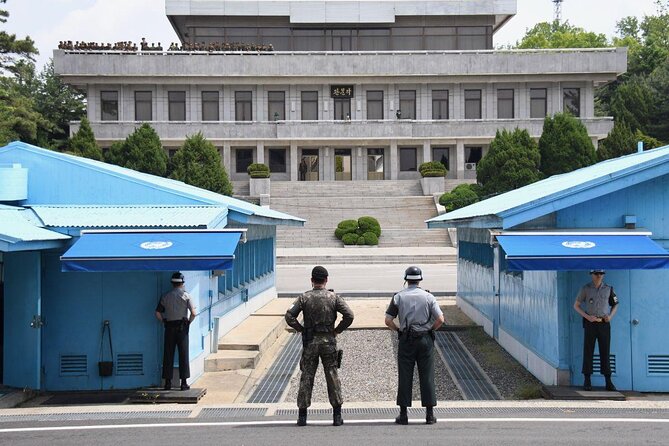
- Telescope time at Dora Observatory for the closest South Korea viewing of North Korea
- Third Tunnel of Aggression experience with instructions that matter for tall visitors
- Imjingak Peace Park stops built around separation, POW return history, and reunification symbolism
- Hard ID checkpoint at Unification Bridge where they inspect the bus and check documents
- Optional Majang Lake Suspension Bridge crossing for a calmer finale after the heavier sites
- Hotel pickup and a mobile ticket so the day starts with less hassle in Seoul
Why This DMZ Day Trip Feels Different From the Usual Seoul Tour
This is not a sightseeing loop. You’re crossing into a zone shaped by war, armistice rules, and ongoing tensions, so every stop carries a job: explain the Cold War logic, show the physical reminders, and help you understand what separation means in daily life.
The itinerary is built around two kinds of moments. First, you get outdoor memorial and reunification symbolism at Imjingak and nearby locations. Then you move toward the more intense, factual viewing parts: tunnels and the observatory, where you’re literally looking toward North Korea with serious optics.
What makes it work for your day is the pacing. It runs about 8 hours, and it’s structured so you’re not stuck waiting around too long at each location—especially at the heavy stops.
You can also read our reviews of more tours and experiences in Seoul.
Meeting in Seoul Without Losing Your Morning
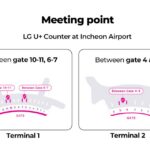
Your tour starts with a simple pickup plan. You’ll either use hotel pickup near major downtown subway areas or meet at one of three subway exits: Myeongdong (Exit 9), Seoul City Hall (Exit 6), or Hongdae (Exit 3). Aim to arrive 10–15 minutes early because the day is timed to what the DMZ area allows that day.
This matters because DMZ logistics run on strict timing. One missed meeting point can snowball into wasted time and stress, and you don’t want that on a once-a-year kind of day.
Also, the tour group can be up to 150 people, so you’ll want to keep your day pack simple and easy to grab. If you carry a backpack, keep it zipped and accessible. You’ll appreciate that when staff ask you to move quickly.
Imjingak Peace Park: Bells, POW Return Stories, and Why It’s Not Just Memorial Photos
A big chunk of the emotional tone comes from Imjingak, and the stops there aren’t random. They connect names, dates, and symbolic objects so you can understand why people still come back.
Here’s what you’ll experience in that first zone:
Imjingak Tourist Information Center and clearance basics
Before you go deeper, your guide collects entrance clearances and tickets required to enter the civilian-controlled areas. This is the moment where the whole trip becomes real, because it’s one of the few parts where you see how rules shape movement.
Imjingak Resort and the Bell Tower energy
Imjingak Park was established in 1972 as a sanctuary for people separated by the Korean War. The weathered Bell Tower is the kind of object that makes you pause without needing a speech.
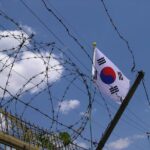

Bridge of Freedom and a very specific POW number
Cross the Bridge of Freedom, a wooden span built in 1953 to replace a war-damaged railroad bridge over the Imjin River. One detail you’ll remember is the number of prisoners of war who returned to South Korea: 12,773. That specificity turns an abstract story into something you can actually picture.
Practical tip: this is a good place to take your photos, but don’t rush. The bridge is short, yet it’s one of the most discussed stops because it’s tied directly to release and return.
Optional Paju Imjingak Peace Gondola ride
If you selected it, you may ride the Paju Imjingak Peace Gondola, launched in 2020. It crosses above the Imjin River for a view of the DMZ edge from the air. It’s a nice contrast to the land stops, and it gives your brain a break from the memorial objects.
Steam, Soybeans, and a Peace Bell That Weighs 21 Tons
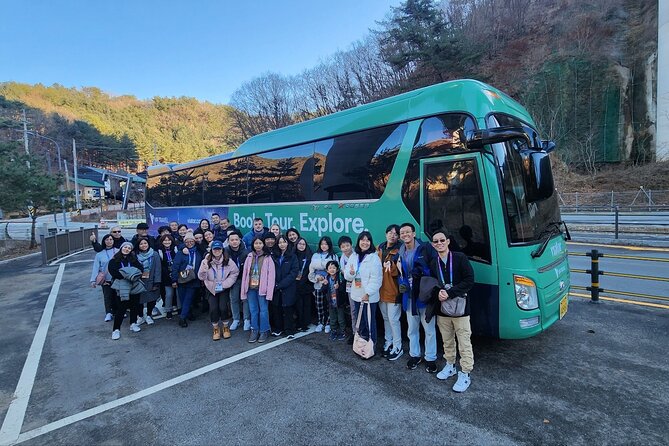
The Imjingak area keeps going, and it gets surprisingly varied.
Mangbaedan Memorial Altar
You’ll see the Mangbaedan Memorial Altar, built in 1987 near the DMZ area. Families pay tribute to relatives in North Korea during traditional holidays, and that gives the site a living feel. It’s not only about the past.
The steam locomotive at Jangdan Station
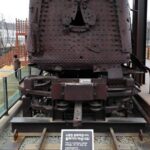
At Jangdan Station of the Gyeongui Line, you’ll find a battle-scarred steam locomotive often called the Iron Horse. It once ran along the Gyeongui Line until the Korean War halted travel in 1950. It’s a reminder that infrastructure gets broken, and people are the ones who rebuild the meaning afterward.
Pyeonghwauijong Peace Bell
Then there’s the massive bronze Peace Bell, cast in 2002 and weighing 21 tons. The idea is simple: a heavy object meant to symbolize unity, and a sound meant to reach you physically.
If you’re the type who likes symbolism explained in plain language, this stop will work well for you. The bell is big enough that you don’t have to guess how seriously they treat the message.
The Unification Bridge Checkpoint: Where Your Day Stops Being Tourist Easy
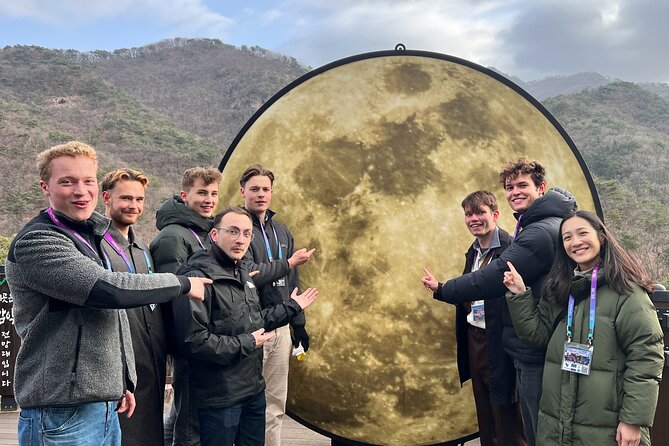
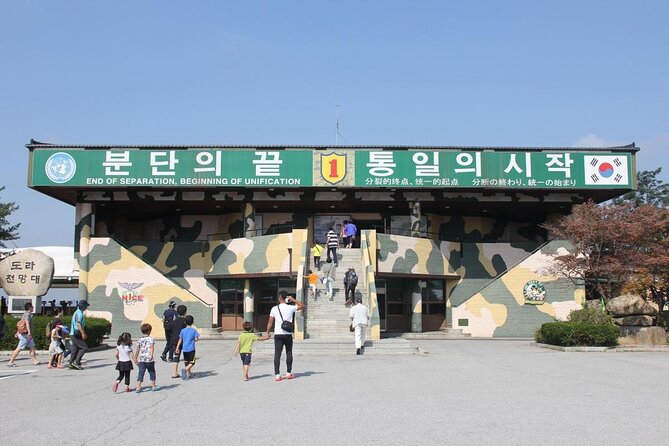
At Unification Bridge, there’s a military checkpoint. Soldiers inspect the bus and check IDs before allowing entry. This is where you must be prepared.
You should have your passport or one of the listed valid IDs (a military ID card or a South Korea-issued ID, depending on what you have). If you forget, you can waste time fast.
This checkpoint also explains why the day runs the way it does. It’s not a casual drive into a strange area. It’s permission-based movement.
One more practical point: the tour passes over the Imjin River afterward, and the calm water and wildlife are part of the contrast. It’s one of those moments where your brain finally catches up to what the rest of the day has been doing.
Walking Inside the Third Tunnel of Aggression: The Main Event
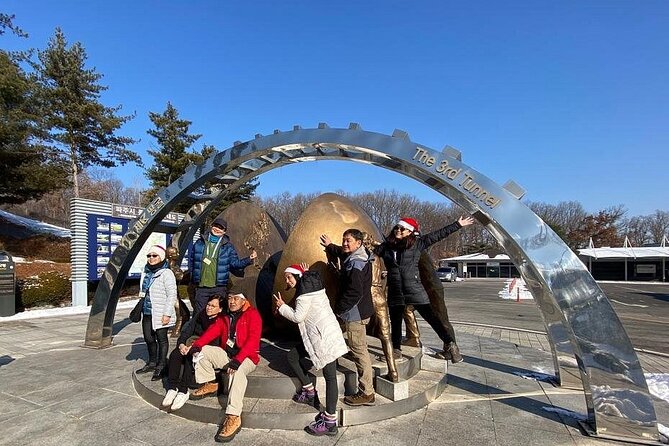
This is the stop most people remember, and for good reason. The Third Tunnel of Aggression (also called the 3rd Infiltration Tunnel) was unearthed in 1978. It runs 1,635 meters long and sits about 52 km from Seoul and 12 km from Munsan.
What to expect underground
You’ll walk through the tunnel with a guided experience. It can be hot and humid, and the tunnel structure means you’re moving in a narrow space with attention on your safety.
A tip that comes up repeatedly: strap your hard hat securely. If you’re taller (one review mentioned people over 6 feet), you’ll likely bump your head if the hard hat sits loose. It’s a small fix that prevents a very annoying moment.
Why the tunnel matters
The tunnel isn’t just a tourist attraction. It’s proof that the conflict plan was engineered, measurable, and not theoretical. Seeing it connects history to engineering to fear, all in one enclosed space.
If you want the DMZ trip to feel like more than photos, this is the turning point.
Dora Observatory: Telescope Viewing and the North Korea Products Moment
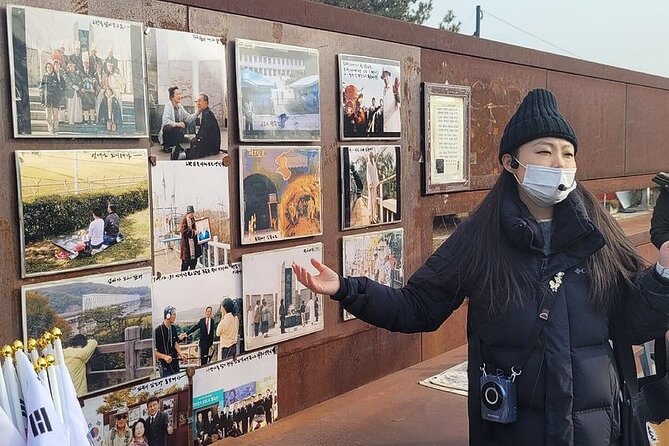
After the tunnel, you’ll go to Dora Observatory, established in 1986 and revamped in 2018. It’s located on Dorasan, and it’s one of the closest South Korea viewing points toward North Korea.
The telescope view
The key feature here is the telescope. You’ll use high-power optics to look across the boundary, and this is where your brain flips from walking through a story to actually seeing the direction the story points toward.
Buying items at the observatory
Another specific detail: at the observatory, you can buy North Korean products. It’s a strange thing to be able to purchase, and that contradiction is exactly why it’s memorable. It turns geopolitics into something you can hold.
If you’re sensitive to political theater, you might keep this part simple: look, listen, and use it as a factual viewing moment rather than a souvenir mission.
Majang Lake Suspension Bridge Crossing (If You Chose It)
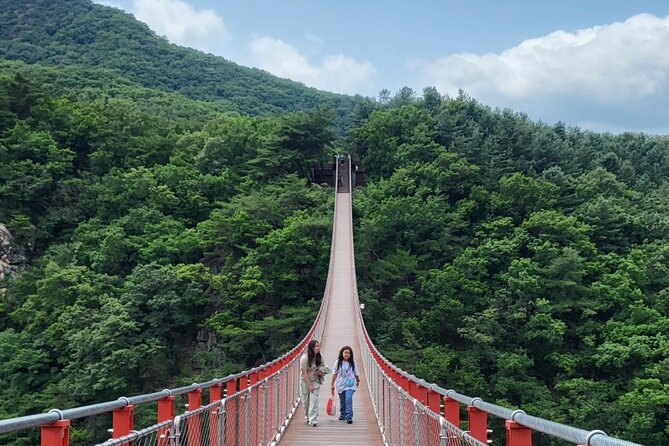
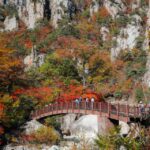
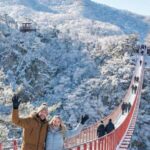
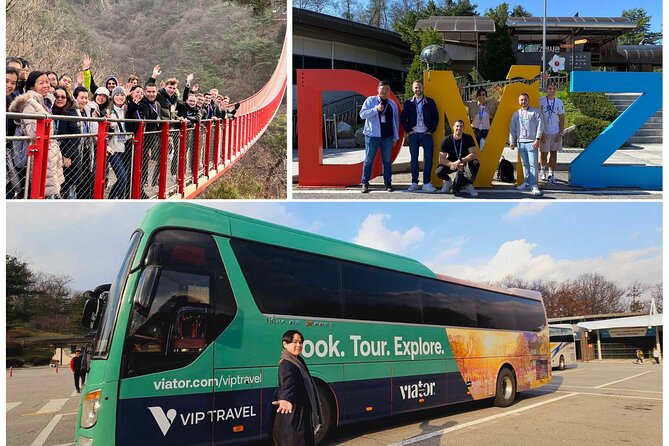
If you selected the option, your finale is the Majang Lake Suspension Bridge. It’s 262 meters long, opened in 2020, and sits about 25 meters above Majang Lake.
This matters because you’re finishing a heavy day with a visual reset. Crossing a bridge is still dramatic in its own way, but it gives you sky, water, and space after the tunnel.
From a value angle, this option is worth it when you want your day to end on a lighter note—especially if you’re traveling with someone who needs a break from intense history.
Price and Value: What $35 Buys in a High-Rule Zone
At $35 per person, this tour is a budget-friendly way into one of the most regulated parts of South Korea tourism. You’re not just paying for transit. You’re paying for:
- A professional guide (English or Chinese)
- Hotel pickup from major subway/downtown areas
- Admission coverage for major DMZ stops, including the Third Tunnel and Dora Observatory
- Optional add-ons if you selected them during checkout (like the Majang Lake crossing and other bridge or ride choices)
Lunch isn’t included, and the end-of-day drop-off is at major areas like Myeongdong, Hongik Univ Subway Station, or City Hall. That part is normal for DMZ tours because timing is tight and meals are easier to handle independently.
Still, considering you’re getting structured access to multiple landmark sites plus telescope viewing and a tunnel walk, the price is strong value—especially if you’d otherwise struggle with how to arrange a DMZ day yourself.
Who This Tour Suits Best (And Who Might Want a Different Day)
This is a great fit if you want a single-day plan that covers the big DMZ touchpoints without you piecing it together. It’s also a solid choice if you like guided storytelling—because the best moments here come from context, not just locations.
You’ll probably enjoy it even more if you’re traveling with friends or family who want a mix of sights: memorials, engineering, and viewing across the boundary.
You might want to reconsider if you dislike checkpoints, you have mobility limits, or you hate enclosed spaces. Even though the tour says most travelers can participate, the tunnel and the general DMZ-area walking do take effort.
Should You Book This DMZ Tour to the Third Tunnel and Majang Lake Crossing?
Yes, if you want the classic DMZ power combo: memorial meaning at Imjingak, the shock of the tunnel, and the real viewing moment at Dora Observatory. The optional Majang Lake bridge can also turn the day into something you remember for the right reasons beyond the political heaviness.
Do it with two practical rules:
1) Bring your passport and keep it easy to access for ID checks.
2) Wear something comfortable and be ready for stairs and tight spaces.
If you’re unsure which option to pick for the finale, choose Majang Lake when you want a calmer end to the day. Skip it if you’d rather keep the day strictly focused on the DMZ core stops.
FAQ
How long is the DMZ Tour Seoul to the Third Tunnel and Dora Observatory?
The duration is about 8 hours (approx.).
What does the tour cost?
The price is $35.00 per person.
Where do I meet the bus in Seoul?
You meet at one of three spots: Myeongdong Subway Station Exit 9, Seoul City Hall Subway Station Exit 6, or Hongdae Subway Station Exit 3. You should arrive 10–15 minutes early.
What is included in the price?
You get a professional English or Chinese tour guide and hotel pickup from main subway/downtown areas. Admission is included for major DMZ sites listed on the route, including the Third Tunnel and Dora Observatory. Optional items depend on what you selected during checkout.
Is lunch included?
No. Lunch is not included.
Do I need a passport for the checkpoint?
Yes. At Unification Bridge, soldiers do ID checks. Bring your passport, a Military ID Card, or a South Korea-issued ID.
Is the Majang Lake Bridge included?
It’s optional. If you chose the Majang Lake bridge option during checkout, you’ll end with the suspension bridge crossing.
Can I buy things related to North Korea during the tour?
At Dora Observatory, you can buy North Korean products.
What if I want to cancel?
You can cancel for a full refund if you cancel at least 24 hours before the experience start time. Free cancellation applies up to that cutoff.