REVIEW · KYOTO
Ninja 1-hour Hands-on Lesson by Japanese master in Kyoto -Entry
Book on Viator →Operated by NINJA DOJO and STORE · Bookable on Viator
Ninja training in a real Kyoto dojo. This 1-hour class gives you a taste of what ninja life could feel like: you’ll learn ninja breathing and walking and then practice weapons work like sword skills, kunai throws, shuriken targeting, and blowgun darts. The format is also practical—small group size (max 6)—so you’re not just watching from the back row.
I like that you get full participation in the hour. From dressing in your ninja outfit to trying the tools safely, it’s designed to be hands-on, not a lecture.
One possible drawback: if you want deep historical detail or heavy theory, this can feel a bit short and more performance-focused than classroom-focused.
In This Review
- Key Highlights You’ll Care About
- Meeting NINJA DOJO and STORE KYOTO: Where the Lesson Starts
- Ninja Basics First: Kuji-in Breathing, Meditation, and Walking
- Weapon Training That Actually Gets Your Hands Moving
- The Ninja Trick House: Gimmick or Real Fun Training?
- Instructor Energy in English: Working With Masters Like Sho and Jack
- Dress Up and Gear: Ninja Clothes Rental and What to Wear
- How the 1-Hour Flow Feels: Fast, Physical, and Targeted
- Price and Value: Is $80.58 Worth It?
- Who Should Book This Ninja Lesson (and Who Might Not Love It)
- Tips to Get the Most Out of Your Ninja Hour
- Should You Book This 1-Hour Kyoto Ninja Lesson?
- FAQ
- How long is the ninja lesson in Kyoto?
- What’s the group size?
- What’s the meeting point address?
- Is the lesson in English?
- What’s included in the price?
- What weapons and skills will we practice?
- Is hotel pickup or drop-off included?
- Are food and drinks included?
- Is this activity outdoors?
- Are service animals allowed?
Key Highlights You’ll Care About
- Max 6 students means more coaching and less waiting
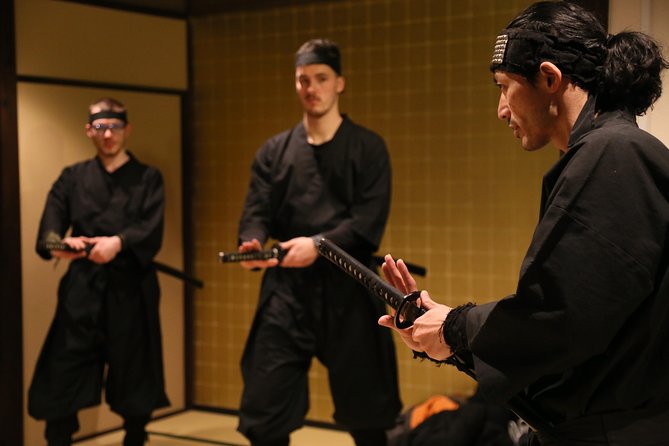
- Kuji-in breathing and ninja walking are taught before weapons practice
- Sword, kunai, shuriken, and blowgun darts are all part of the lesson
- Ninja trick house elements add playful “training” moments along the way
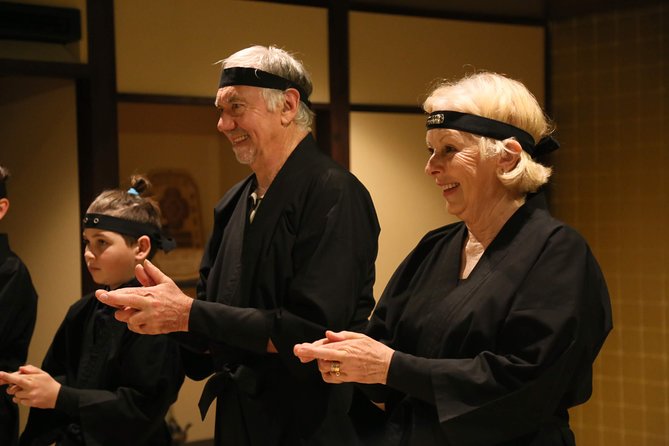
- Ninja clothes rental is included, so you start in costume right away
- English instruction from a Japanese sensei/master keeps it friendly for beginners
Meeting NINJA DOJO and STORE KYOTO: Where the Lesson Starts
You meet at NINJA DOJO and STORE KYOTO, 528 2F, Hakurakutenchō, Shimogyo Ward, Kyoto (near public transportation). Expect to arrive, check in, and get oriented fast—this is a 1-hour activity, so there’s no long pre-show.
The good news is that the lesson returns you to the meeting point at the end. You’re not signing up for a whole day of transit logistics around Kyoto; you’re booking one focused experience in one place.
You’ll also use a mobile ticket. That’s one less thing to manage while you’re walking around central Kyoto.
You can also read our reviews of more tours and experiences in Kyoto.
Ninja Basics First: Kuji-in Breathing, Meditation, and Walking
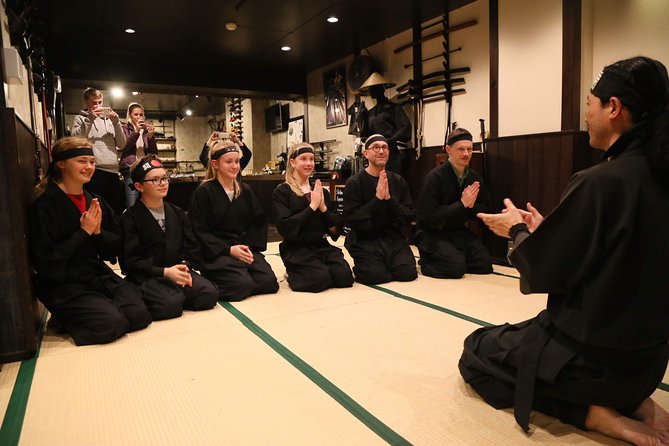
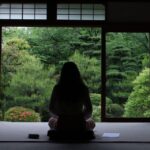
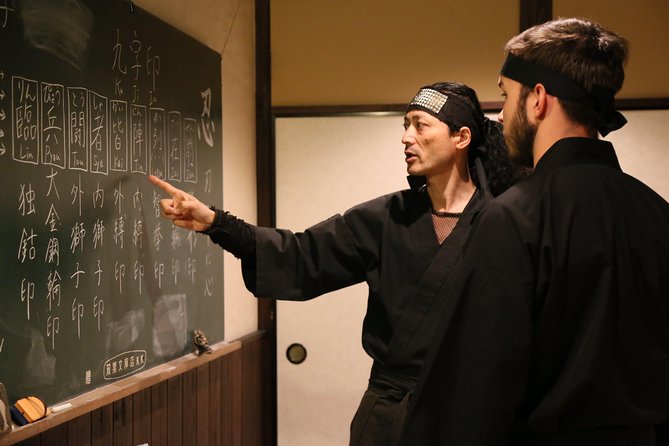
The session starts with entry-level “ninja basics,” and it’s more physical than you might guess. You’ll practice ninja meditation Kuji-In, plus breathing techniques and ninja walking—skills that are meant to connect posture, control, and calm.
Why this matters: when people only jump to weapons, they miss the control part. Here, the training begins with how you hold your body, how you move quietly, and how you regulate your breathing. Even if you’re not aiming to master stealth, these are the foundation moves that keep the rest of the hour from feeling like chaos.
The pacing is designed for beginners. Most people can participate, and the class format keeps the instructor able to adjust what you’re doing instead of rushing through everyone.
Weapon Training That Actually Gets Your Hands Moving
After the basics, the lesson shifts into demonstration and then training with multiple weapons. You’ll move through several stations, and the instructor guides you step by step—so even if you’ve never held a training sword or tried a throwing tool before, you’re not stuck figuring it out alone.
Here’s what’s included in the core weapons sequence:
- Sword training
- Kunai (dagger) training
- Shuriken (ninja star) training
- Ninja blowgun (blow darts) training
A key detail from experience reports: the staff is careful with the equipment. That’s important for two reasons. First, you feel more comfortable trying without fear. Second, it keeps the class beginner-friendly even when the tools look intimidating.
Also, the tone tends to be playful. Some instructors bring humor into the coaching, which makes repeated attempts less frustrating when you’re trying to hit a target.
The Ninja Trick House: Gimmick or Real Fun Training?
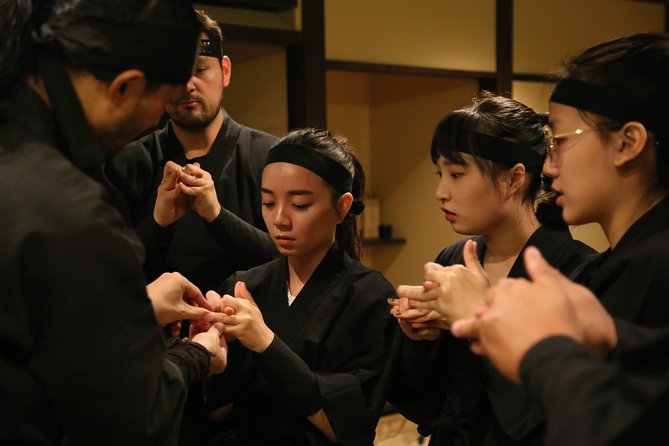
There’s an “introduction gimmick and trap” at a ninja trick house during the lesson. In practice, this tends to be the moment that turns a training hour into a story you remember.
One technique-themed highlight you may encounter: walking in a dark space on a floor with spikes. The good part is that the instructor shows you how to avoid the scary parts and how to move safely. It’s not about danger; it’s about control and coordination under weird conditions.
Some classes also include extra playful elements like secret rooms or trap-door moments inside the dojo setup (depending on timing and flow). The takeaway for you: treat this like part of the training experience, not like a sideshow. It’s there to make the “ninja life” idea tangible.
Instructor Energy in English: Working With Masters Like Sho and Jack
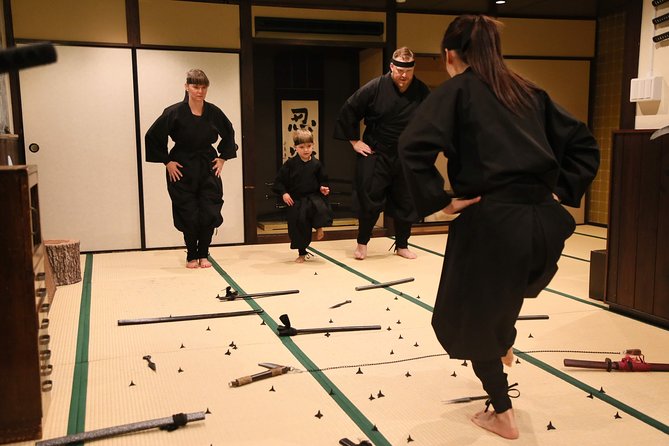
This class is led by a Japanese sensei/master who teaches in English. Names that show up in real-world experiences include Sho and Jack, and both are described as bringing a mix of skills, history context, and humor.
That blend matters. If the instructor is all jokes, you lose clarity. If they’re only lecturing, you lose the hands-on value. The best sessions balance both: a little story to set the scene, then clear demonstrations so you can do the move yourself.
You can also expect patience. When multiple ages and skill levels are in the room, the instructor’s pacing is what keeps everyone included.


Dress Up and Gear: Ninja Clothes Rental and What to Wear
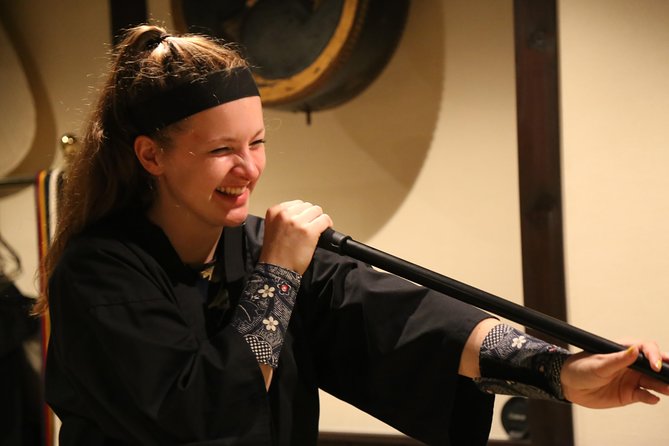
Ninja clothes rental is included during training. That means you don’t need to hunt for a costume before you arrive, and you can spend your time in Kyoto doing real sightseeing instead of shopping for props.
For what to wear, aim for comfort and easy movement. You’ll be practicing breathing, walking, and throwing tools, so avoid anything that restricts motion or makes you worry about tripping.
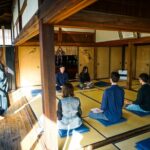
You’ll spend the hour inside a dojo-style setting. Some participants also describe the space as authentic Japanese-style with ninja artifacts, which adds to the feeling that you’re stepping into a real training environment rather than a generic storefront show.
How the 1-Hour Flow Feels: Fast, Physical, and Targeted
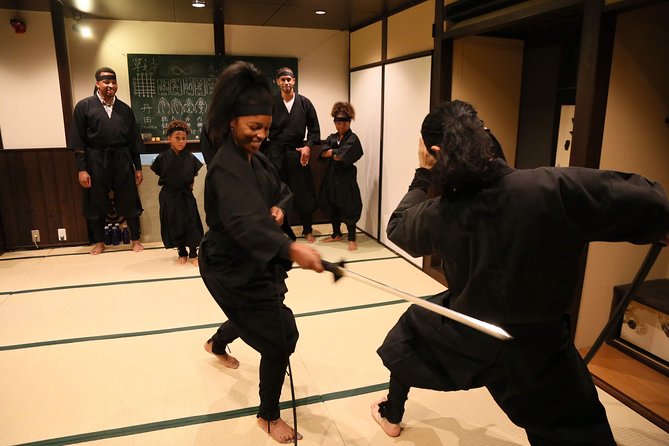
Because the class is about 1 hour, it runs like a training circuit: basics first, then stations for sword and throwing/blowgun practice, then the trick-house segment. The hour doesn’t drag, and you keep moving instead of waiting for someone else to finish.
A common comment is that time flies because the lesson packs in a lot. You’ll get enough repetition to feel something improved—especially with the throwing stations—without ending up exhausted.
One note for your planning: some people wish they booked the longer version because the hour can feel like a sampler. If your group is very weapon-focused or you want more practice time, consider upgrading to a longer session if it’s offered on the same day.
Price and Value: Is $80.58 Worth It?
At $80.58 per person, the value comes from four things you can’t replicate as easily on your own:
- Small-group coaching (max 6)
More attention from the instructor means more actual doing, not just watching.
- Multiple weapon stations in one hour
Sword, kunai, shuriken, and blowgun darts give you variety. You’re not paying for one trick.
- Costume rental included
That’s part of the experience, not an extra fee.
- Admission fee included
You’re paying for access plus instruction, not just entry.
What’s not included is also useful for budgeting: there’s no hotel pickup/drop-off, and food and drinks aren’t provided. So plan a snack or meal around it, and build in some normal Kyoto transit time to reach the dojo.
If you’re looking for a high-energy, hands-on, beginner-friendly activity that’s easy to fit into a day, the price can feel fair. If you’re looking for deep, academic ninja history, you may feel you wanted more classroom time.
Who Should Book This Ninja Lesson (and Who Might Not Love It)
This experience is a good match if you want:
- A fun family activity that gets kids moving
- An interactive break from temples and shrines
- A safe way to try weapons training basics
- A class that works for many ages thanks to a beginner entry level
It’s also a solid date idea. Dressing up, learning basics, and trying to hit targets gives you shared “we did this” memories.
Who might reconsider: if you strongly prefer detailed historical immersion and theory, this will feel like a short training program with story touches rather than a long education track.
Tips to Get the Most Out of Your Ninja Hour
- Arrive a few minutes early so you don’t feel rushed while checking in and changing.
- Use the coaching cues. Even small adjustments to stance or breathing can improve your throws quickly.
- Take photos if allowed. Some sessions include taking pictures and videos and sharing them at no extra cost, which can be a nice souvenir without forcing you to run your own camera the whole time.
- If you’re traveling with kids, remind them the weapons are handled carefully and the goal is practice and control, not speed.
Should You Book This 1-Hour Kyoto Ninja Lesson?
If your main goal is an active, hands-on Kyoto experience, I’d say yes. The combination of small group size, weapons practice, and the dojo trick-house segment makes it feel like more than a themed photo stop. And because it’s only about an hour, it fits cleanly into a busy sightseeing day.
Book it especially if you have kids, teens, or anyone who wants to try sword-and-throwing basics in a guided, safe setup. Skip it—or at least temper expectations—if you’re hunting for long-form history lectures or deep training theory.
If you want a “Kyoto memory that you can explain with your hands,” this is the kind of class that delivers.
FAQ
How long is the ninja lesson in Kyoto?
The lesson is about 1 hour.
What’s the group size?
This activity has a maximum of 6 travelers.
What’s the meeting point address?
NINJA DOJO and STORE KYOTO, 528 2F, Hakurakutenchō, Shimogyo Ward, Kyoto, 600-8422.
Is the lesson in English?
Yes. The sensei/master teaches in English.
What’s included in the price?
Ninja clothes rental during training and the admission fee are included, along with instruction from the Japanese sensei/master.
What weapons and skills will we practice?
You’ll train with a ninja sword, kunai (dagger), shuriken (ninja star), and a blowgun with blow darts. The class also includes Kuji-In ninja meditation, ninja breathing, and ninja walking.
Is hotel pickup or drop-off included?
No, hotel pickup and drop-off are not included.
Are food and drinks included?
No. Food and drink are not included.
Is this activity outdoors?
The activity requires good weather. If it’s canceled due to poor weather, you’ll be offered a different date or a full refund.
Are service animals allowed?
Yes, service animals are allowed.